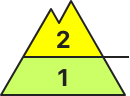
Beware fresh snow, drifts and weak layers on shady slopes: prone to triggering
As a result of fresh snow and winds, avalanche danger is increasing. The fresh snow and freshly generated drifts can easily trigger a medium-sized avalanche by minimum additional loading. Danger zones occur primarily in steep terrain and in wind-loaded gullies and bowls. In addition, avalanches on shady slopes can fracture down to deeper weak layers and in isolated cases then grow to large size. Such danger zones occur especially where the snow is shallow and in transitions from shallow to deep snow. Wherever there is solar radiation, small-to-medium sized loose snow avalanches are possible in steep rocky terrain.
Snowpack
By Sunday morning, 20cm of fresh snow fell in the Arlberg region, up to 25cm in Verwall and Silvretta, locally more. Due to NW winds, fresh snowdrift accumulations were generated. The fresh snow and drifts have often been deposited on a loosely-packed old snowpack surface or atop surface hoar. They are prone to triggering. The mid-level part of the snowpack consists of well-settled, compact layers widespread which on high-altitude shady slopes cover a poorly structured old snowpack fundament.
Tendency
On Monday, snow showers will repeatedly pass through starting at midday, often accompanied by strong-velocity westerly winds. Fresh trigger-sensitive snowdrift accumulations will be generated.
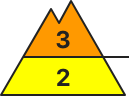
Danger level
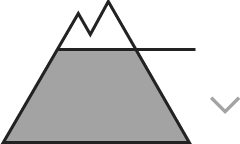
2000m
Avalanche Problem
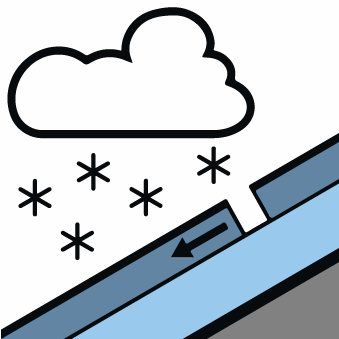
New snow
2000m
New snow
2000m
Beware fresh snow, drifts: prone to triggering
The fresh snow and drifts can be triggered as medium-sized avalanches even by minimum additional loading. Danger zones occur primarily in steep terrain and in wind-loaded gullies and bowls. In addition, avalanches on shady slopes can fracture down to deeper weak layers and in isolated cases then grow to large size.
Snowpack
By Sunday morning 25-30cm of fresh snow fell. As a result of NW winds, fresh snowdrift accumulations will be generated. They will be deposited often atop a loosely-packed old snowpack surface or atop surface hoar and are prone to triggering. The mid-level part of the snowpack consists widespread of well settled, compact layers which on shady slopes at higher altitudes blanket a poorly structured old fundament.
Tendency
On Monday, snow showers will repeatedly pass through starting at midday, often accompanied by strong-velocity westerly winds. Fresh trigger-sensitive snowdrift accumulations will be generated.
Danger level
treeline
Avalanche Problem
Wind slab
Treeline
Persistent weak layer
2000m
Watch out for weak layers deep in the snowpack!
The avalanche risk is moderate above the tree line and low below. Fresh wind slab is the main problem. Avalanches can be triggered in places with a small additional load. This is possible above all in the steep terrain adjacent to ridgelines in the north, east and south aspects as well as in gullies and bowls.
On shady slopes at higher altitudes, avalanches can break through to deeper layers in the persistent weak layer and reach medium size.
Snowpack
Fresh snowdrift accumulations form with winds from north-westerly directions. Some of these come to rest on a soft layer of snow and can be prone to triggering. In shady high altitudes, layers of faceted crystals can be found deep in the otherwise compact old snowpack. At medium altitudes, the snowpack is wet towards the ground.
Tendency
Depending on the amount of new snow, the avalanche risk may increase slightly.
Danger level
treeline
Avalanche Problem
Wind slab
Treeline
Beware fresh snow, drifts: prone to triggering
Avalanche danger above the timberline is moderate, below that altitude danger is low. The fresh snow and drifts can be triggered even by minimum additional loading as generally small-sized avalanches. Danger zones occur primarily in steep terrain and in wind-loaded gullies and bowls. If avalanches on shady slopes fracture down to deeper layers of the snowpack, they can grow to medium size. Apart from the risks of being buried in snow masses, the danger of being swept along and forced to take a fall also require caution.
Snowpack
By Sunday morning, 15-20cm of fresh snow fell. Due to NW winds, fresh snowdrift accumulations were generated. The fresh snow and drifts have often been deposited on a loosely-packed old snowpack surface or atop surface hoar. They are often prone to triggering. The mid-level part of the snowpack consists of well-settled, compact layers widespread which on high-altitude shady slopes cover a poorly structured old snowpack fundament.
Tendency
On Monday, snow showers will repeatedly pass through starting at midday, often accompanied by strong-velocity westerly winds. Fresh trigger-sensitive snowdrift accumulations will be generated.
Danger level
2000m
Avalanche Problem
Persistent weak layer
2000m
Weak layers persist deep in the snowpack
The problem is the weak layers in the snowpack, which are deeper in the snowpack. If the load exceeds the load-bearing capacity of the deeper Weak layers, a deep and large avalanche can be triggered. There are many such weak layers, especially on axis above the forest. Small wet snow avalanches are possible during the day on sunny slopes.
Snowpack
dp.1: deep persistent weak layer
In high alpine regions, there is a crust on the surface, and the snow layers are mostly well connected. The Crust supports the skier's weight. In the old snow cover, several weak layers of shreds and sheared grains occur deep below the surface. On Saturday it snowed lightly, with up to 5 cm of New fallen snow.
Tendency
On Monday, it will start snowing. The snowfall level will be around 1700 m and 20-30 cm of New fallen snow may fall. The danger of avalanches will increase.
Danger level
1800m
Avalanche Problem
Persistent weak layer
1800m
New snow
1800m
Weak layers persist deep in the snowpack
The problem is the weak layers in the snowpack, which are deeper in the snowpack. If the load exceeds the load-bearing capacity of the deeper Weak layers, a deep and large avalanche can be triggered. There are many such weak layers, especially on axis above the forest. Small wet snow avalanches are possible during the day on sunny slopes.
Snowpack
dp.1: deep persistent weak layer
In high alpine regions, there is a crust on the surface, and the snow layers are mostly interconnected. The crust supports the skier's weight and can be frozen in the morning. In the mid-mountains, more and more terrestrial areas appear on the sunny slopes. In the old snow cover, several weak layers of shreds and frosted grains occur deep below the surface.
Tendency
It will clear up on Tuesday. Faster in the high alpine regions than in the mid mountains. There will be no major warming. The danger of avalanches will remain similar.
Danger level
2000m
Avalanche Problem
Persistent weak layer
2000m
Wind slab
2000m
The main problem is a persistent weak layer in persistent weak layer, wind slab is still prone to triggering
The avalanche risk is moderate above around 2000 metres and low below that. In the aspects from west to north to east, medium and occasionally large, dry slab avalanches can still be triggered by individuals in a few places. Such avalanche prone locations are rare but often unrecognisable. Take particular care at the transitions from little to more snow. In addition, the southerly foehn has created pillows of wind drifted snow that can still be easily triggered by individuals, especially in the extended northern exposures. Danger areas are usually adjacent to ridgelines and behind terrain edges.
In sunny conditions, small loose snow avalanches can be triggered from extremely steep sunny slopes.
Snowpack
Overnight snowfall is unproductive. Due to the many clouds, the snowpack can hardly outgoing longwave radiation overnight and no melt-freeze crust forms. In shady high altitudes, you can still find soft, faceted snow on the surface in some places, which has been partly covered by fresh wind slab and now some new fallen snow. Below this lies a well-set sequence of compact, older drift snow layers, in which a crust is embedded in combination with faceted crystals. The connection at the transition to the old snow foundation, which consists mainly of deep rime, is still poor. Deep and sunny middle layers are largely snowed out.
Tendency
With a brisk westerly wind, it will snow unproductively on Monday, the avalanche danger will not change significantly.
Danger level
2000m
Avalanche Problem
Persistent weak layer
2000m
Be aware of the local persistent weak layer problem!
The avalanche risk is generally low. However, on shady slopes in the higher elevations and transitions from little to more snow still need to be considered in some cases. Only isolated slab avalanches can still be triggered here by large additional loads. The danger of wet snow avalanches is low.
Snowpack
Depending on the altitude and aspect, the snowpack is differently developed on the surface, partly crusted, partly less stabilised and often moist up to high altitudes in the interior and wet towards the ground. The snow base, fundament remains high and weakened on shady slopes. Low and widespread middle elevations are bare, in some places there is only a little snow.
Tendency
Despite some new fallen snow, the avalanche situation hardly changes.
Danger level
treeline
Avalanche Problem
Wind slab
Treeline
Be aware of the risk of falling!
The avalanche risk is low. Fresh wind slabs can be problematic. Occasionally, smaller avalanches can be triggered with a small additional load. This is possible above all in the steep terrain adjacent to ridgelines in the north, east and south aspects as well as in gullies and bowls. On shady slopes at high altitudes, deeper weak layers can be disturbed in isolated cases with large additional loads.
Snowpack
Fresh, small snowdrift accumulations form with winds from north-westerly directions. Some of these come to rest on a soft layer of snow and can be prone to triggering. In shady high altitudes, layers of faceted crystals can be found deep in the otherwise compact old snowpack. At medium altitudes, the snowpack is wet towards the ground.
Tendency
The avalanche danger remains low.
Danger level
2000m
Avalanche Problem
Persistent weak layer
2000m
Latent persistent weak layer problem, slightly increasing wet snow problem
The avalanche risk is low. Nevertheless, there is still a persistent weak layer problem in the extended northern sector. Occasionally, mainly in very steep gullies and bowls, slab avalanches can be triggered by people. The avalanche prone locations are usually difficult to recognise and are often located in transition areas from a little to a lot of snow.
On sunny slopes, incoming radiation increases the probability of triggering small wet snow avalanches.
In steep terrain, there is a risk of falling on the hard snow surface.
Snowpack
With outgoing longwave radiation, a melt-freeze crust can form, which softens on the sunny slopes during the day with increasing moisture penetration. On shady slopes at higher altitudes, there are still isolated areas with a soft (faceted) snow surface, where the firmness of the layer changes depending on altitude and exposure. Below this there is an increasingly sufficiently settled and compact snowpack, the transition to the foundation consisting of deep rime (floating snow) is still poor. Medium and low altitudes are often free of snow.
Tendency
On Sunday, the sun will often shine, especially on the southern side of the Alps, while there will be more clouds to the north of the main Alpine ridge. Local showers are to be expected in the afternoon. Little change in the avalanche danger.
Danger level
Low risk of isolated wet snow avalanches
The avalanche risk is low. In exceptional cases, small snow slabs can still be triggered in the entrance areas of steep gullies on shady slopes with a large additional load. The risk of being swept away and falling on icy, possibly thinly snow-covered surfaces generally outweighs the risk of burial.
Snowpack
Low and sunny mid-altitude areas are snowed out. Where present, the snowpack is moist to wet and well-set right up to the summit areas. Due to the many clouds, the snow surface can hardly outgoing longwave radiation overnight and no stable melt-freeze crust forms. In the higher areas on shady slopes, there are still weak layers of large faceted crystals in the lower part of the snowpack, especially near the ground.
Tendency
The southerly foehn subsides and it snows unproductively. The avalanche danger does not change significantly.
Danger level
Avalanche danger remains low. Wet snow slides are possible on steep slopes during the day, which can also be triggered by individual winter sports enthusiasts. Caution is still advised on shady slopes, where small slab avalanches are possible in persistent weak layers.
Snowpack
The cloudless nights of the last few days have allowed a melt-freeze crust to form, which softens again during the day with rising temperatures and sunlight. This melt-freeze crust lasts longer in shady locations. Convective showers have deposited graupel in places, which can still remain in shady high altitudes.
In gullies and bowls, the wind slab is well stabilised, but in narrow places it is icy in places. Faceted crystals are partially weakening the snow base, fundament at higher elevations in the northern sector.
As temperatures remain mild, the snow is melting. The snowpack is becoming increasingly moist and thinner, especially in sunny areas. Below around 1400 metres, and below around 1600 metres on sunny slopes, there is only a little snow.
Tendency
The avalanche danger remains low for the time being. A cold front will move through from the north-west on Monday, bringing snow showers and cooling.
Danger level
1800m
Avalanche Problem
Persistent weak layer
1800m
Note the persistent weak layer
The avalanche risk is low. Medium-sized slab avalanches can still be triggered in a few hard-to-recognise places, especially in the extended northern sector above 1800 m, but usually only with a large additional load. This is in particular at the transitions from little to more snow. With the southerly foehn, small pillows of wind drifted snow formed on shady slopes, which are temporarily still prone to triggering.
Snowpack
Overnight snowfall is unproductive. Due to the many clouds, the snow surface can hardly outgoing longwave radiation overnight and no stable melt-freeze crust forms. In shady high areas, you can still find soft, faceted snow in some places, which has been partly covered by fresh wind slab and now some new fallen snow. Below this lies a well-set sequence of compact, older drift snow layers, in which a crust is embedded in combination with faceted crystals. The connection at the transition to the old snow foundation, which consists mainly of deep rime, is still poor. Deep and sunny middle layers are largely snowed out.
Tendency
The southerly foehn subsides and it snows unproductively. The avalanche danger does not change significantly.