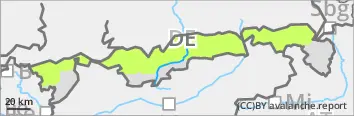
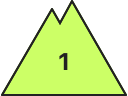
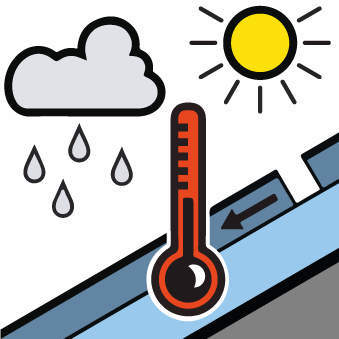
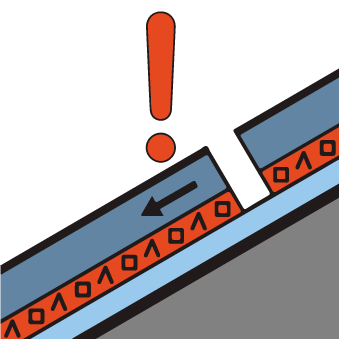
The avalanche risk is low. Wet snow is the main problem. Occasionally, small loose snow avalanches can detach themselves from the steep terrain interspersed with rocks. Smaller gliding avalanches are possible on individual, very steep slopes with smooth ground.
On very steep north-facing slopes at higher altitudes, medium slab avalanches can also be triggered in isolated cases with a large additional load. This is particularly the case at transitions from a little to a lot of snow.
Snowpack
It is mostly cloudy at night and outgoing longwave radiation is limited. The snow surface is already soft in many places in the morning. The snowpack is soaked up to high altitudes and is often wet towards the ground. Occasionally, weak layers of faceted crystals can be found deep under a compact snowpack on the shady slopes of higher summits and areas adjacent to the summit. On the south side, the ground is becoming more and more puffy right up to the summits. There is hardly any snow at low altitudes.
Tendency
No significant change in avalanche danger
Danger level
2000m
Avalanche Problem
Persistent weak layer
2000m
Wet snow
Latent persistent weak layer problem
The avalanche risk is low. The main problem is a persistent weak layer. Avalanche prone locations are mainly in the northern aspects of the high altitudes on very steep slopes as well as in gullies and bowls. Slab avalanches can be triggered with a large additional load and can reach medium size. Be careful at transitions from little to much snow.
In addition, smaller loose snow avalanches can release themselves from steep terrain interspersed with rocks. At medium altitudes, individual small to medium-sized gliding avalanches are possible on slopes with a smooth surface.
Snowpack
On the shady slopes, weak layers of faceted crystals can be found deep under a compact, crusted can form at high altitudes. At night, it is mostly cloudy and outgoing longwave radiation is limited. There may be some localised snowfall at higher altitudes. The snow comes to rest on a thin, superficial melt-freeze crust on the north side, under which faceted crystals have formed. At medium elevations, the snow surface is already soft in many places in the morning. The snowpack is wet towards the ground. On the south side, the ground is still pitting. There is hardly any snow at low altitudes.
Tendency
Depending on the amount of new snow, the danger of dry avalanches may increase slightly.