The avalanche risk is predominantly moderate above 1800 metres. There are still avalanche prone locations on shady slopes in steep terrain. Here and at the transition from little to more snow, isolated slab avalanches can be triggered by mostly large additional loads. Individual spontaneous wet snow avalanches are possible from unloaded steep slopes.
Snowpack
The snowpack firms overnight, initially crust can form on the surface, but is otherwise moist up to high altitudes, and also wet on sunny slopes. It then loses firmness with incoming radiation. The snow base, fundament remains high up and weakened on the shady slopes due to the kinetic metamorphism. Low and sunny slopes in the middle are bare.
Tendency
Little change.
Danger level
2000m
Avalanche Problem
Persistent weak layer
2000m
Generally favorable conditions. Caution urged on steep shady slopes.
Isolated avalanches can still be triggered by winter sports enthusiasts, particularly in little-skied backcountry terrain where the surface is not capable of bearing loads. Danger zones occur especially in spots where the snow is relatively shallow, and in transitions from shallow to deep snow. Avalanches can trigger down to deeper layers inside the snowpack and grow to large size. A cautious route selection and maintaining safety distances between tourers on ascents and descents are recommended. On hard-frozen steep slopes, the danger of sliding and falling require special caution. During the course of the day, likelihood of naturally triggered small wet-snow avalanches triggering increases somewhat on sunny, steep slopes.
Snowpack
Clouds moving in will hamper the nocturnal longwave outgoing radiation only slightly. Generally there is a melt-freeze crust capable of bearing loads, which softens up during the daytime hours. On north-facing slopes, a rain crust extends regionally up to 2300-2500m. The mid part of the snowpack consists of well consolidated layers which on higher altitude shady slopes are blanketed over by large-sized cup-shaped snow crystals.
Tendency
No significant change is anticipated. The persistent weak layer problem on shady high-altitude slopes will persist. Frequency of danger zones is gradually receding.
Danger level
1900m
Avalanche Problem
Persistent weak layer
1900m
Weak layers persist deep in the snowpack
The problem is the weak layers in the snowpack, which are deeper in the snowpack. If the load exceeds the load-bearing capacity of the deeper Weak layers, a deep and large avalanche can be triggered. There are many such weak layers, especially on axis above the forest.
Snowpack
dp.1: deep persistent weak layer
The snowpack freezes at night, but becomes harder during the day, especially on Sunny slopes. The crust strengthens and becomes thicker. This process will be less pronounced today than on previous days. The snow has settled and is already well consolidated, especially on the sunny slopes. Bonded snow has formed. Several weak layers of slush and faceted snow crystals are appearing deep below the surface in the old snow cover.
Tendency
It will clear up on Tuesday. Faster in the high alpine regions than in the mid mountains. There will be no major warming. The danger of avalanches will remain similar.
Danger level
1800m
Avalanche Problem
Persistent weak layer
1800m
Weak persistent layer is still the main problem
The avalanche risk is moderate above 1800 metres and low below. There is still a persistent weak layer problem in the extended northern sector. Medium-sized slab avalanches can still be triggered by people in mainly steep gullies and bowls. The avalanche prone locations are usually difficult to recognise and are often located in transition areas from little to much snow.
On the sunny slopes, the softened, barely stabilised snowpack can trigger wet snow avalanches.
Snowpack
Due to a lack of outgoing longwave radiation, the snowpack hardly gains any firmness, so that it quickly becomes damp or wet up to the higher elevations. On shady slopes, there are still areas with a soft (faceted) snow surface at higher altitudes, but the surface is often already hard here too. Below this, there are still responsive weak layers in the form of faceted crystals in the area of crusts or frost that is still snowed in. In addition, the foundation consisting of floating snow (deep rime) continues to weaken the snowpack (partly also on the south side). Medium (sunny slopes) and low altitudes are largely free of snow.
Tendency
More sunshine again on Tuesday, afternoon showers from Wednesday. No significant change in the avalanche danger.
Danger level
2000m
Avalanche Problem
Persistent weak layer
2000m
Note the persistent weak layer
The avalanche risk is moderate from around 2000 metres and low below. In a few places, medium to large slab avalanches can be triggered by individuals, especially in the aspects from west to north to east. Danger areas are often difficult to recognise and a defensive choice of route is still advised. Take particular care at the transitions from little to more snow.
Wet snow avalanches are possible on the sunny slopes as the snowpack softens. These usually remain small, but at very high to high alpine altitudes (from around 2600 m) they can penetrate into weak layers close to the ground. The likelihood of gliding avalanches increases somewhat due to the greatly reduced outgoing longwave radiation at night.
Snowpack
The snow surface only just freezes and is soon damp or wet up to high altitudes. In shady high-altitude areas, some soft, faceted snow can still be found on the surface, some of which has already crusted can form. Below this lies a now well-set and connected sequence of compact drift snow layers, but often a crust with faceted crystals is still embedded in the upper area (the old snowpack before the last major precipitation). The connection at the transition to the old snow foundation, which consists mainly of deep rime, is still poor. Deep and sunny middle layers are largely snowed out.
Tendency
No significant change in avalanche danger.
Danger level
1800m
Avalanche Problem
Persistent weak layer
1800m
Wet snow
A look at the snowpack can help to assess the old snow problem on the north sides.
The avalanche risk is moderate above 1800 metres and low below that. Persistent weak layer is the main problem. With large additional loads, for example due to cornice breakage, even large slab avalanches can be triggered in isolated cases on shady slopes. Take care on the northern sides of high altitudes, even in transition areas from little to much snow, for example when entering gullies and bowls.
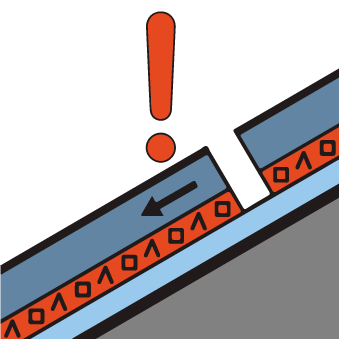
At medium altitudes, individual small to medium gliding avalanches are also possible on slopes with a smooth surface. During the daytime changes and with the sunlight, smaller loose snow avalanches can detach themselves from the rocky steep terrain.
Snowpack
On shady slopes at higher altitudes, weak layers of faceted crystals can be found deep in the snowpack. These are usually covered by compact or crusted can form layers of snow. Early in the morning, the snowpack is usually crust-capable of bearing loads and icy. In the sun, the snow softens again during the day, causing it to lose its bond. On the shady slopes, faceted crystals can also be found at higher altitudes under a thin, superficial melt-freeze crust. Towards the ground, the snowpack is wet in the middle layers. On the south side and at lower altitudes, the ground becomes more and more pale.
Tendency
No significant change.
Danger level
Avalanche Problem
Wet snow
Isolated wet snow avalanches!
The avalanche risk is predominantly low. Sporadic spontaneous wet snow avalanches are possible from unloaded steep slopes. There are still isolated avalanche prone locations on shady slopes in steep terrain where slab avalanches can be triggered by large additional loads.
Snowpack
The snowpack hardly firmnesses overnight with increasing cloud cover, is only partially crusted can form on the surface, but is otherwise moist or wet up to high altitudes. The snow base, fundament is high and occasionally weakened on shady slopes due to the kinetic metamorphism. Low and increasingly middle elevations are bare.
Tendency
Little change.
Danger level
1800m
Avalanche Problem
Persistent weak layer
1800m
Note the persistent weak layer problem in the extended northern sector!
The avalanche risk is low. Nevertheless, there is still a persistent weak layer problem in the extended northern sector. Occasionally, mainly in very steep gullies and bowls, slab avalanches can be triggered by people. The avalanche prone locations are usually difficult to recognise and are often located in transition areas from a little to a lot of snow.
On the sunny slopes, the softened, barely stabilised snowpack can trigger small wet snow avalanches.
Snowpack
Due to a lack of outgoing longwave radiation, the snowpack hardly gains any firmness, so that it quickly becomes damp or wet up to the higher elevations. On shady slopes at higher altitudes, there are still areas with a soft (faceted) snow surface, but often the surface is already hard. Below this, there are still isolated, accessible weak layers in the form of faceted crystals in the area of crusts or frost that is still snowed in. In addition, the foundation consisting of floating snow (deep rime) is still weakening the snowpack (partly also on the south side). Medium (sunny slopes) and low altitudes are largely free of snow.
Tendency
Danger level
Avalanche Problem
Wet snow
Low risk of isolated wet snow avalanches
The avalanche risk is low. Small wet snow avalanches are possible on the few sunny slopes that have not yet been discharged. In addition, small snow slabs can still be triggered occasionally in the entrance areas on shady slopes and bowls, but usually only with great additional load.
Snowpack
The snowpack is moist to wet and well settled right up to the summit areas. Only a thin melt-freeze crust forms overnight. In the higher, on shady slopes, there are still weak layers of large faceted crystals in the lower part of the snowpack, especially close to the ground. Deep and sunny middle layers are covered with snow.
Tendency
No significant change in avalanche danger.
Danger level
Favorable conditions will continue
Avalanche danger is predominantly low. Isolated danger zones occur particularly in extremely steep terrain. Small avalanche triggerings are mostly possible in relatively shallow-snow areas and in transitions from shallow to deep snow. Beware the danger of sliding and falling on hard-frozen steep slopes. During the course of the day, likelihood of naturally triggered small-sized avalanches increases somewhat on sun-basked, very steep slopes.
Snowpack
Following a night of clear skies and good longwave outgoing radiation, the snowpack is well consolidated and stable. Generally there is a melt-freeze crust capable of bearing loads, which softens up during the daytime hours, particularly at low altitudes and on sunny slopes. No further triggerings in older weak layers of the snowpack were registered in recent days at the Avalanche Warning Service.
Tendency
Continuing favorable conditions, no significant change anticipated
Danger level
Avalanche Problem
Wet snow
Low avalanche danger, only isolated avalanche prone locations
The avalanche risk is low. Small, wet, loose snow or gliding sluffs may occasionally fall on their own from sunny slopes that have not yet discharged during the day. There are still isolated avalanche prone locations in persistent weak layers on shady slopes. In most cases, however, the risk of falling and injury clearly outweighs the risk of burial. Take particular care in the icy entrance areas to steep gullies and bowls.
Snowpack
A melt-freeze crust forms overnight. Due to the very mild weather phase, the snow surface is quickly soft and moist in sunny locations in the morning. In shady locations, the melt-freeze crust can also persist during the day. At higher altitudes, the snow surface is often hard and sometimes icy due to wind and rain. There are still considerable amounts of wind slabs in the gullies and bowls, which are already well consolidated. Faceted crystals can weaken the snow base, fundament in the northern sector. There is little snow below 1500 metres.
Tendency
The avalanche risk remains low.
The sunny and very mild high-pressure weather will continue over the next few days. Due to the dry air masses, snowmelt will slow down somewhat. However, the rapid decline in snow will continue on sunny slopes.
Danger level
1800m
Avalanche Problem
Persistent weak layer
1800m
Note the persistent weak layer
The avalanche risk is low. In a few places that are often difficult to recognise, medium-sized slab avalanches can still be triggered by individuals, especially in the extended northern sector. In particular at the transitions from little to more snow.
On the sunny slopes, isolated wet snow avalanches are possible as the snowpack softens. These usually remain small. The likelihood of gliding avalanches increases somewhat due to the greatly reduced outgoing longwave radiation at night.
Snowpack
The snow surface only just freezes and is soon damp or wet up to high altitudes. In shady high-altitude areas, some soft, faceted snow can still be found on the surface, some of which has already crusted can form. Below this lies a now well-set and connected sequence of compact drift snow layers, but often a crust with faceted crystals is still embedded in the upper area (the old snowpack before the last major precipitation). The connection at the transition to the old snow foundation, which consists mainly of deep rime, is still poor. Deep and sunny middle layers are largely snowed out.
Tendency
No significant change in avalanche danger.
Danger level
Avalanche Problem
Wet snow
Danger of falling on icy snow surfaces!
The avalanche risk is low. Wet snow is the main problem. During the daytime changes, small loose snow avalanches can detach themselves from the rocky steep terrain with the sun's rays. Individual, smaller gliding avalanches are possible on very steep slopes with smooth ground that have not yet been discharged.
On shady, very steep slopes at higher elevations, medium slab avalanches can also be triggered in isolated cases with a large additional load. This is particularly the case at transitions from a little to a lot of snow.
Snowpack
The snowpack is soaked up to high altitudes and is often wet towards the ground. A stable melt-freeze crust forms overnight. It softens again in the sun and the snow loses its bond. On shady slopes, the snow surface remains hard and icy. Occasionally, weak layers of faceted crystals can be found deep in the snowpack on shady slopes at higher altitudes. These are covered by compact or crusted can form layers of snow. On the south side and at lower altitudes, the ground is becoming increasingly paler.