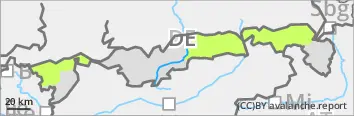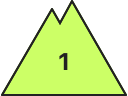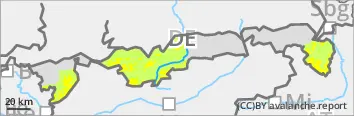
Danger level
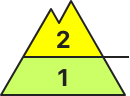 | 1800m |
|  |
|  | ||||
|  |  |

At higher altitudes, be aware of the risk of slipping on shady slopes.
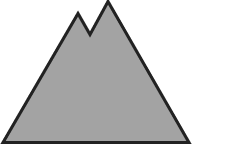
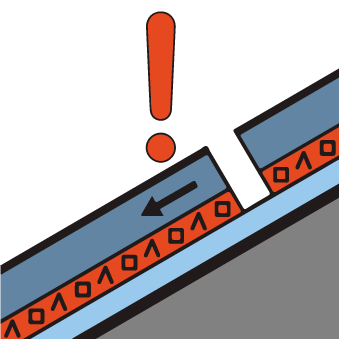
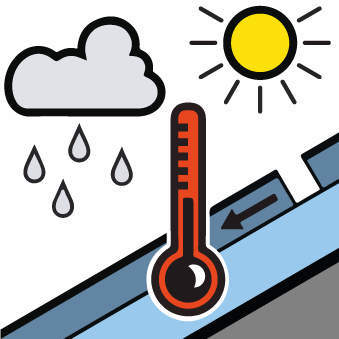
The avalanche risk is moderate above 1800 metres and low below that. Persistent weak layer is the main problem. With large additional loads, for example due to cornice breakage, even large slab avalanches can be triggered in isolated cases on shady slopes. Caution is also required at high altitudes in transition areas from little to much snow, for example when entering gullies and bowls. At medium altitudes, individual small to medium gliding avalanches are also possible on slopes with a smooth surface. During the daytime changes and with the sunlight, smaller loose snow avalanches can detach themselves from the rocky steep terrain.
Snowpack
On shady slopes at higher altitudes, weak layers of faceted crystals can be found deep in the snowpack. These are usually covered by compact or crusted can form layers of snow. Early in the morning, the snowpack is usually crust-capable of bearing loads and icy. In the sun, the snow quickly softens again during the day, causing it to lose its bond. On the shady slopes, faceted crystals can be found at higher altitudes under a thin, superficial melt-freeze crust. Towards the ground, the snowpack is wet in the middle layers. On the south side and at lower altitudes, the ground becomes more and more puffy.
Tendency
No significant change.