The avalanche risk is considerable from around 2000 m, below that it is low. In a few places, medium to large dry slab avalanches can be triggered by individuals, especially in the aspects from north-west to east. At higher altitudes (from around 2400 m) they also occur on the west and south sides. Be especially careful at the transitions from little to more snow, where weak layers in the old snowpack can be addressed and avalanches can become large. Danger areas are difficult to recognise away from obvious pillows of wind drifted snow. Caution and a defensive route choice are still advised, especially when danger signs such as booming noises, cracks and fresh avalanches occur. Individual gliding avalanches occur on steep grassy terrain. Wet loose snow avalanches and snow slabs from sunny slopes that have not yet been unloaded are also possible.
Snowpack
The snowpack can cool down well overnight and crust can form. In the morning hours, the melt-freeze crust is stable, but softens again on sunny slopes during the day. In general, the snowpack on the sunny slopes is damp or wet up to high altitudes, on shady slopes from around 2000 m there is still dry, partly soft snow, which is increasingly settling. However, the connection to the angular old snow below is still poor, weak layers can be found at the transition to the old snow as well as deeper in the old snowpack. Deep and sunny middle layers are often already snowed out.
Tendency
Little change in avalanche danger. The persistent weak layer problem continues to make the situation difficult to assess in the terrain.
Danger level
2000m
Avalanche Problem
Persistent weak layer
2000m
Persistent weak layer remains the main danger
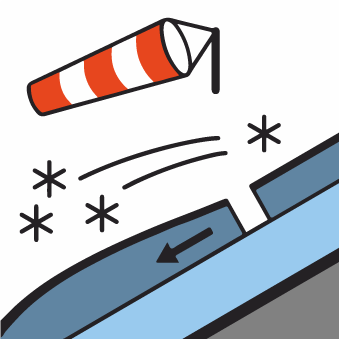
The avalanche risk is moderate above the tree line and low below. In a few places, especially in the extended northern exposures, medium slab avalanches can be triggered by individuals, especially at the transitions from little to more snow. Danger areas are difficult to recognise, which is why defensive route selection is still advised. Individual gliding avalanches occur on steep grassy terrain. Wet loose snow avalanches and snow slabs from sunny slopes that have not yet been unloaded are also possible.
Snowpack
The snowpack cools down well overnight and crusts can form. In the morning hours, the melt-freeze crust is stable, but softens again on the sunny slopes during the day. In general, the snowpack on the sunny slopes is damp or wet up to high altitudes, while on shady slopes from around 2000 metres there is still dry, sometimes soft snow that is increasingly settling. However, the connection to the angular old snow below is still poor, weak layers can be found at the transition to the old snow as well as deeper in the old snowpack. Deep and sunny middle layers are often already snowed out.
Tendency
Little change in avalanche danger. The persistent weak layer problem is only slowly weakening.
Danger level
1800m
Avalanche Problem
Persistent weak layer
1800m
Wet snow
1600m
Be aware of the persistent weak layer problem at high altitudes!
The avalanche danger is rated as moderate above 1800 metres. Wet loose snow avalanches from slopes that have not yet been discharged are still possible.
There is still a persistent weak layer problem in the northern sector: in very steep gullies and bowls on the shady slopes, triggering of dry slab avalanches is possible with large additional loads.
Snowpack
The snowpack loses firmness in the morning. The snowpack has settled. Up to the high altitudes, the snowpack became wet or moist or hard, depending on the aspect. The kinetic metamorphism (persistent weak layer problem) is still weakening the snowpack on the northern slopes of the higher elevations.
Tendency
High pressure will continue to ensure bright, sunny and dry conditions in the days that follow. At the weekend, however, Saharan dust could cause noticeable cloudiness.
Danger level
1700m
Avalanche Problem
Persistent weak layer
1700m
Wind slab
Treeline
Wet snow
2000m
Avalanche danger in high alpine regions is moderate
There are also some places in high alpine regions with blown snow, which can trigger an avalanche in particular if the load is too high. Weak layers in the snowpack are also a problem. If the load exceeds the load-bearing capacity of the deeper Weak layers, a deep and large avalanche can be triggered. There are many such weak layers, especially on axis above the forest.
Snowpack
dp.1: deep persistent weak layer dp.10: springtime scenario
The snowpack freezes at night, but becomes harder during the day, especially on Sunny slopes. As the snow warms up, it undergoes a more intense transformation on sunny slopes, which is less pronounced on the axis. In the old snow cover, several weak layers of shreds and coarse grains appear deep below the surface.
Tendency
It will clear up on Tuesday. Faster in the high alpine regions than in the mid mountains. There will be no major warming. The danger of avalanches will remain similar.
Danger level
1600m
Avalanche Problem
Persistent weak layer
1600m
Wet snow
Persistent weak layer and increased wet snow problem during daytime changes
The avalanche risk is predominantly moderate above an altitude of around 1600 metres. There are still avalanche prone locations on shady slopes in steep terrain. Here and most likely at the transition from little to more snow, slab avalanches can be triggered by mostly large additional loads. In some cases, naturally triggered avalanches of up to medium size are possible from unloaded steep slopes, with the warming of the day and plenty of sunshine, especially in the afternoon.
Snowpack
The snowpack has largely settled, with only some firmness on the surface overnight, but is otherwise moist up to high altitudes and often wet on sunny slopes. The snow surface quickly loses firmness depending on altitude and aspect. At high altitudes and on shady slopes, the snow base, fundament continues to be weakened by the kinetic metamorphism. In the middle sunny slopes, the snow depths have already decreased significantly again and, like at low altitude, are often bare.
Tendency
Note the persistent weak layer problem and daytime changes in wet snow avalanches.
Danger level
1800m
Avalanche Problem
Persistent weak layer
1800m
Wet snow
Avalanche prone locations, especially at transitions from little to much snow.
The avalanche risk is moderate above 1800 metres and low below that. Persistent weak layer is a persistent weak layer. Medium slab avalanches can be triggered on shady slopes, in particular with large additional loads. Take particular care at high altitudes in transition areas from little to much snow, for example when entering gullies and bowls.
During the daytime changes and with the sunlight, wet loose snow avalanches can release themselves from the rocky steep terrain. At medium altitudes, individual gliding avalanches are possible on slopes with smooth ground. They can also occasionally occur on shady slopes. Wet avalanches are small to medium-sized.
Snowpack
On shady slopes at higher altitudes, weak layers of faceted crystals can be found deep in the snowpack. These are usually covered by compact or crusted can form layers of snow. Early in the morning, the snowpack is partially crusted of bearing loads at medium elevations and softens in the sun during the day. Towards the ground, the snowpack is wet in the middle layers and can slide off.
Tendency
Hardly any change in avalanche danger over the next few days.
Danger level
2000m
Avalanche Problem
Persistent weak layer
2000m
Still weak old snow regionally in steep shady terrain
Avalanches can be triggered by one single winter sports enthusiast, particularly in little-skied terrain in west-, north-, and east-facing aspects, as well as on steep sunny slopes above 2600m. Danger zones occur especially in spots where the snow is relatively shallow, and in transitions from shallow to deep snow. Avalanches can trigger down to deeper layers inside the snowpack and grow to large size. A cautious route selection and maintaining safety distances between tourers in ascent and descent are recommended. On hard-frozen steep slopes, the danger of sliding and falling require special caution. During the course of the day, naturally triggered small wet-snow avalanches are possible on sunny, steep slopes. Avoid zones below glide cracks in the surface.
Snowpack
On shady slopes at higher altitudes there are large-sized cup-shaped crystals widespread in the lowermost part of the snowpack, without bonding. The fresh snow and drifts from last week blanket this poor fundament. Up to higher altitudes, a melt-freeze crust occurs, mostly capable of bearing loads until late afternoon. As a result of solar radiation and daytime warming, the snowpack softens during daytime hours.
Tendency
No significant change is anticipated. The persistent weak layer problem on shady high-altitude slopes will persist.
Danger level
Little snow, the snow is falling.
The avalanche risk is low. The snow cover is advancing rapidly. Small loose snow slides on steep meadow slopes are the exception.
Snowpack
Due to the very mild weather, the thin snowpack is damp and wet. Only on shady slopes has a melt-freeze crust formed in places. There is only a little snow up to the summit regions.
Tendency
The avalanche risk remains low.
The influence of high pressure will firm over the next few days, resulting in bright, sunny and very mild weather. At the weekend, Saharan dust could cause significant air turbidity.
Danger level
Avalanche Problem
Wet snow
Low avalanche danger. Occasional wet snow slides with warming during the day.
The avalanche risk is low. Where there are still snow reserves, wet snow or gliding sluffs may occur in a few places as the day warms up. At higher altitudes, there is an increased risk of falling in the entrance areas to steep gullies due to icy patches. These are partly covered by some new fallen snow. In the northern sector, there are still isolated avalanche prone locations in persistent weak layers at higher altitudes.
Snowpack
A melt-freeze crust forms overnight. However, due to the very mild weather phase, the snow surface is quickly soft and moist in sunny locations in the morning. In shady locations, the melt-freeze crust can also persist during the day. At higher altitudes, the snow surface is often hard and sometimes icy due to wind and rain. There is some new fallen snow above. There are still considerable amounts of wind slabs in the gullies and bowls, which are already well consolidated. Faceted crystals can weaken the snow base, fundament in the northern sector. There is little snow below 1500 metres.
Tendency
The avalanche risk remains low.
The influence of high pressure will firmness over the next few days, resulting in bright, sunny and very mild weather. The dry air masses at higher altitudes will slow down the snowmelt. At the weekend, Sahara dust could cause significant air turbidity.
Danger level
Avalanche Problem
Wet snow
Minor wet snow problem
The avalanche risk is low. In the afternoon hours, small spontaneous wet snow avalanches or gliding sluffs are still possible on the few sunny slopes that have not yet been discharged, and small wet snow avalanches can occasionally be triggered by a winter sports enthusiast. In addition, avalanches can occasionally still be triggered in persistent weak layers in the entrance areas of gullies and bowls on the shady slopes, but usually only with great additional load.
Snowpack
The snowpack is moist to wet and well set up to high altitudes. The snow surface can cool down well overnight and crust can form, but on the sunny slopes it softens again during the day. Where there was an old snowpack before the snowfall (at high altitudes on shady slopes), it still contains weak layers of large faceted crystals, especially near the ground. Low and sunny mid-altitude locations are often already snowed out.
Tendency
No change in avalanche danger. Weak daytime changes in wet snow avalanche activity.
Danger level
Avalanche Problem
Wet snow
Slight daytime changes in the risk of wet snow. Watch out for increasing sinking depths.
The avalanche risk is low. Wet snow is the main problem. Small loose snow avalanches can occasionally detach themselves from the rocky steep terrain with the sunlight. On very steep slopes of all aspects with smooth ground, individual small to medium gliding avalanches are possible. Areas under glide cracks should be avoided.
On shaded steep slopes above approx. 1700 m, medium-sized slab avalanches with a large additional load can also be triggered. The isolated avalanche prone locations are mainly at transitions from little to much snow, for example at the entrance to gullies and bowls.
Snowpack
The snowpack is soaked up to high altitudes and wet towards the ground. Overnight, a partially stable melt-freeze crust forms, which quickly softens again in the sun. Occasionally, weak layers of faceted crystals can be found deep in the snowpack on shady slopes at higher altitudes. These are usually covered by compact or crusted can form layers of snow. On the south-south side, the ground is increasingly pitting.
Tendency
The avalanche danger hardly changes.
Danger level
Persistent weak layer problem in the northern sector!
The avalanche risk is low. Wet loose snow avalanches cannot be ruled out in isolated cases on extremely steep terrain. In the Gurk and Seetal Alps, the triggering of a snow avalanche in the northern sector on extremely steep slopes cannot be ruled out.
Snowpack
The snowpack will gain some firmness during the night. In the northern sector, there is still a persistent weak layer problem in the Niedere Tauern, in the Hochschwab area but also in the Gruk and Seetal Alps above 1800 metres. Floating snow is weakening the snow layering.
Tendency
High pressure will continue to ensure bright, sunny and dry conditions in the days that follow. At the weekend, however, Saharan dust could cause noticeable clouding of the air. Avalanche risk remains the same.
Danger level
Favorable conditions, with slight daytime rise in avalanche danger
Avalanche danger is predominantly low. Isolated danger zones occur particularly in extremely steep terrain. Small avalanche triggerings are mostly possible in relatively shallow-snow areas and in transitions from shallow to deep snow. Beware the danger of sliding and falling on hard-frozen steep slopes. During the course of the day, naturally triggered small-sized avalanches are possible on sun-basked steep slopes. Avoid zones beneath glide cracks.
Snowpack
Snowpack predominantly well consolidated and stable following a night of clear skies with good outgoing radiation. A melt-freeze crust mostly capable of bearing loads. During the course of the day the uppermost layers will soften, particularly at low altitudes and on sunny slopes. No further triggerings in older weak layers of the snowpack were registered in recent days at the Avalanche Warning Service.
Tendency
Continuing favorable conditions, with a slight daytime rise in danger of wet-snow avalanches