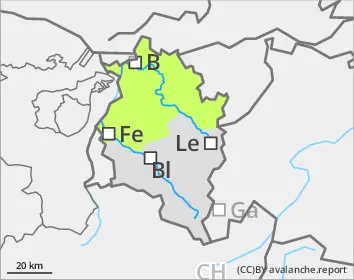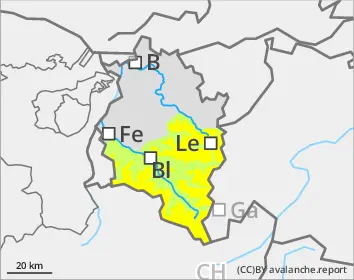
Danger level
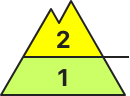 | 2000m |
|  |
|  |
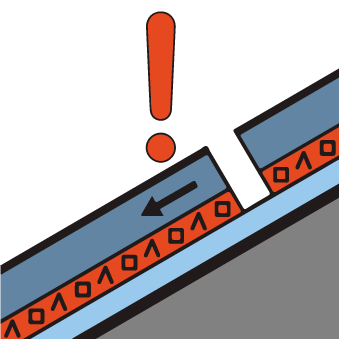

Still weak old snow regionally in steep shady terrain
Avalanches can be triggered by one single winter sports enthusiast, particularly in little-skied terrain in west-, north-, and east-facing aspects, as well as on steep sunny slopes above 2600m. Danger zones occur especially in spots where the snow is relatively shallow, and in transitions from shallow to deep snow. Avalanches can trigger down to deeper layers inside the snowpack and grow to large size. A cautious route selection and maintaining safety distances between tourers in ascent and descent are recommended. On hard-frozen steep slopes, the danger of sliding and falling require special caution. During the course of the day, naturally triggered small wet-snow avalanches are possible on sunny, steep slopes. Avoid zones below glide cracks in the surface.
Snowpack
On shady slopes at higher altitudes there are large-sized cup-shaped crystals widespread in the lowermost part of the snowpack, without bonding. The fresh snow and drifts from last week blanket this poor fundament. Up to higher altitudes, a melt-freeze crust occurs, mostly capable of bearing loads until late afternoon. As a result of solar radiation and daytime warming, the snowpack softens during daytime hours.
Tendency
No significant change is anticipated. The persistent weak layer problem on shady high-altitude slopes will persist.