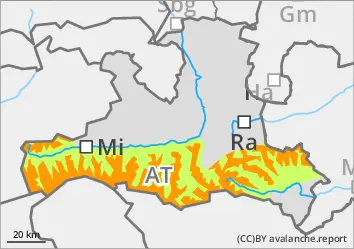
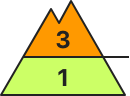
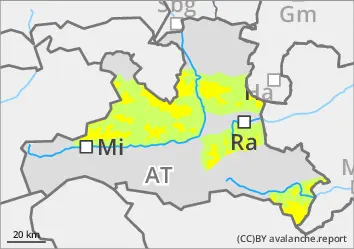
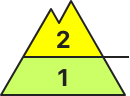
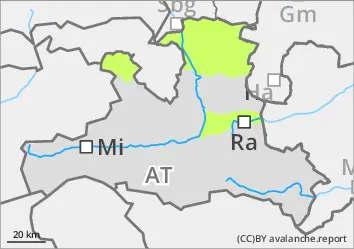
The avalanche risk is considerable from around 2000 m, below that it is low. In a few places, medium to large dry slab avalanches can be triggered by individuals, especially in the aspects from north-west to east. At higher altitudes (from around 2400 m) they also occur on the west and south sides. Be especially careful at the transitions from little to more snow, where weak layers in the old snowpack can be addressed and avalanches can become large. Danger areas are difficult to recognise away from obvious pillows of wind drifted snow. Caution and a defensive route choice are still advised, especially when danger signs such as booming noises, cracks and fresh avalanches occur. Individual gliding avalanches occur on steep grassy terrain. Wet loose snow avalanches and snow slabs from sunny slopes that have not yet been unloaded are also possible.
Snowpack
The snowpack can cool down well overnight and crust can form. In the morning hours, the melt-freeze crust is stable, but softens again on sunny slopes during the day. In general, the snowpack on the sunny slopes is damp or wet up to high altitudes, on shady slopes from around 2000 m there is still dry, partly soft snow, which is increasingly settling. However, the connection to the angular old snow below is still poor, weak layers can be found at the transition to the old snow as well as deeper in the old snowpack. Deep and sunny middle layers are often already snowed out.
Tendency
Little change in avalanche danger. The persistent weak layer problem continues to make the situation difficult to assess in the terrain.
Danger level
2000m
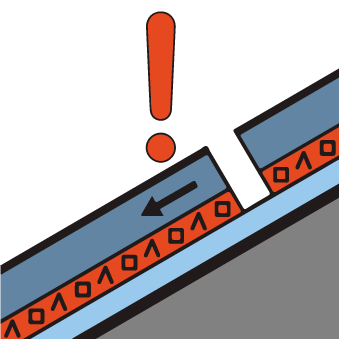
Avalanche Problem
Persistent weak layer
2000m
Persistent weak layer remains the main danger
The avalanche risk is moderate above the tree line and low below. In a few places, especially in the extended northern exposures, medium slab avalanches can be triggered by individuals, especially at the transitions from little to more snow. Danger areas are difficult to recognise, which is why defensive route selection is still advised. Individual gliding avalanches occur on steep grassy terrain. Wet loose snow avalanches and snow slabs from sunny slopes that have not yet been unloaded are also possible.
Snowpack
The snowpack cools down well overnight and crusts can form. In the morning hours, the melt-freeze crust is stable, but softens again on the sunny slopes during the day. In general, the snowpack on the sunny slopes is damp or wet up to high altitudes, while on shady slopes from around 2000 metres there is still dry, sometimes soft snow that is increasingly settling. However, the connection to the angular old snow below is still poor, weak layers can be found at the transition to the old snow as well as deeper in the old snowpack. Deep and sunny middle layers are often already snowed out.
Tendency
Little change in avalanche danger. The persistent weak layer problem is only slowly weakening.
Danger level
Avalanche Problem
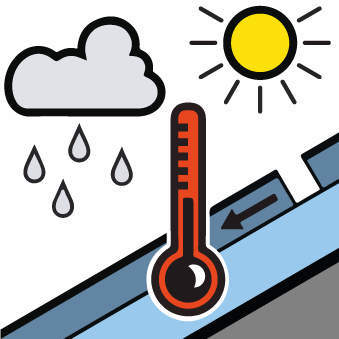
Wet snow
Minor wet snow problem
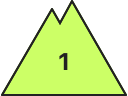
The avalanche risk is low. In the afternoon hours, small spontaneous wet snow avalanches or gliding sluffs are still possible on the few sunny slopes that have not yet been discharged, and small wet snow avalanches can occasionally be triggered by a winter sports enthusiast. In addition, avalanches can occasionally still be triggered in persistent weak layers in the entrance areas of gullies and bowls on the shady slopes, but usually only with great additional load.
Snowpack
The snowpack is moist to wet and well set up to high altitudes. The snow surface can cool down well overnight and crust can form, but on the sunny slopes it softens again during the day. Where there was an old snowpack before the snowfall (at high altitudes on shady slopes), it still contains weak layers of large faceted crystals, especially near the ground. Low and sunny mid-altitude locations are often already snowed out.
Tendency
No change in avalanche danger. Weak daytime changes in wet snow avalanche activity.