Backcountry touring terrain: weak old snow. Slight daytime rise in wet-snow activity.
In the lowermost part of the snowpack above 2000m there are marked weak layers evident. Wherever the snowpack is melt-freeze encrusted and not capable of bearing loads, avalanches can in places be triggered by one single winter sports enthusiast, particularly in little-skied terrain in west-, north-, and east-facing aspects, as well as on steep sunny slopes above 2600m. Danger zones occur especially in spots where the snow is relatively shallow, and in transitions from shallow to deep snow. In addition, below 2200m moist slab avalanches can often be triggered by winter sports enthusiasts in the weak old snow. Avalanches can trigger down to deeper layers inside the snowpack and grow to large size. On steep grass-covered slopes, isolated glide-snow avalanches are possible despite lower temperatures. Avoid zones below glide cracks in the surface. In addition, below 2200m moist wet-snow avalanches can be triggered by winter sports enthusiasts.
Snowpack
On shady slopes at higher altitudes there are large-sized cup-shaped crystals widespread in the lowermost part of the snowpack, without bonding. The deep fresh snow and drifts from last week blanket this poor fundament. During nights of clear to cloudy skies, the snowpack surface freezes only poorly. As a result of solar radiation and daytime warming, the snowpack rapidly softens during daytime hours.
Tendency
As a result of daytime warming and solar radiation, danger of wet-snow avalanches increases somewhat during the course of the day. The persistent weak layer problem persists, causing a difficult-to-calculate situation in outlying terrain.
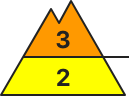
Danger level
2000m
Avalanche Problem
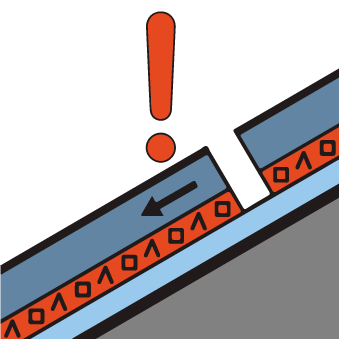
Persistent weak layer
2000m
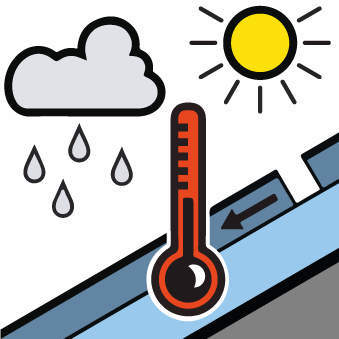
Wet snow
2200m
Combined wet and persistent weak layer problem
The avalanche risk is considerable above 2000 m and moderate below. In a few places, medium to large dry slab avalanches can be triggered by individuals (even from a distance), especially on shady slopes. Danger areas are difficult to recognise away from obvious pillows of wind drifted snow, which is why caution and a defensive choice of route is still advised. In addition, large spontaneous wet snow avalanches and avalanches triggered by people can occur in all aspects. There is a low level of sliding snow activity.
Snowpack
On the sunny slopes, the snowpack briefly carries a (more or less load-bearing) melt-freeze crust, below which it is moist up to high altitudes. There is still soft, dry snow on the shady slopes. The new and wind slab snow of the last week has settled and is often well connected to each other. However, the connection to the angular persistent weak layer below is still poor.
Tendency
The persistent weak layer problem continues to make the situation tense and difficult to calculate in the terrain. Note slight daytime changes on Tuesday.
Danger level
Avalanche Problem
Wet snow
Moderate wet snow problem
The avalanche risk is moderate. A few small, wet avalanches can occur spontaneously or be triggered by a winter sports enthusiast, and medium avalanches are still possible in isolated cases. Individual gliding avalanches are also possible. There is also a slight persistent weak layer problem from around 1600 metres. Avalanches can break in persistent weak layers, in particular with large additional loads.
Snowpack
The snowpack is moist to wet and well settled up to high altitudes. Where there was an old snowpack before the snowfall, it still contains weak layers of large faceted crystals, especially near the ground.
Tendency
Gradual decrease in avalanche danger due to melting snow. Note slight daytime changes on Tuesday.
Danger level
2200m
Avalanche Problem
Wet snow
2200m
Persistent weak layer
Treeline
Combined wet and persistent weak layer problem
The avalanche risk is moderate. In a few places, spontaneous wet snow avalanches as well as those triggered by people can occur in all aspects below around 2200 m, which usually remain medium-sized. Gliding avalanches also occur in very steep grassy terrain.
In addition, medium to large dry slab avalanches can be triggered by individuals in a few places, especially on shady slopes above the tree line. Most likely at the transition from little to more snow. Danger areas are difficult to recognise, which is why defensive route selection is still advised.
Snowpack
On the sunny slopes, the snowpack is briefly covered with a (more or less stable) melt-freeze crust, below which it is moist to wet up to high altitudes. On the shady slopes, soft, dry snow can still be found from around 1800 metres. The new and wind slab snow of the last week has settled and is often well connected to each other. However, the connection to the angular persistent weak layer below is still poor in places.
Tendency
The persistent weak layer problem is only slowly weakening and remains insidious. There will be slight daytime changes on Tuesday.
Danger level
treeline
Avalanche Problem
Persistent weak layer
Treeline
Wet snow
In the high altitudes, continue to take the persistent weak layer problem into account
The avalanche risk is moderate above the tree line and low below. In high areas on shady slopes above the tree line, small to medium-sized slab avalanches can still be triggered by winter sports enthusiasts in a few places, but usually only with a large additional load. The most likely avalanche prone locations are at the entrances to snow-covered gullies and bowls and at the transition from little to more snow. Small, wet loose snow slides or gliding avalanches can still occasionally detach themselves from unloaded hands, but many areas are already unloaded. In exposed areas, the snow surface is hard and icy in places and there is a risk of falling.
Snowpack
With the clouds at night, the snow surface can hardly cool down and is already soft and not load-bearing in the morning. Depending on the aspect, the snowpack is damp or wet up to high altitudes. On steep grassy slopes and forest embankments with large snow reserves, the entire snowpack can start to glide snow. At shady high altitudes, there are prone to triggering weak layers at the transition to the hardness of the old snowpack. This is unfavourably structured and weakened in places with embedded crusts and faceted crystals.
Tendency
There is a mixture of sun and clouds. No significant change in the avalanche danger.
Danger level
1800m
Avalanche Problem
Persistent weak layer
1800m
Wet snow
Persistent weak layer problem in shady high altitudes!
The avalanche danger is rated as moderate above 1800 metres. Wet loose snow avalanches from slopes that have not yet been discharged are still possible. The frequency of final loads has decreased.
There is still a persistent weak layer problem in the northern sector: Triggering of dry slab avalanches is possible in very steep gullies and bowls on shady slopes with large additional loads. The avalanches can tear through to the ground in the northern sector.
Snowpack
The firmness of the snowpack surface increases again briefly during the night. The expected new fallen snow is not relevant for avalanches. On the northern slopes, the kinetic metamorphism (cup crystals in the snow layer close to the ground!) continues to weaken the snowpack.
Tendency
We will remain under the influence of weak disturbances on Tuesday and Wednesday. There will be an increased risk of showers in the afternoon, especially from the Gurktal Alps to the Eisenerz Alps, with the possibility of a few centimetres of new fallen snow. However, only above 1600 metres, as the temperature level will remain high. No significant change in the avalanche risk is expected.
Danger level
1700m
Avalanche Problem
Persistent weak layer
1700m
Wind slab
Treeline
Wet snow
2000m
Avalanche danger is gradually decreasing
With a slight cooling and cloudy weather, the danger of wet snow avalanches has decreased.
However, there are still some places in the high alpine regions with blown snow where a heavy load can trigger avalanches. Weak layers in the snowpack are also a problem. If the load exceeds the load-bearing capacity of the deeper Weak layers, a deep and large avalanche can be triggered. There are many such weak layers, especially on axis above the forest.
Snowpack
dp.1: deep persistent weak layer dp.10: springtime scenario
The snowpack freezes at night, but becomes harder during the day, especially on Sunny slopes. This process will be less pronounced today. In high alpine regions, the snowpack will remain frosty during the day.
The old snow cover is made up of layers of bonded snow that are already somewhat compacted and mostly well interconnected. In the old snow cover, several weak layers of faceted snow crystals and frosted grains occur deep below the surface.
Tendency
It will clear up on Tuesday. Faster in the high alpine regions than in the mid mountains. There will be no major warming. The danger of avalanches will remain similar.
Danger level
treeline
Avalanche Problem
Persistent weak layer
Treeline
Wet snow
Weak layers in persistent weak layer!
The avalanche risk is moderate above the tree line. There are still avalanche prone locations on steep terrain, especially on shady slopes. Slab avalanches can be triggered here by large, and in places also by small additional loads. Naturally triggered damp to wet avalanches are rarely possible from very steep terrain that has not been unloaded. Medium-sized avalanches are generally possible. If deeper layers are also affected, they can occasionally become large.
Snowpack
The snowpack has settled. It is damp to wet up to high altitudes. The snow surface varies greatly depending on altitude, aspect and time of day. At high altitudes and on shady slopes, the snow base, fundament is still weakened by the kinetic metamorphism and in some places there are weak layers in older drift snow packs. In the middle elevations, the snow depths on the sunny slopes have already decreased significantly or are as bare as in the lower elevations.
Tendency
No significant change in the avalanche situation.
Danger level
1800m
Avalanche Problem
Persistent weak layer
1800m
Wet snow
2200m
Main danger: weak old snowpack
Avalanche danger above 1800m is moderate, below that altitude danger is low. One single winter sports enthusiast can trigger avalanches on very steep shady slopes above 1800m which fracture down to deeper layers of the snowpack, particularly where the melt-freeze crusts are not capable of bearing loads. Danger zones occur most often in relatively shallow-snow places and in transitions from shallow to deep snow. In addition, above 1600m isolated moist slab avalanches can be triggered by winter sports enthusiasts in the weak old snow. Avalanches can fracture down to deeper layers inside the snowpack and grow to medium size. During the daytime hours, small wet-snow and glide-snow avalanches can trigger naturally in steep sunny terrain. Avoid zones beneath glide cracks. In addition, below 2200m moist wet-snow avalanches can be triggered by winter sports enthusiasts.
Snowpack
Above 1800m on shady slopes, weak layers still occur in the lowermost part of the snowpack. During nights of clear to cloudy skies, the snowpack surface freezes only poorly. As a result of solar radiation and daytime warming, the snowpack rapidly softens during daytime hours.
Tendency
As a result of daytime warming and solar radiation, danger of wet-snow avalanches increases somewhat during the course of the day. The persistent weak layer problem persists, causing a difficult-to-calculate situation in outlying terrain.
Danger level
1600m
Avalanche Problem
Persistent weak layer
1600m
Gliding snow
2000m
Be aware of the persistent weak layer problem at higher altitudes!
The avalanche risk is moderate above 1600 metres and low below that. Persistent weak layer is a persistent weak layer. With large additional loads, medium slab avalanches can be triggered on steep slopes in the west, north and east aspects. Take particular care at high altitudes in transition areas from little to much snow, for example when entering gullies and bowls.
At medium altitudes, isolated gliding avalanches are possible on slopes with a smooth surface. Gliding avalanches can also occur on shady slopes and at any time of day or night. They can be small to medium in size.
Snowpack
In shady slopes at higher altitudes, weak layers consisting of faceted crystals can be found deeper in the snowpack. These are usually covered by compact or crusted can form layers of snow. Outgoing longwave radiation is reduced by clouds at night and moisture remains in the snowpack at medium altitudes. Towards the ground, the snowpack is partly wet and gliding snow.
Tendency
Slow decline in the wet snow problem - the persistent weak layer problem remains.
Danger level
Persistent weak layer problem in the northern sector!
The avalanche risk is low. Wet loose snow avalanches cannot be ruled out in isolated cases on extremely steep terrain. In the Gurk and Seetal Alps, the triggering of a snow avalanche in the northern sector on extremely steep slopes cannot be ruled out.
Snowpack
During the night, the snowpack gains some firmness. Depending on the aspect, the snow becomes damp or wet up to high altitudes during the day changes, which leads to a decreasing firmness and destabilisation of the snowpack. The thawing is progressing! In the northern sector, there is still a persistent weak layer problem in the Gruk and Seetal Alps above 1900 metres.
Tendency
We will remain under the influence of weak disturbances on Tuesday and Wednesday. There will be an increased risk of showers in the afternoon, especially from the Gurktal Alps to the Eisenerz Alps, with the possibility of a few centimetres of new fallen snow. However, only above 1600 metres, as the temperature level will remain high. No significant change in the avalanche risk is expected.
Danger level
Little snow, the snow is falling
The avalanche risk is low. Isolated danger areas for triggering small slab avalanches are still conceivable in the blown-in entrance areas to steep gullies and bowls on shady slopes. Small loose snow slides from slopes that have not yet been unloaded cannot be completely ruled out, but many areas have already been unloaded.
Snowpack
With the clouds at night, the snowpack can hardly consolidate and is already soft and not capable of bearing loads in the morning. Depending on the aspect, the snowpack is damp or wet up to high altitudes. At shady high altitudes, the old snowpack with crusts and embedded angular crystals is unfavourably structured and weakened in places.
Tendency
There is a mixture of sun and clouds. No significant change in the avalanche danger.