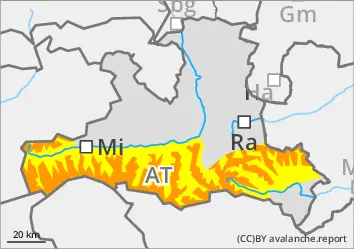
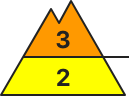
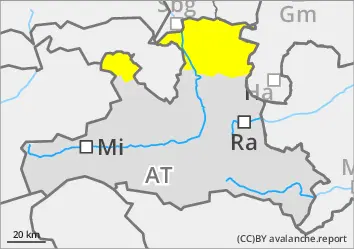
The avalanche risk is considerable above 2000 m and moderate below. In a few places, medium to large dry slab avalanches can be triggered by individuals (even from a distance), especially on shady slopes. Danger areas are difficult to recognise away from obvious pillows of wind drifted snow, which is why caution and a defensive choice of route is still advised. In addition, large spontaneous wet snow avalanches and avalanches triggered by people can occur in all aspects. There is a low level of sliding snow activity.
Snowpack
On the sunny slopes, the snowpack briefly carries a (more or less load-bearing) melt-freeze crust, below which it is moist up to high altitudes. There is still soft, dry snow on the shady slopes. The new and wind slab snow of the last week has settled and is often well connected to each other. However, the connection to the angular persistent weak layer below is still poor.
Tendency
The persistent weak layer problem continues to make the situation tense and difficult to calculate in the terrain. Note slight daytime changes on Tuesday.
Danger level
Avalanche Problem
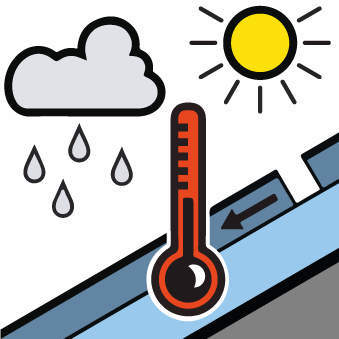
Wet snow
Moderate wet snow problem
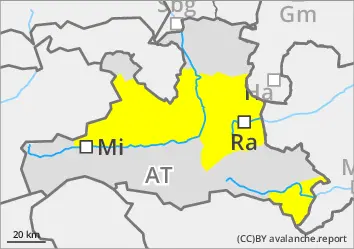
The avalanche risk is moderate. A few small, wet avalanches can occur spontaneously or be triggered by a winter sports enthusiast, and medium avalanches are still possible in isolated cases. Individual gliding avalanches are also possible. There is also a slight persistent weak layer problem from around 1600 metres. Avalanches can break in persistent weak layers, in particular with large additional loads.
Snowpack
The snowpack is moist to wet and well settled up to high altitudes. Where there was an old snowpack before the snowfall, it still contains weak layers of large faceted crystals, especially near the ground.
Tendency
Gradual decrease in avalanche danger due to melting snow. Note slight daytime changes on Tuesday.
Danger level
2200m
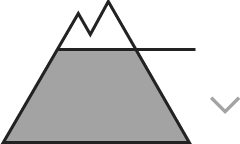
Avalanche Problem
Wet snow
2200m
Persistent weak layer
Treeline
Combined wet and persistent weak layer problem
The avalanche risk is moderate. In a few places, spontaneous wet snow avalanches as well as those triggered by people can occur in all aspects below around 2200 m, which usually remain medium-sized. Gliding avalanches also occur in very steep grassy terrain.
In addition, medium to large dry slab avalanches can be triggered by individuals in a few places, especially on shady slopes above the tree line. Most likely at the transition from little to more snow. Danger areas are difficult to recognise, which is why defensive route selection is still advised.
Snowpack
On the sunny slopes, the snowpack is briefly covered with a (more or less stable) melt-freeze crust, below which it is moist to wet up to high altitudes. On the shady slopes, soft, dry snow can still be found from around 1800 metres. The new and wind slab snow of the last week has settled and is often well connected to each other. However, the connection to the angular persistent weak layer below is still poor in places.
Tendency
The persistent weak layer problem is only slowly weakening and remains insidious. There will be slight daytime changes on Tuesday.