Tours require restraint, observe multiple starting zones
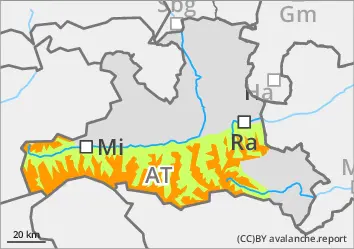
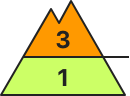
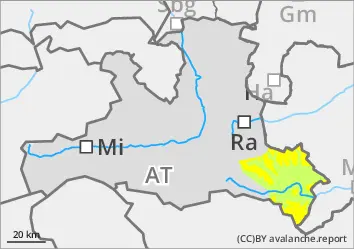
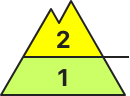
The avalanche risk is considerable above 1800 metres and low below. The situation remains precarious for winter sports.
On slopes of all aspects, medium-sized slab avalanches can easily be triggered by individuals in some places. There is a high likelihood that surface-triggered avalanches will tear through to deeper layers. In particular on north-west to north to east-facing slopes above 1800 metres. Danger areas are sometimes barely recognisable and require a defensive choice of route. Take particular care near transitions from little to much snow, behind terrain edges and in the entrance areas to steep gullies and bowls. Remote triggering is possible, and naturally triggered avalanches can occasionally occur.
Snowpack
Around 10 cm of new fallen snow falls over the course of the daytime changes. Fresh and older wind slab snow overlaid with soft layers of faceted crystals and deep frost. In areas protected from the wind, on shady slopes above around 2000 m and on sunny slopes above 2400 m, surface hoar has also been snowed in in places. Fractures occur either in soft layers near the surface or around the crust that forms the transition to the completely angular old snowpack. In general, areas with little snow alternate with sometimes considerable snowdrift accumulations in a confined space with overall snow depths that are well below average.
Tendency
As the snowfall continues, snowdrift accumulations grow.
Danger level
1800m
Avalanche Problem
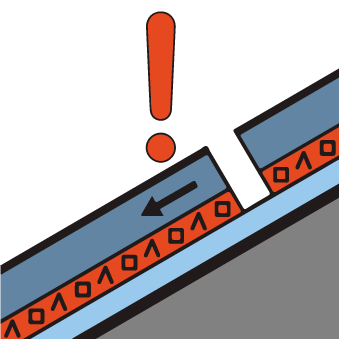
Persistent weak layer
1800m
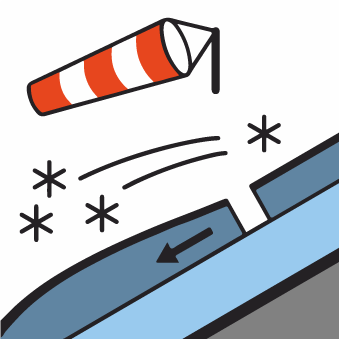
Wind slab
Treeline
Fresh wind slab snow overlays persistent weak layer problem
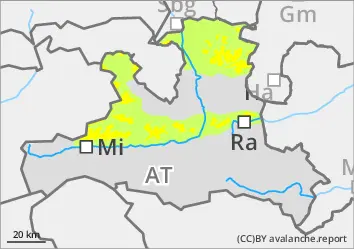
The avalanche risk is moderate above 1800 metres and low below. Especially in the sectors from north-west to north to south-east, slab avalanches can be triggered by individuals in some places. Avalanches in wind slabs usually remain small. Avalanches that are triggered in persistent weak layers in deep weak layers or tear through these weak layers can reach medium size. Be careful in particular near transitions from little to more snow and in the blown-in entrance areas to steep gullies. Avalanche prone locations are sometimes difficult to recognise and require a defensive route choice. In areas bordering on the "considerable" avalanche prone location, avalanches are more frequent and can become larger.
Snowpack
Around 5 cm of new fallen snow during the daytime changes. This and the snow from the previous days will be transported extensively. Within the snowpack, bonded snow overlays soft, angular layers. In wind-protected, shady areas above around 2000 m, surface hoar has also been snowed in in places. Fractures occur either in soft layers near the surface or around the crust that forms the transition to the completely built-up old snow foundation. In general, areas with little snow alternate with sometimes considerable snowdrift accumulations in a confined space, with overall snow depths well below average.
Tendency
With some new fallen snow and wind, fresh snowdrift accumulations continue to form.
Danger level
treeline
Avalanche Problem
Wind slab
Treeline
Persistent weak layer
2000m
Fresh and snow-covered wind slabs are prone to triggering
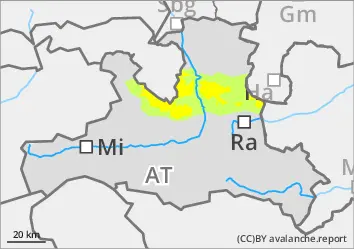
The avalanche risk is moderate above the tree line and low below. In north-west to north to south-facing slopes, avalanches can be triggered by individuals in some places. Above 2000 metres, slab avalanches are also possible in persistent weak layers in a few places. Occasionally, avalanches can reach medium size. Danger areas are located at the transition from little to more snow and generally next to blown-off areas as well as in the entrance areas to gullies and bowls filled with wind slabs. Caution in the area of terrain traps.
Snowpack
During the daytime changes, up to 15 cm of new fallen snow will fall, which will be transported extensively. Fresh, prone to triggering snowdrift accumulations form, older snowdrift accumulations are covered with snow. On shady slopes protected from the wind above around 2000 metres, surface hoar has also been covered with snow in places. At high altitudes, especially in northern and eastern aspects, bonded snow overlays a weak old snowpack of faceted crystals and deep frost.
Tendency
As the snowfall continues, snowdrift accumulations grow.
Danger level
1800m
Avalanche Problem
Persistent weak layer
1800m
Wind slab
Treeline
Beware of fresh and snow-covered wind slabs in combination with persistent weak layers
The avalanche risk is moderate above 1800 m and low below.
On slopes of all aspects, medium-sized slab avalanches can be triggered by individuals in some places. Surface-triggered avalanches can tear through to deeper layers. In particular on north-west to north to east-facing slopes above 1800 metres. Danger areas increase with altitude, some of them are barely recognisable and require a defensive choice of route. Take particular care near transitions from little to much snow, behind terrain edges and in the entrance areas to steep gullies and bowls. Cracks when stepping on the snowpack indicate danger.
Snowpack
During the daytime changes, up to 15 cm of new fallen snow falls, which is extensively transported. Fresh and older, over-snowed wind slabs overlay soft layers of faceted crystals and deep frost. In wind-protected, shady areas above around 2000 m, surface hoar has also been snowed in to some extent. Fractures occur either in soft layers near the surface or around the crust that forms the transition to the completely angular old snowpack. In general, areas with little snow alternate with sometimes considerable snowdrift accumulations in a confined space with overall snow depths that are well below average.
Tendency
As the snowfall continues, snowdrift accumulations grow.