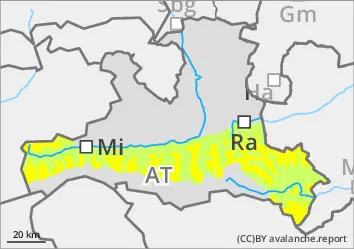
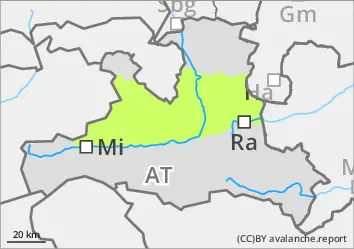
Caution: Prone to triggering wind slab and weak persistent weak layer are difficult to recognise in the terrain and should be avoided!
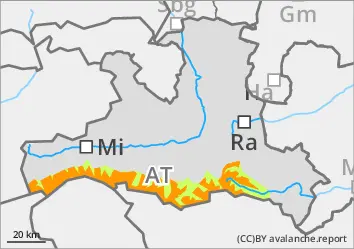
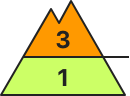
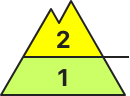
The avalanche risk is considerable above 2000 m and low below. Above around 2000 m, slab avalanches can be triggered in some places by individual winter sports enthusiasts and can be of medium size. The number and size of avalanche prone locations generally increase rapidly above the tree line. Transitions from little to more snow should be consistently avoided. Caution should also be exercised in the snow-covered entrance areas to steep gullies and bowls as well as behind terrain edges, where prone-to-triggering snow packs are located. Some of these are covered in snow and therefore difficult to recognise! Avalanches that are triggered close to the surface can tear through to deeper weak layers. Whumpfing collapsing sounds when stepping on the snowpack can indicate danger.
On sunny slopes, small loose snow slides can detach spontaneously during daytime changes.
Snowpack
There is fresh, prone-to-triggering wind slab snow on a locally very varied snow surface, which is covered by 10 - 20 centimetres of quite soft new fallen snow and is difficult to recognise. In general, there are often areas with little snow next to considerable snowdrift accumulations. The older snowdrift accumulations and the old snow surface are in places transformed and soft, in places hard as a board. The old snowpack consists of crusts with faceted crystals in between and deep rime. A break usually occurs around the uppermost crust, but can also take deeper layers with it. The total snow depth is well below average.
On the sunny slopes, the new fallen snow can lose its binding on the surface during the daytime changes.
Tendency
Hardly any decrease in avalanche danger, the weak layers in the snowpack remain prone to triggering.
Danger level
2000m
Avalanche Problem
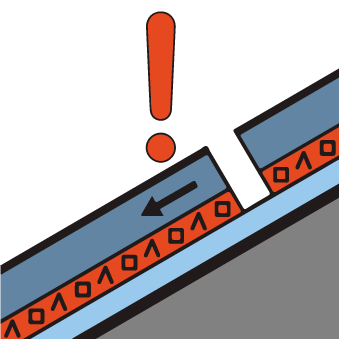
Persistent weak layer
2000m
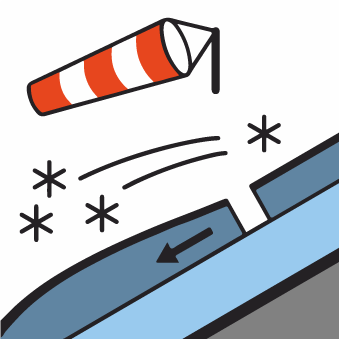
Wind slab
2000m
Prone to triggering wind slab and the weak old snowpack are difficult to recognise in the terrain.
The avalanche risk is moderate above 2000 metres and low below that. Above around 2000 m, slab avalanches can be triggered in a few places, sometimes by individual winter sports enthusiasts, and can reach medium size if they tear through the old snowpack. Some of the avalanche prone locations are covered in snow and therefore difficult to recognise. Take particular care in the west, north and east aspects, especially in the snow-covered entrance areas to steep gullies and bowls, behind terrain edges and at the transition from little to more snow. Whumpfing collapsing sounds when stepping on the snowpack can indicate danger. In addition to the risk of burial, the risk of being swept away and falling should also be taken into account.
Snowpack
On a very varied old snow surface, there are local piles of fresh pillows of wind drifted snow, some of which are prone to triggering. Some of these are covered by soft new fallen snow. In general, there are often areas with little snow next to considerable snowdrift accumulations. Older snowdrift accumulations and the old snow surface are in places transformed and soft, in places hard as a board. The old snowpack consists of crusts with faceted crystals in between and deep rime. A break usually occurs around the uppermost crust. The total snow depth is well below average.
Tendency
Hardly any decrease in avalanche danger. The weak layers in the snowpack remain prone to triggering.
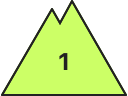
Danger level
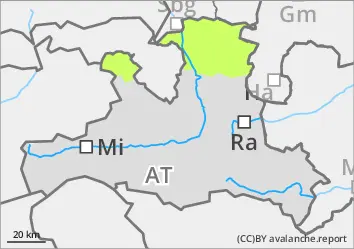
Low avalanche danger, little new fallen snow.
The avalanche risk is low. Thin pillows of wind drifted snow are occasionally lying behind the edges of the terrain. Take care in the entrance areas to steep gullies where the formerly hard or icy old snow surface has now been covered. In general, the risk of entrapment, falling and injury outweighs the risk of burial.
Snowpack
A few centimetres of new fallen snow (up to around 5 cm) and some thin wind slab cover previously bare ground, stones or the hard, icy surface of old snow. If present, the thin snow base, fundament is weakened by persistent weak layers.
Tendency
No change in avalanche danger.
Danger level
2200m
Avalanche Problem
Persistent weak layer
2200m
Weak persistent weak layers and fresh pillows of wind drifted snow are the main dangers.
The avalanche risk is low. In the extended northern and eastern exposures above around 2200 m, small slab avalanches can still be triggered by individual winter sports enthusiasts at a few avalanche prone locations. Danger areas are located at the transitions from little to more snow as well as in the blown-in entrance areas to steep gullies and bowls and behind terrain edges. Some of the avalanche prone locations are thinly covered with snow and difficult to recognise. In general, the risk of entrapment, falling and injury usually outweighs the risk of burial, but be careful in the area of terrain traps.
Snowpack
A few centimetres of new and wind-slab snow cover previously empty areas (south-facing) or a hard, sometimes icy surface of old snow. On shady slopes in particular, the mostly small snowdrift accumulations overlay a weak layer of old snowpack, with layers of faceted crystals around crusts.