Some new fallen snow covers stones and avalanche prone locations.
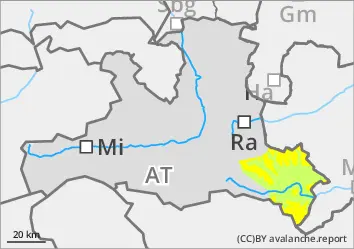
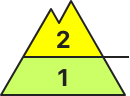
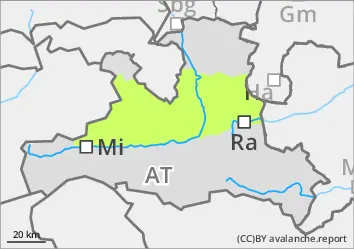
The avalanche risk is moderate above 1900 metres and low below. In skiable terrain, small to medium-sized slab avalanches can be triggered in a few places, especially in the northern sector, by low additional loads. Avalanche prone locations increase rapidly from the tree line upwards, at higher altitudes increasingly also in eastern aspects.
Snowpack
There is about 10 cm of new fallen snow on an otherwise very variable surface. There are areas with little snow next to snowdrift accumulations. These have been transformed in places to build up and are soft, in places hard as a board. The old snowpack consists of crusts with faceted crystals in between and deep rime. A break usually occurs around the uppermost crust. The total snow depth is well below average.
Tendency
Slow decline in avalanche danger.
Danger level
2000m
Avalanche Problem
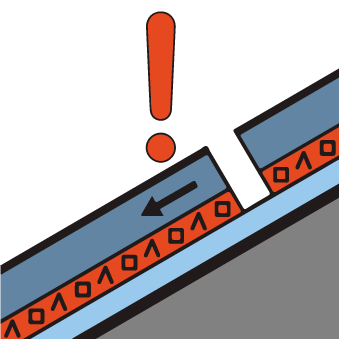
Persistent weak layer
2000m
Wind slab on weak old snowpack. Lots of stones.
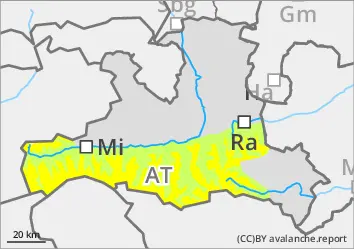
The avalanche risk is moderate above 2000 metres and low below. Slab avalanches can be triggered in a few places by low additional loads and can reach medium size. Both fresh and older drift snowpacks as well as the weakly built-up old snowpack can be disturbed, fractures can tear through. Avalanche prone locations increase rapidly from the tree line upwards. They are concentrated from west to north to east, in some places in the southern sector in the high Alps, and generally next to blown-off areas. Drift snow areas should be avoided. Whumpfing collapsing sounds when stepping on the snowpack can indicate danger. The avalanche prone locations are difficult to recognise.
Snowpack
There is 5 to 10 cm of new/wind slab snow on a locally very varied snow surface. There are areas with little snow next to considerable snowdrift accumulations. In places, these have been transformed and are soft, in places hard as a board. The old snowpack consists of crusts with faceted crystals in between and deep rime. A break usually occurs around the uppermost crust. The total snow depth is well below average.
Tendency
Slow decline in avalanche danger.
Danger level
Avalanche Problem
Persistent weak layer
Weak old snowpack with little snow.
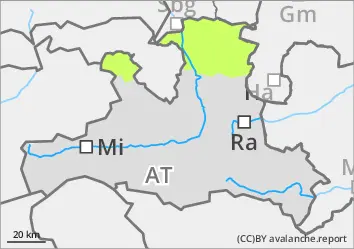
The avalanche risk is low.
At high altitudes in the northern and eastern sectors, a snow slab can still be triggered in a few places, especially with a large additional load. In extremely steep terrain, the transition from little to more snow and wind slab should be assessed critically.
Snowpack
Little snow, south-facing many apere surfaces, broad ridge and ridges often completely blown off. The snow surface is variable. The old snowpack is weak, with faceted crystals between crusts.
Tendency
No significant change in avalanche danger.
Danger level
Hardly any snow and low avalanche danger.
The avalanche risk is low. The risk of stones and slipping on icy surfaces is higher than the risk of burial.
Snowpack
Little snow, lots of patches of loose snow. Snow surface often hard to icy. Edgy persistent weak layer weakens the snow base, fundament if present.