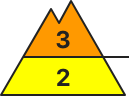
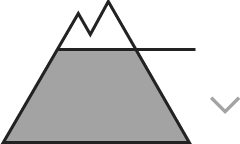
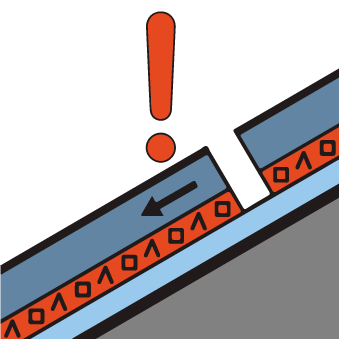
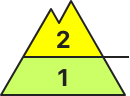
One single winter sports enthusiast can trigger slab avalanches. If they sweep away the entire snowpack they can grow to medium size. Danger zones are located especially on steep shady slopes, but also in wind-loaded gullies and bowls in all aspects. Whumpf noises and fractures on the snowpack surface are alarm signals. Activities in backcountry away from secured ski runs require experience in evaluating the terrain and assessing avalanche dangers. In addition, trigger-sensitive snowdrift accumulations require caution particularly in ridgeline and pass areas.
Snowpack
The old snowpack is overall unfavorably structured. Intermediate layers inside the snow cover are still only moderate-to-weakly bonded to each other in many places. In addition, older snowdrift accumulations are still often prone to triggering on shady high-altitude slopes.
Tendency
Avalanche danger will recede only gradually. At high altitudes, weak layers continue to be prone to triggering.
Danger level
2000m
Avalanche Problem
Persistent weak layer
2000m
Persistent weak layer
2000m
Beware: the snowpack is still prone to triggering at high altitudes
A single winter sports enthusiast can trigger slab avalanches in the old snow. If a release sweeps away the entire snowpack the avalanche can grow to medium size. Danger zones are located expecially on steep shady slopes, but also in wind-loaded gullies and bowls in all aspects. Whumpf noises and fractures on the surface are alarm signals. Also remote triggerings continue to be possible. Activities in outlying terrain away from secured ski runs require experience in evaluating the terrain and assessment of avalanche dangers. In addition, as a result of foehn-wind impact, trigger-sensitive snowdrift accumulations have been generated particularly in ridgline and pass areas.
Snowpack
The old snowpack is overall unfavorably structured. Intermediate layers inside the snow cover continue to be only moderate-to-weakly bonded together. Settling noises, fractures in the surface and avalanche releases continue to confirm the ongoing proneness to triggering of the snowpack. In addition, older snowdrift accumulations on shady high-altitude slopes can be prone to triggering in places.
Tendency
Avalanche danger will recede only gradually. At high altitudes, weak layers inside the snowpack continue to be prone to triggering.
Danger level
1900m
Avalanche Problem
Persistent weak layer
1900m
Skiable terrain is prone to triggering! Wind slab lies on weak old snowpack
The avalanche risk is moderate above around 1900 metres and low below. Slab avalanches can be triggered in some places by low additional loads and can reach medium size. Both fresh and older drift snowpacks as well as the weakly built-up old snowpack can be disturbed, whereby fractures can tear through. Avalanche prone locations are found in north-west, north to east facing steep terrain, but also in the south and west sectors and generally next to blown-off areas. They increase rapidly from the tree line upwards. Isolated remote triggering is still possible, drifting snow areas should be consistently avoided. Whumpfing collapsing sounds can indicate danger. Terrain traps are less full due to a lack of snow and are therefore more effective.
Snowpack
The local snow surface varies greatly. There are areas with little snow next to considerable snowdrift accumulations. A melt-freeze crust usually forms overnight, which softens up to high altitudes on sunny slopes. In addition, the wind slab begins to build up and is partially slightly moistened on the surface with sunlight. At the transition to the old snowpack, faceted crystals are deposited on and under the crust, which serve as a reactive weak layer. Fractures in the persistent weak layer usually occur here. Deeper in the old snowpack there is a sequence of faceted crystals, crusts and deep rime. Ridges and ridges are often completely blown off.
Tendency
As the south foehn subsides, the wind slab problem is decreasing but the persistent weak layer problem remains.
Danger level
1800m
Avalanche Problem
Persistent weak layer
1800m
Persistent weak layer problem in the northern sector!
The avalanche danger is assessed as moderate above 1,800 metres and low below that. Slab avalanches can be triggered in some places even with little additional load and can reach medium size when breaking through the persistent weak layer. The danger areas are located in particular in the north to east aspects behind ridgelines and terrain edges as well as in the entrance areas to steep gullies and bowls.
Snowpack
The stormy southerly wind from the montage caused fresh, small-scale snowdrift accumulations to form. In the higher elevations, there is fresh and older wind slab snow in the extended northern and eastern exposures on an unstable snow cover, snowpack with weak layers of faceted crystals and floating snow. On the sunny slopes, the snow cover, snowpack is mostly settled and quite compact.
Tendency
No change in the avalanche danger.
Thursday will be mostly sunny and the wind will blow from the south.
Danger level
1800m
Avalanche Problem
Persistent weak layer
1800m
Windslab snow and weak old snowpack with low snow cover
The avalanche risk is moderate above 1800 metres and low below. Slab avalanches can be triggered in some places by small additional loads, but remain predominantly small. Avalanche prone locations increase rapidly above the tree line, at higher altitudes increasingly also in south-eastern aspects. Whumpfing collapsing sounds when stepping on the snowpack can indicate danger. During daytime changes, there is a low risk of small loose snow avalanches on sunny slopes. Terrain traps are less full due to lack of snow and therefore more effective.
Snowpack
The local snow surface varies greatly. There are areas with little snow next to considerable snowdrift accumulations. A melt-freeze crust usually forms overnight, which softens up to high altitudes during the daytime changes on the sunny slopes. In addition, fresh wind slab snow begins to build up and is partially slightly soaked on the surface with sunlight. Where there is an old snowpack, there are faceted crystals on and under the crust at the transition to it, which can serve as a reactive weak layer. Fractures in the persistent weak layer usually occur here. Deeper in the old snowpack there is a sequence of faceted crystals, crusts and deep rime. The total snow depth is well below average.
Tendency
As the wind dies down, the danger within the stage decreases.
Danger level
1600m
Avalanche Problem
Persistent weak layer
1600m
Long-lasting, weak layers in persistent weak layer.
The avalanche danger is moderate above 1600 metres and low below that. The main problem is a persistent weak layer. Dry slab avalanches can be triggered in places by a small additional load. Avalanche prone locations can be found at the transition from little to much snow, for example at the entrance to gullies and bowls. Slab avalanches can reach medium size, especially on snowy eastern and northern slopes.
Snowpack
Above approx. 1600 m, bonded snow lies on built-up layers, often in the area of surface crusts. These layers are still prone to triggering in places. The snowpack base consists mainly of faceted crystals. Up to medium altitudes, the snow surface is dominated by partly stable crust and thin breakable crust at higher altitudes. On the sunny slopes, it is frozen hard in the morning and firns up during the daytime changes. At the highest elevations there is some small-scale wind slab. The snow depths are below average.
Tendency
Slow decline in avalanche danger.
Danger level
treeline
Avalanche Problem
Persistent weak layer
Treeline
Moderate avalanche danger at higher altitudes
Older drifts from last week and unfavorably structured intermediate layers inside the snowpack are still prone to triggering in places at high altitudes. Winter sports enthusiasts can trigger small, in isolated cases medium-sized avalanches in wind-loaded zones, particularly on steep W-N-E facing slopes and in transitions from shallow to deep snow, for example at the entry into gullies and bowls.
Snowpack
Bonding of the most recent fresh snow and drifts to the often faceted, expansively metamorphosed old snowpack surface and to unfavorably structured layers inside the snowpack is often only moderate. Due to higher temperatures the snow at low and intermediate altitudes is moist and the snowpack surface melt-freeze encrusted in early morning. At low altitudes there is little snow on the ground.
Tendency
Avalanche danger will recede only gradually.
Danger level
treeline
Avalanche Problem
Persistent weak layer
Treeline
Persistent weak layer problem - moderate avalanche danger!
The avalanche risk remains moderate in some areas above the tree line. Attention must still be paid to steep slopes adjacent to the ridgeline, transitions, terrain edges and steep bowls and gullies, especially in the northern and eastern sectors. Slab avalanches of up to medium size can still be triggered here in places even with low additional loads. Avoid small-scale fresh drifts caused by southerly winds, especially at higher elevations.
Snowpack
Local wind slabs and bonded snow lie on an unstable old snowpack that has been transformed by building up. Easily accessible weak layers are present in the form of faceted crystals and/or floating snow. At higher elevations, fresh, small-scale but easily disturbed drifts may be present. In general, there is little snow and the snow cover, snowpack is very unevenly distributed. In addition to completely blown away areas, there are also well-filled areas.
Tendency
Still no significant change.
Danger level
2000m
Avalanche Problem
Persistent weak layer
2000m
Weak old snowpack with low snow cover
The avalanche risk is moderate above 2000 metres and low below. Slab avalanches can be triggered in some places by low additional loads and can be small to medium in size. At higher altitudes, older wind slabs are still prone to triggering and avalanches triggered on the surface can tear through to the ground. Avalanche prone locations are concentrated in north-west to north to east-facing steep terrain. They increase rapidly in size and frequency with altitude, especially next to blown-off areas. Whumpfing collapsing sounds when stepping on the snowpack can indicate danger. In the afternoon, there is a low risk of spontaneous loose snow avalanches in the southern sector. Terrain traps are less full due to lack of snow and therefore more effective.
Snowpack
The local snow surface varies greatly. There are areas with little snow next to considerable snowdrift accumulations. A melt-freeze crust usually forms overnight, which softens up to summit level on the sunny slopes during the daytime changes. In addition, fresh wind slab snow begins to build up and is partially slightly soaked on the surface with sunlight. Where an old snowpack is present, there are faceted crystals on and under the crust at the transition to it, which can serve as a reactive weak layer. Fractures in the persistent weak layer usually occur here. Deeper in the old snowpack there is a sequence of faceted crystals, crusts and deep rime. The total snow depth is well below average.
Tendency
No significant change in avalanche danger.
Danger level
Avalanche Problem
Wet snow
Low risk of small, wet avalanches
The avalanche risk is low. Individual small wet avalanches can spontaneously release from very steep terrain with the sun's rays. Terrain traps are less full due to a lack of snow and are therefore more effective.
Snowpack
Where there is still snow, the snowpack is moist to wet due to mild air and sunlight, depending on the altitudes, and closes with a melt-freeze crust, which forms a steep sunny slope during the day, but otherwise often remains hard and icy. The snow base, fundament is sometimes weakened by persistent weak layers.
Tendency
No significant change in avalanche danger.
Danger level
1600m
Avalanche Problem
Persistent weak layer
1600m
Be aware of the risk of falling on hard frozen surfaces.
The avalanche risk is low. Smaller avalanches can be triggered in persistent weak layers, especially with large additional loads. The few avalanche prone locations are found on very steep slopes in the northern and eastern aspects, especially when entering gullies and bowls.
Snowpack
Up to high altitudes, the snowpack has crusted can form on the surface. At higher altitudes, bonded snow lies in places on angular, built-up layers. On the sunny slopes, the hard-frozen snowpack softens on the surface during the daytime changes. Larger areas here are already bare again. Overall, there is little snow, ground contact is to be expected everywhere.
Tendency
The avalanche danger remains low.
Danger level
Be aware of the risk of falling in steep, partly icy areas adjacent to the ridgeline, crest or summit and in crusted can forms.
The avalanche risk is low. In below-average snow conditions, there are only individual avalanche prone locations for small slab avalanches in extremely steep, on shady slopes above the tree line, which can be triggered by large additional loads. The risk of falling in crusted canyons and in steep, partly icy areas adjacent to the ridgeline, crest or summit is much higher than the risk of burial.
Snowpack
The snowpack is well below average for the time of year. In sunny slopes, it is mostly bare beyond the tree line. On shady slopes, the thin snow surface is crusted can form and hard, sometimes icy. At higher altitudes it is mostly blown off, only in areas sheltered from the wind is there a little more snow. In extremely steep gullies on shady slopes, angular shapes can weaken the snow base, fundament. Above this, however, there is usually only a little snow.
Tendency
The avalanche danger remains the same.
The high pressure weather will continue until Saturday. The wind will be weak to moderate in the Ybbstal Alps and moderate to strong from the south-west from the Rax-Schneeberg area to the Hochwechsel. Clouds are already gathering on Saturday. From today's perspective, an Adriatic low is expected on Sunday and Monday, which could bring a significant amount of new snow. However, the forecast is still very uncertain.
Danger level
Avalanche Problem
Persistent weak layer
Low avalanche danger, isolated avalanche prone locations in shady slopes
The avalanche danger is low. In extremely steep and shady slopes above the tree line, the triggering of small slab avalanches cannot be completely ruled out. The risk of injury and falling generally outweighs the risk of burial. In general, be careful in the hardness or icy entrance areas to steep gullies.
Snowpack
The snow surface is crusted and hard, during the day it hardly softens even on the sunny slopes. The snow base, fundament is set and compact. In extremely steep shady-slope gullies, the snow base, fundament can be partially weakened by angular shapes, but these areas are rare.
Tendency
No change in the avalanche danger. Thursday will be mostly sunny and the wind will blow from the south.
Danger level
Isolated avalanche prone locations on steep shady slopes
Avalanche danger is low. Isolated danger zones are located on extremely steep shady slopes. Small-sized, in isolated cases medium-sized avalanches can be triggered even by minimum additional loading. Danger zones occur mostly in transitions from shallow to deep snow, for example, at the entry point into gullies and bowls. The risks of being swept along and forced to take a fall require caution.
Snowpack
The snowpack surface is melt-freeze encrusted in early morning, then softens up during the day, particularly on sunny slopes. At low altitudes there is little snow on the ground. South-facing slopes are becoming increasingly bare of snow.
Tendency
No significant change anticipated
Danger level
treeline
Avalanche Problem
Persistent weak layer
Treeline
Avalanche danger is low
Particularly near the ridges, areas of blown snow have formed, under which the snowpack is sheared off. In particular, even a light load can cause the Weak layer to collapse, in some cases even slipping into a small, folded avalanche.
Snowpack
dp.1: deep persistent weak layer
Snow is scarce and local conditions are quite variable. A crust has formed on the surface in some places, which in many places also bears the weight of sand. In the axis, the snowpack is mostly dry, compacted and hard on the surface, and completely cut at depth. Ridges and peaks are in many places blown down to a crusted or icy base.
Tendency
Avalanche conditions will remain similar in the coming days. The weather will get worse over the weekend.