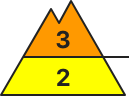
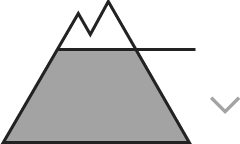
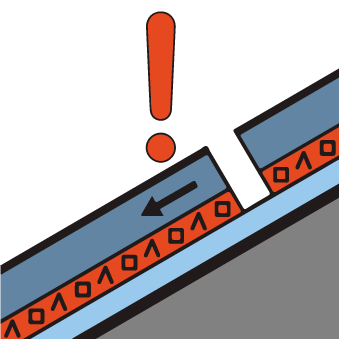
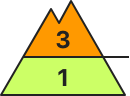
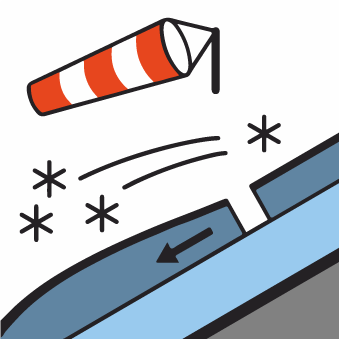
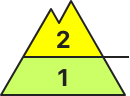
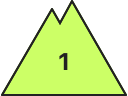
One single winter sports enthusiast can trigger slab avalanches in the old snow. When they sweep away the entire snowpack, the avalanches can grow to medium size. Danger zones occur especially on steep shady slopes, but also in wind-loaded gullies and bowls in all aspects. Whumpf noises and fractures on the surface are alarm signals. Also remote triggerings continue to be possible. In addition, freshly generated snowdrifts in higher-altitude pass and ridgeline zones require caution. Activities in backcountry require experience in evaluating the terrain and assessing avalanche danger.
Snowpack
As a result of often strong-velocity southerly winds, fresh snowdrift accumulations have been generated in ridgeline terrain and pass zones which are prone to triggering. Bonding of the most recent fresh snow and drifts to the often faceted, expansively metamorphosed old snowpack surface and inside the unfavorably structured layers of old snow continues to be moderate-to-weak. In addition, layers inside the fresh snow and drifted snow masses from last week are often still prone to triggering. Remote triggerings, settling noises, fractures on the surface continue to confirm the trigger-sensitivity.
Tendency
No significant change is anticipated. Layers of old snow remain prone to triggering at high altitudes.
Danger level
2000m
Avalanche Problem
Wind slab
2000m
Danger areas in the wind slab next to the blown-off areas
The risk of avalanches increases rapidly with altitude from around 1800 metres and is considerable above 2000 metres.
Slab avalanches can be triggered in some places by small additional loads and can reach medium size. Avalanche prone locations are concentrated in the north-west to north-east facing steep terrain, but sometimes also in the east and south sectors, behind terrain edges and in gullies and bowls. They increase rapidly in size and frequency with altitude. The wind slabs are often located directly next to blown-off areas, are easily recognisable and should be avoided at all costs. Cracks and whumpfing collapsing sounds when walking on the snow cover, snowpack are a sign of danger.
Snowpack
Under the influence of mild air and sunlight, the snow cover, snowpack has settled and become cardboardy up to around 2000 metres. It has at least a thin melt-freeze crust in the morning. In the wind slabs, fresh drift snow lies on a leeward layer of old snow that is often still soft in the higher altitudes and is prone to triggering. Further weak layers of faceted crystals and deep rime lie in the persistent weak layer below and can be activated occasionally by surface avalanches. The total snow depth is still well below average in many places. Broad ridge and ridges are often completely blown off.
Tendency
The southerly wind will continue to pick up on Sunday and bring extensive transport. This means a pronounced wind slab problem.
Danger level
2200m
Avalanche Problem
Wind slab
2200m
Persistent weak layer
In high alpine regions, there are more dangerous places with blowing snow
The most dangerous places are those with blown snow, where a heavy load can trigger a mostly small, blocky Avalanche. Greater caution is needed in ravines and gullies where there may be more blown snow.
Snowpack
dp.4: cold following warm / warm following cold
The snow base is local, with little snow overall. On the sunny slopes of the mid-mountains, the snow is more variable, with land patches appearing. Elsewhere, the snowpack is mostly dry and little transformed, with some drifting at the top. Ridges and peaks are in many places blown down with a hard and crusty snow base.
Tendency
Weather and avalanche conditions will remain similar in the coming days.
Danger level
treeline
Avalanche Problem
Wind slab
Treeline
Moderate avalanche danger at higher altitudes
Older and small-sized freshly generated snowdrift accumulations are often still prone to triggering at high altitudes. Winter sports enthusiasts can trigger small, in isolated cases medium sized slab avalanches in wind-loaded zones, particularly on steep W-N-E facing slopes and in gullies and bowls. At lower altitudes, wet snowslides and small avalanches will be possible.
Snowpack
The most recent fresh fallen snow and snowdrifts were able to settle further due to higher temperatures. Bonding to the often faceted, expansively metamorphosed snowpack surface and inside the unfavorably structured layers of old snow is often only moderate. In addition, layers inside the fresh snow and drifted snow from last week are often still prone to triggering. As a result of higher temperatures, the snow at low and intermediate altitudes is moistend and the snowpack surfact is melt-freeze encrusted in early morning. At low altitudes there is only little snow on the ground.
Tendency
No significant change is anticipated.
Danger level
1800m
Avalanche Problem
Wind slab
1800m
The wind slab is easily recognisable - avoid it consistently
The avalanche danger is moderate above around 1800 metres and low below.
Small to medium slab avalanches can be triggered in very steep terrain by low additional loads. Most avalanche prone locations are on north-west, north to south-east facing slopes, behind ridges and in gullies and bowls. The wind slab is easily recognisable and should be avoided. Cracks and whumpfing collapsing sounds when walking on the snow cover, snowpack indicate danger.
Snowpack
Under the influence of mild air and sunlight, the snow cover, snowpack has settled and become cardboardy up to around 2000 metres. In the morning, it has at least a thin crust of melt or rain ice. At higher altitudes, older wind slabs are still prone to triggering in places. The transition to the old snowpack (faceted crystals on/under the crust) usually serves as a weak layer. It consists of layers of faceted crystals, deep rime and melt-freeze crusts. Surface-triggered avalanches can tear through to the ground. The total snow depth is still well below average. Ridges and ridges are often completely blown off.
Tendency
To the north of the main Tauern ridge, the southerly foehn will be stormy in places. Increase in avalanche prone locations there due to fresh wind slab.
Danger level
1600m
Avalanche Problem
Persistent weak layer
1600m
Individual winter sports enthusiasts can trigger avalanches.
The avalanche danger is moderate above 1600 metres and low below that. The main problem at higher altitudes is a persistent weak layer. Dry slab avalanches can be triggered in some places by a small additional load. Avalanche prone locations are at the transition from little to much snow, for example at the entrance to gullies and bowls. Slab avalanches can reach medium size, especially on snowy eastern and northern slopes.
Wet snow can also be problematic during daytime changes. Small, wet avalanches can detach themselves, especially when exposed to sunlight in very steep, extreme terrain.
Snowpack
The snow cover, snowpack is increasingly settling in mild temperatures. In places, old snow packs lie on weak, built-up layers, often in the area of crusts. At high altitudes, the snowpack base consists of faceted crystals. Up to medium elevations, the snow cover, snowpack is soaked through to the ground in many places. The snow surface is crusted can form in the morning and softens on the sunny slopes during the daytime changes.
Tendency
Slow decline in avalanche danger.
Danger level
2000m
Avalanche Problem
Wind slab
2000m
Avoid easily recognisable wind slabs
The avalanche danger is moderate above 2000 metres and low below. Small to medium slab avalanches can still be triggered in very steep terrain by low additional loads. Most avalanche prone locations are on north-west, north to south-east facing slopes, behind ridges and in gullies and bowls. The wind slab is easily recognisable and should be avoided. Cracks and whumpfing collapsing sounds when walking on the snow cover, snowpack indicate danger.
Snowpack
Under the influence of mild air and sunlight, the snow cover, snowpack has settled and become cardboardy up to around 2000 metres. In the morning it has at least a thin melt-freeze crust, and up to around 1900 metres it also has a crust of rain ice. At higher altitudes, older wind slab is still prone to triggering in places. The transition to the old snowpack (faceted crystals on/under the crust) usually serves as a weak layer. It consists of layers of faceted crystals, deep rime and melt-freeze crusts. Surface-triggered avalanches can tear through to the ground. The total snow depth is still well below average. Ridges and ridges are often completely blown off.
Tendency
Little change in most of the region. From the Steinberge to the Gosaukamm, the southerly foehn is picking up. There is an increase in avalanche prone locations due to fresh wind slab.
Danger level
Avalanche Problem
Persistent weak layer
Low avalanche danger. Poor snow layering on the north side!
The avalanche danger is low.
In the extremely steep north-facing gullies at high altitudes, the possibility of a snow slab being triggered cannot be ruled out.
Snowpack
On the north side, the kinetic metamorphism weakens the snow base, fundament. Angular shapes or cup crystals form weak layers. If an avalanche is triggered in the northern sector, the snow cover, snowpack tears through to the ground. A melt-freeze crust has formed on the sunny slope, but it is not always stable.
Tendency
The avalanche danger remains low.
At the weekend, the high fog layer south of the Niedere Tauern and Hochschwab will become thicker, and at least occasionally the mountain ranges will be covered in fog up to an altitude of 1500 metres.
Danger level
1600m
Avalanche Problem
Persistent weak layer
1600m
Few avalanche prone locations.
The avalanche danger is low. Persistent weak layer is a persistent weak layer. Small avalanches can be triggered occasionally with little additional load. Avalanche prone locations can be found on very steep slopes in the northern and eastern aspects.
With sunlight, wet avalanches can occasionally release on their own in very steep terrain. They remain small.
Snowpack
Up to high altitudes, the snow cover, snowpack is soaked to the ground in many places and crusted can form on the surface. On sunny slopes, it softens during the daytime changes. At higher elevations, older wind slabs are lying on dry, angular layers in places. The snow depths are below average.
Tendency
The avalanche danger remains low.
Danger level
Low avalanche danger, isolated avalanche prone locations in shady slopes
The avalanche danger is low. In extremely steep shady slopes above the tree line, small slab avalanches cannot be completely ruled out. The risk of injury and falling generally outweighs the risk of burial. Take particular care in the hardness or icy entrance areas to steep gullies.
Snowpack
The snow surface is crusted can form and hard, during the day it only softens a little on extremely steep slopes on the sunny slopes. The snow base, fundament is mostly set and compact, but due to the moisture input of the past few days, it can still be damp up to the higher elevations. In extremely steep shady slopes, the snow base, fundament can be weakened by angular shapes, but these areas are rare. In general, the snow cover is below average, with often only a few centimetres of snow covering the ground below the tree line.
Tendency
The avalanche risk remains low. With a slight foehn tendency, temperatures will remain positive in the Ybbstal Alps for the time being. It will be slightly cooler in the Schneeberg and Rax areas.
Danger level
Avalanche Problem
Wind slab
Persistent weak layer
Avalanche danger is low
There are places with blown snow, where In particular a heavy load can trigger a mostly small Avalanche. Blown snow can also occur in gullies and gullys.
Snowpack
dp.4: cold following warm / warm following cold
The snow base is local, with little snow overall. On the sunny slopes of the mid-mountains, the snow is more variable, with land patches appearing. Elsewhere, the snowpack is mostly dry and little transformed, with some drifting at the top. Ridges and peaks are in many places blown down with a hard and crusty snow base.
Tendency
Weather and avalanche conditions will remain similar in the coming days.
Danger level
2000m
Avalanche Problem
Persistent weak layer
2000m
Avoid avalanche prone locations in the steep terrain at high altitudes!
The avalanche risk is predominantly classified as low. Slab avalanches of up to medium size can be triggered by large additional loads in only a few places in the terrain at high altitudes, in very to extremely steep terrain. There are avalanche prone locations mainly in areas adjacent to the ridgeline and in steep, filled-in bowls and gullies. Occasionally, small wet loose snow avalanches from extremely steep terrain cannot be completely ruled out.
Snowpack
The snow cover, snowpack was able to settle with the mild temperatures and incoming radiation. Weak layers may still be present at high altitudes. The snow base, fundament is weakened by crystalline forms that have been transformed by building up. Depending on the hardness and aspect, the snow surface varies in hardness, sometimes crust can form and can soften somewhat, especially on sunny slopes.
Tendency
No significant change in avalanche danger.
Danger level
Avalanche Problem
Wet snow
Low risk of small, wet avalanches
The avalanche risk is low. Individual wet and predominantly small avalanches can spontaneously break loose from very steep terrain with the sunlight.
Snowpack
The snow cover, snowpack is moist to wet due to rainfall, mild air and sunlight, depending on the altitudes, and closes with a crust of melt or rain ice, which can rise during the day. The snow base, fundament is partially weakened by persistent weak layers.
Tendency
No significant change on Sunday. A moderately strong southerly wind is not able to move the snow.
Danger level
2000m
Avalanche Problem
Persistent weak layer
2000m
Unfavourable snow layering in the northern sector!
The avalanche danger is assessed as low. There are few avalanche prone locations in the east and north sectors, especially behind ridgelines, terrain edges and in extremely steep gullies and bowls (persistent weak layer problem!). Occasional slabs can be triggered as small to medium slab avalanches due to large additional loads.
Snowpack
The snow cover, snowpack has largely settled due to the continued warmth. In the high altitudes, older wind slab lies on angular forms in the northern and eastern exposures. Weak layers are mainly found in the old snowpack (unstable layer of faceted crystals). In the foundation of the snow cover, kinetic metamorphism (floating snow) weakens the stability. On the sunny slopes, the snowpack is again becoming more stable. A non-load-bearing crust has formed in the sunny slopes.
Due to the wind from the south, fresh snowdrift accumulations are forming occasionally in the high alpine regions (Schladminger Tauern - Dachstein).
The snow depths are still below average.
Tendency
Colder on Sunday, still foehn in the northern Alps. Clouds and fog on the southern side of the Alps will soften during the day.
On the north side, the risk of slush will remain at high altitudes.