Increasingly unfavourable snow layering with altitude.
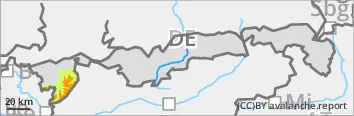
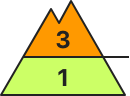
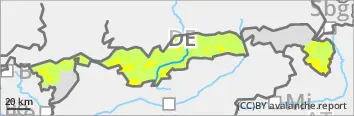
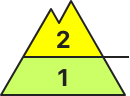
The avalanche danger is considerable above 1600 metres, below that it is low. The main problem at higher altitudes is a persistent weak layer. Dry slab avalanches can be triggered in some places by small additional loads. Avalanche prone locations are mainly on steep slopes with aspects from north-west to east to south-east as well as in gullies and bowls at the transition from little to much snow. The number and extent of avalanche prone locations increase with altitude. Slab avalanches can occasionally become large.
Wet snow is also problematic during daytime changes. Wet avalanches can detach themselves in very steep terrain, especially when exposed to sunlight. They can reach small to medium size.
Snowpack
Older, thick drift snowpacks lie in the upper part of the snow cover, in places on soft, angular layers or surface hoar, often in the area of crusts. At high altitudes, the base of the snowpack consists of faceted crystals. Up to high altitudes, the snow cover, snowpack is soaked through to the ground in many places. A melt-freeze crust forms on the surface overnight at mid-altitudes and on sunny slopes at high altitudes. On sunny slopes, it softens again during the daytime changes, causing the snow to lose its bond.
Tendency
Slow decline in avalanche danger.
Danger level
1600m
Avalanche Problem
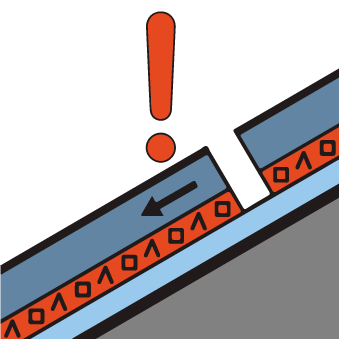
Persistent weak layer
1600m
Wet snow
Snow cover tests can help to assess the problem of old snow in the terrain.
The avalanche danger is moderate above 1600 metres and low below that. The main problem at higher altitudes is a persistent weak layer. Dry slab avalanches can be triggered in some places by low additional loads. Avalanche prone locations are mainly on steep slopes with aspects from north-west to east to south-east as well as in gullies and bowls at the transition from little to much snow. The number and extent of avalanche prone locations increase with altitude. Slab avalanches can be of medium size.
Wet snow is also problematic during daytime changes. Small to medium-sized, wet avalanches can release themselves in very steep terrain, especially when exposed to sunlight.
Snowpack
Older drift snow packs lie in the upper part of the snow cover, in places on weak, built-up layers, often in the area of crusts. At high altitudes, the snowpack base consists of faceted crystals. In many places, the snow cover, snowpack is soaked through to the ground up to high altitudes. A melt-freeze crust forms on the surface overnight at mid-altitudes and on sunny slopes at high altitudes. On sunny slopes, it softens again during the daytime changes, causing the snow to lose its bond. Snow depths are below average, especially in the east.
Tendency
Slow decline in avalanche danger.
Danger level
Avalanche Problem
Wet snow
Persistent weak layer
1600m
Few avalanche prone locations.
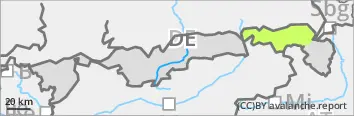
The avalanche danger is low. Wet snow is the main problem. Especially with sunlight, wet avalanches can detach themselves in very steep terrain and usually remain small.
In addition, smaller slab avalanches can occasionally be triggered in persistent weak layers at higher altitudes. Avalanche prone locations are mainly on very steep slopes in the northern and eastern aspects.
Snowpack
Up to high altitudes, the snow cover, snowpack is soaked through to the ground in many places. A melt-freeze crust forms on the surface overnight. On the sunny slopes, it softens again during the daytime changes, causing the snow to lose its bond. At higher altitudes, older wind slab snow is still lying on dry, angular layers in places. The snow depths are below average.