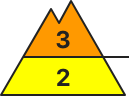
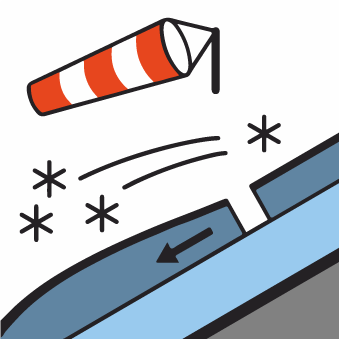
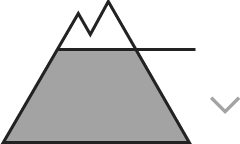
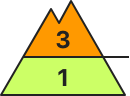
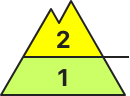
The avalanche danger is considerable above 1,800 metres and moderate below. The main problem at higher altitudes is wind slab avalanches. Slab avalanches can be triggered on steep slopes with aspects from north-west to east to south as well as in gullies and bowls with little additional load. The number of avalanche prone locations increases with altitude and avalanches can become large in places at higher altitudes in areas with more snow.
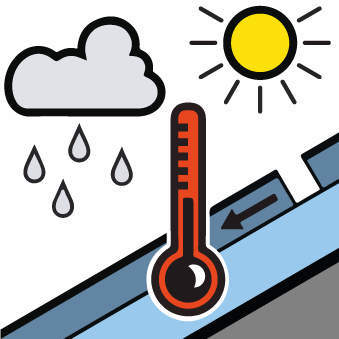
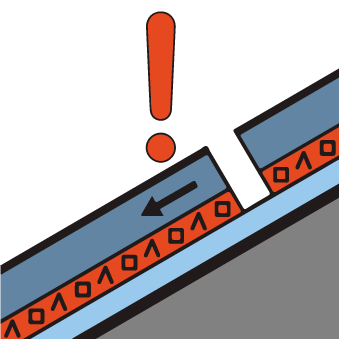
Wet snow is also problematic. Loose snow, gliding snow and slab avalanches can detach themselves in all aspects, especially at medium altitudes (1000 m - 2000 m). At high altitudes, southern exposures are particularly affected when the sun comes out. Wet avalanches can reach medium size.
Snowpack
Particularly at high altitudes, fresh small and sometimes thick older snow packs lie on soft layers or surface hoar. The snowpack base here consists of faceted crystals. The warm temperatures and solar radiation lead to further soaking of the snow cover, even at high altitudes, causing the snow to lose its bond. Up to high altitudes, the snow cover, snowpack is wet to the ground or at least moist near the surface. A melt-freeze crust forms on the surface overnight, which thaws again during the daytime changes.
Tendency
Slow decline in avalanche danger.
Danger level
2000m
Avalanche Problem
Persistent weak layer
2000m
Wind slab
2000m
Considerable avalanche danger at high altitudes
One single person can trigger slab avalanches in the old snow. If the fracture sweeps away the entire snowpack, the release can grow to medium size. Danger zones occur especially on steep shady slopes and in wind-loaded gullies and bowls in all aspects. Whumpf noises and fractures on the snowpack surface are alarm signals. Also remote triggerings cannot be ruled out. In addition, small-sized fresh snowdrifts require special caution in high altitude ridgeline terrain and pass zones. Activities in backcountry demand experience in evaluating the terrain and assessing dangers.
Snowpack
The fresh fallen snow and drifts from the most recent period of precipitation have settled further as a result of higher temperatures. Bonding to the often loosely-packed, faceted, expansively metamorphosed old snowpack surface, often with surface hoar, continues to be moderate-to-poor in places. In addition, layers inside the recent fresh snow and drifts are often still prone to triggering.
Tendency
No significant change is anticipated. The old snow remains prone to triggering at high altitudes.
Danger level
Avalanche Problem
Wet snow
Wind slab
1600m
Self-triggering of wet snow avalanches, wind slab problem at altitude.
The avalanche danger is moderate. The main problem is wet snow. Wet loose snow, gliding snow and slab avalanches can detach themselves in all aspects. Wet avalanches can reach medium size.
Wind slab avalanches are also problematic. Slab avalanches can be triggered at higher altitudes on steep slopes from north-west to east to south aspects and in gullies and bowls with little additional load. Slab avalanches can reach medium size.
Snowpack
The warm temperatures and solar radiation lead to further soaking of the snow cover, causing the snow to lose its binding properties. Up to high altitudes, the snow cover, snowpack is wet or at least moist near the surface. A melt-freeze crust forms on the surface overnight, which thaws again during the daytime changes. At higher altitudes, the base of the snowpack is still dry and angular. Here, older snowdrift accumulations are sometimes still prone to triggering on soft layers or surface hoar in the upper part of the snow cover, snowpack.
Tendency
Slow decline in avalanche danger.
Danger level
2000m
Avalanche Problem
Wind slab
2000m
Avoid easily recognisable wind slabs at all costs, they are still easy to trigger.
The avalanche danger is considerable above 2000 m and low below.
Slab avalanches can still be triggered in some places by small additional loads (individual winter sports enthusiasts). Avalanches can reach medium size. Avalanche prone locations can be found in all areas adjacent to the ridgeline or summit, behind terrain edges and in gullies and bowls. They increase in size and frequency with altitude. The wind slab is easily recognisable and should be avoided at all costs; the transition from a little to a lot of snow is particularly critical. Cracks in the snow cover, snowpack also indicate danger. In addition to the risk of burial, the danger of being swept away and falling must be taken into account. There are also many rocks lurking around.
Snowpack
On Tuesday, the snow cover, snowpack was able to settle and has become cardboardy up to around 2000 metres and has a melt-freeze crust in the morning, which softens during the day. Above this, the wind slab from the weekend is still prone to triggering. The transition to the old snowpack (faceted crystals on/under the crust) usually serves as a weak layer. The old snowpack consists of layers of faceted crystals, deep rime and melt-freeze crusts; avalanches triggered on the surface can tear through to the ground.
The total snow depth is still well below average. Ridges and ridges are often completely blown off.
Tendency
The settlement continues to progress in mild weather.
Danger level
2000m
Avalanche Problem
Wind slab
2000m
Avoid easily recognisable wind slabs
The avalanche danger is moderate above 2000 metres and low below.
Slab avalanches can still be triggered in very to extremely steep terrain by low additional loads and can reach medium size. Most avalanche prone locations are on west to north to south-east facing slopes, behind ridges and in gullies and bowls. The wind slab is easily recognisable and should be avoided. Cracks in the snow cover, snowpack also indicate danger. In addition to the risk of burial, the danger of being swept away and falling must be taken into account. There are also many rocks lurking around.
Snowpack
The snow cover was able to settle on Tuesday and has become cardboardy up to around 2000 metres and has a melt-freeze crust in the morning, which softens during the day. Above this, the wind slab snow from the weekend is still prone to triggering, and the transition to the old snowpack (faceted crystals on/under the crust) usually serves as a weak layer. The old snowpack consists of layers of faceted crystals, deep rime and melt-freeze crusts. Surface-triggered avalanches can tear through to the ground. The total snow depth is still well below average. Ridges and ridges are often completely blown off.
Tendency
The settlement continues to progress in mild weather.
Danger level
treeline
Avalanche Problem
Wind slab
Treeline
Wet snow
1600m
Pay attention to local avalanche prone locations due to wind slab!
The avalanche risk is classified as moderate at high altitudes, in some cases even above the tree line. Localised snowdrift accumulations from recent snowfall should be noted, which can still be triggered locally in steep terrain as a medium-sized slab avalanche by a small additional load. There are avalanche prone locations particularly in areas adjacent to the ridgeline and in filled bowls and gullies. Spontaneous small loose snow or wet snow avalanches are possible from steep, undischarged slopes at low and partly medium altitudes where there is a sufficiently thick snow cover, snowpack.
Snowpack
The mild temperatures have already allowed the snow cover, snowpack to settle. Nevertheless, there are still prone to triggering snow packs at high altitudes, which can contain weak layers or do not always bond sufficiently with the old snowpack. Crystals that have been transformed to build up weaken the snow base, fundament. The snow cover, snowpack in the low and partly medium altitudes varies in moisture and sometimes even wetness depending on altitude and aspect.
Tendency
The snow cover, snowpack can continue to settle. Pay attention to avalanche prone locations in steep terrain at high altitudes due to older wind slab.
Danger level
treeline
Avalanche Problem
Persistent weak layer
Treeline
Wet snow
2000m
Moderate avalanche danger at higher altitudes. Even a single person can trigger a slab avalanche, and naturally triggered avalanches are also possible in isolated cases!
The avalanche danger is moderate above the tree line (level 2) and low below. In particular, older snowdrift accumulations, but also bonded snow in all aspects can be triggered as medium slab avalanches in some places, especially behind ridgelines, terrain edges and in gullies and bowls, even with a small additional load. Sporadic spontaneous slab avalanches are also possible.
In addition, small, spontaneous wet snow avalanches can be expected at lower elevations and also at higher elevations on the sunny side.
Snowpack
Up to 70 cm of new fallen snow has fallen since Thursday. The snow has been transported to the eastern sectors by stormy westerly to north-westerly winds over a large area, but locally all cardinal points and also forest aisles below the tree line can be affected. As a result of the warming, a bound snow layer will also develop in places where there was previously unbound powder. Weak layers are mainly found between drift and new fallen snow and the old snowpack (unstable layer of faceted crystals). In the foundation of the snow cover, kinetic metamorphism (floating snow) weakens the stability.
Tendency
With the influence of high pressure, the coming days will be trouble-free. Occasionally, dense clouds will cover the sun, but rain or snowfall is not in sight for the time being. Slowly but surely, the temperature will drop again at all altitudes.
The risk of avalanches is decreasing.
Danger level
treeline
Avalanche Problem
Wind slab
Treeline
Wet snow
1600m
Moderate avalanche danger due to older wind slab!
The avalanche risk is classified as moderate at high altitudes, in some cases even above the tree line. Attention should be paid to snowdrift accumulations from recent snowfall, which can be triggered as medium-sized slab avalanches in steep terrain, sometimes even with a small additional load. There are avalanche prone locations particularly in areas adjacent to the ridgeline and in filled bowls and gullies. Spontaneous loose snow or wet snow avalanches are possible from steep, undischarged slopes at low and sometimes medium altitudes where there is a sufficiently thick snow cover, snowpack.
Snowpack
The mild temperatures have already allowed the snow cover, snowpack to settle. Nevertheless, there are still prone to triggering snow packs at high altitudes, which can contain weak layers or do not always bond sufficiently with the old snowpack. Crystals that have been transformed to build up weaken the snow base, fundament. The snow cover, snowpack in the low and partly medium altitudes varies in moisture and sometimes even wetness depending on altitude and aspect.
Tendency
The snow cover, snowpack can continue to settle. Pay attention to avalanche prone locations in steep terrain at high altitudes due to older wind slab.
Danger level
treeline
Avalanche Problem
Wind slab
Treeline
Moderate avalanche danger at higher altitudes
Avalanche danger is often still considerable at high altitudes. Winter sports enthusiasts can trigger small-to-medium sized slab avalanches in wind-loaded zones, particularly on steep W-E-SE facing slopes and in gullies and bowls. At lower altitudes, wet snowslides and small avalanches will be possible. Also gliding snow activity is increasing again.
Snowpack
The fresh fallen snow and drifts from the most recent period of precipitation have settled further as a result of higher temperatures. Bonding to the often loosely-packed, faceted, expansively metamorphosed old snowpack surface, often with surface hoar, continues to be moderate-to-poor in places. In addition, layers inside the recent fresh snow and drifts are often still prone to triggering. Up to intermediate altitudes the snowpack surface is frequently melt-freeze encrusted.
Tendency
No significant change is anticipated.
Danger level
treeline
Avalanche Problem
Wind slab
Treeline
Wet snow
2000m
Persistent weak layer
2000m
High alpine regions can be dangerous places with blowing snow
The most dangerous places are those with blown snow, where a heavy load can trigger a small to medium-sized Avalanche. Greater caution is needed in ravines and gullys, where there may be large amounts of blowing snow. As the weather warms up, the snowpack is more transformed and softened in the mid-mountains - wet snow creeps can be triggered during the day.
Snowpack
dp.4: cold following warm / warm following cold
The snow base is uneven due to the influence of wind. There is some light snow in the sheltered areas of the high alpine regions, but for the most part the snow base is hard and covered with a Crust. Greater caution is needed, especially in places where wind has created new snow layers. The thawing of the snowpack in the mid-mountains has softened and transformed the snowpack.
Tendency
It will remain relatively warm, with similar danger of avalanches. There will still be dangerous spots of blowing snow above the tree line.
Danger level
treeline
Avalanche Problem
Persistent weak layer
Treeline
Wet snow
2000m
Moderate avalanche danger above the tree line. Even a single person can trigger a slab avalanche!
The avalanche danger is moderate above the tree line (level 2) and low below. In particular, older snowdrift accumulations, but also bonded snow in all aspects can be triggered as a small to medium slab avalanche in some places, especially behind ridgelines, terrain edges and in gullies and bowls, even with a small additional load.
In addition, small, spontaneous wet snow avalanches can be expected at lower altitudes and also at higher altitudes on the sunny side.
Snowpack
Up to 30 cm of new fallen snow has fallen since Thursday. The snow has been transported to the eastern sectors by stormy westerly to north-westerly winds. Due to the warming, a bound snow layer is now developing in places where there was previously unbound powder. Weak layers are mainly found between drift and new fallen snow and the old snowpack (unstable layer of faceted crystals). In the foundation of the snow cover, kinetic metamorphism (floating snow) weakens the stability.
Warming can cause the snow cover to become unstable at lower elevations and, on sunny slopes, also at higher elevations and slide off as a small loose snow avalanche.
Tendency
With the influence of high pressure, the coming days will be trouble-free. Occasionally, dense clouds will cover the sun, but rain or snowfall is not in sight for the time being. Slowly but surely, the temperature will drop again at all altitudes.
The risk of avalanches is decreasing.
Danger level
1600m
Avalanche Problem
Wet snow
1600m
Wind slab
1600m
Moderate avalanche danger above 1600 m.
The avalanche danger is moderate above 1600 metres and low below that. The main problem is wet snow. Wet loose snow, gliding snow and slab avalanches can detach themselves in all aspects. At higher altitudes, wet avalanches can reach medium size.
Wind slab avalanches are also problematic. At higher altitudes, slab avalanches can be triggered in some places on steep slopes in the north-west to east to south aspects as well as in gullies and bowls with little additional load. Slab avalanches can also reach medium size at high altitudes.
Snowpack
The warm temperatures and solar radiation lead to further soaking of the snow cover, causing the snow to lose its binding properties. Up to high altitudes, the snow cover, snowpack is wet or at least moist near the surface. A melt-freeze crust forms on the surface overnight, which thaws again during the daytime changes. At higher altitudes, the base of the snowpack is still dry and angular. Here, older snowdrift accumulations in the upper part of the snow cover are still prone to disturbance on soft layers or surface hoar.
Tendency
Slow decline in avalanche danger.
Danger level
2000m
Avalanche Problem
Wet snow
2000m
Low avalanche danger, but isolated wet snow slides!
The avalanche risk is low. However, small, spontaneous wet snow slides can occur at low altitudes, e.g. from wooded areas and also at higher altitudes on sunny slopes.
Snowpack
The persistent weak layer problem is easing due to the warming, but the snow can become wet and therefore unstable at low altitudes and on sunny slopes.
Tendency
With the influence of high pressure, the coming days will be trouble-free. Occasionally, dense clouds will cover the sun, but rain or snowfall is not in sight for the time being. Slowly but surely, the temperature will drop again at all altitudes.
The risk of avalanches remains low.
Danger level
Note the occasional damp slide.
The avalanche danger is low (level 1). Due to the moistening of the snow cover, caused by rain and mild temperatures, small, spontaneous loose snow slides are possible.
Snowpack
Due to the rain up to the summit area on Tuesday and the rising temperatures, the snow cover, snowpack has lost firmness. Due to the continuing mild temperatures and the sunshine, the snow cover, snowpack remains moist and wet. A melt-freeze crust may form in the morning, which will thaw during the day. The amount of snow is still well below average.
Tendency
The avalanche danger will remain the same on Thursday. The danger of wet loose snow avalanches is even decreasing.
In the coming days, the weather will continue to be characterised by high pressure and mild temperatures. Although dense clouds will occasionally cover the sun, rain or snowfall is not expected for the time being. The high fog in the lowlands will become denser and gradually reach up to altitudes of around 1000 metres.
Danger level
Avalanche Problem
Wet snow
Sunlight and warming can spontaneously loosen damp slides.
The avalanche danger is categorised as low (level 1). The main problem is small, wet slides, which can be triggered in a few places by additional load. Spontaneous, small loose snow slides are also possible in isolated cases, especially from steep slopes in southern and eastern aspects. With the sunshine and rising temperatures, the danger of spontaneous loose snow slides increases slightly during the daytime changes. In shady gullies and bowls above the tree line, there are still prone to triggering snowdrift accumulations. These can be triggered by a single person as a small slab avalanche.
Snowpack
The wind slab, which was deposited on a soft layer of snow with graupel, is only occasionally prone to triggering in shady gullies and bowls due to the warming and rain up to an altitude of 1700 metres. Due to the rain and warming, the snow cover, snowpack has lost firmness, especially at altitudes below 1700 metres. Due to the continuing rise in temperatures and solar radiation, the moisture in the snow cover, snowpack, in particular in southern and eastern aspects, increases significantly up to the summits during the daytime changes.
Tendency
The avalanche danger will remain the same on Thursday. The danger of wet loose snow avalanches is even decreasing.
In the coming days, the weather will continue to be characterised by high pressure and mild temperatures. Although dense clouds will occasionally cover the sun, rain or snowfall is not expected for the time being. The high fog in the lowlands will become denser and gradually reach up to altitudes of around 1000 metres.
Danger level
Avalanche Problem
Wet snow
Rainy ice crust spoils the skiing fun
The avalanche danger is low. Individual wet avalanches may trigger spontaneously with the sunlight. The wind slab from the weekend is hardly triggerable.
Snowpack
The snow cover, snowpack is moist to wet and closes with a melt-freeze crust / rain ice crust, which can rise during the day.