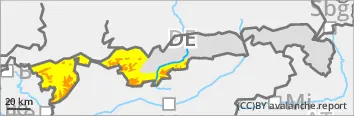
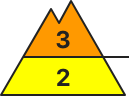
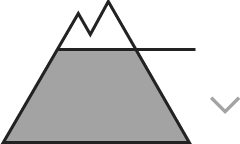
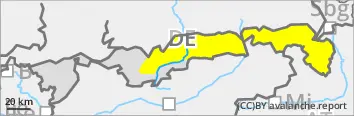
The avalanche risk is considerable above the tree line and moderate below it. The problem is wind slab avalanches at all altitudes. Slab avalanches can easily be triggered in blown-in areas, especially on steep slopes with aspects from north-west to east to south and in gullies and bowls with little additional load. Avalanche prone locations can also be found in forest transition areas, forest aisles and clearings. Avalanches can also become large in isolated cases.
Snowpack
With stormy westerly winds and snowfall, snowdrift accumulations continue to grow. Fresh and older wind slab lies on soft layers or surface hoar and is very prone to triggering. In places, weak intermediate layers are embedded in the new snow pack. At higher altitudes, deeper layers often consist of faceted crystals. The snow depth varies greatly, alternating between blown and drifted snow.
Tendency
The avalanche situation remains critical for the time being.
Danger level
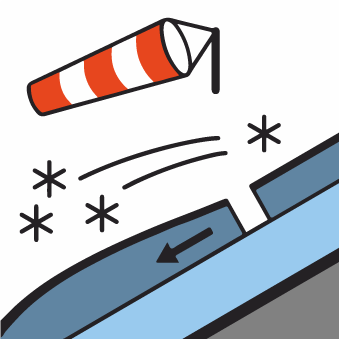
Avalanche Problem
Wind slab
Avoid snowdrift accumulations!
The avalanche danger is moderate. Wind slab can be triggered as a small to medium slab avalanche by a small additional load. Avalanche prone locations are located adjacent to the ridgeline, crest or summit and distant from ridgelines in steep terrain with aspects from northwest to east to south as well as in gullies and bowls. Snow slabs can also be triggered in forest transition areas as well as in aisles and clearings. In addition to the risk of burial, the risk of falling and injury must be taken into account.
Snowpack
It remains stormy. The fresh and older wind slab is prone to triggering on soft layers or surface hoar. The base of the snowpack is often crusted can form at medium elevations, at higher elevations it consists of faceted crystals. The snow depth varies greatly, alternating between blown and drifted snow-laden areas.
Tendency
Depending on the amount of new snow, the avalanche risk may increase.