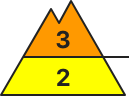
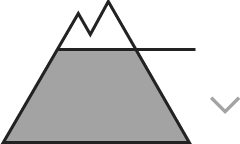
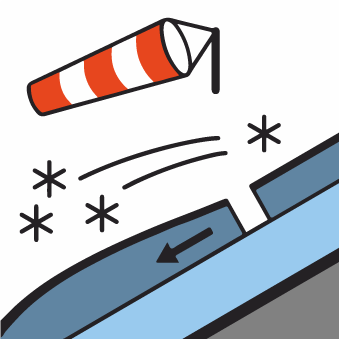
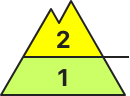
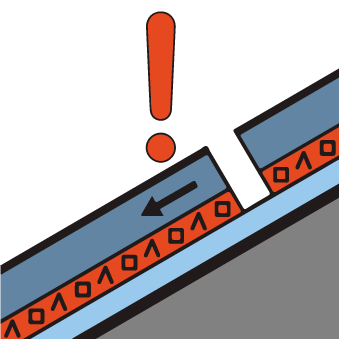
Strong-velocity westerly winds are transporting the most recent snowfall, generating fresh and trigger-sensitive snowdrift accumulations. Avalanches can be triggered even by minimum additional loading and then grow to medium size. Danger zones are located primarily on shady W-N-E facing slopes above 2000m, particularly in ridgeline terrain and in wind-loaded gullies and bowls. Apart from the danger of being buried in snow masses, the risks of being swept along and forced to take a fall require caution. Activities in open terrain demand experience in assessing avalanche dangers.
Snowpack
Strong westerly winds will transport about 20cm of snow which has fallen since Friday. The snowdrifts will be deposited primarily on shady slopes on top of an unfavorable old snowpack surface, they are prone to triggering. In those locations the snowpack is often expansively metamorphosed and, therefore, weak. Snow depths continue to be significantly below-average at all altitudes. Only limited information from outlying terrain is currently available to the Avalanche Warning Services.
Tendency
Brittle, delicate snowdrifts will remain trigger sensitive.
Danger level
2200m
Avalanche Problem
Wind slab
2200m
Persistent weak layer
2600m
Snowdrift accumulations are prone to disturbance and sometimes difficult to recognise
The avalanche danger is moderate above 2200 m and low below. Above around 2200 m, slab avalanches can be triggered in some places by slight additional load in the wind slab and can occasionally be medium in size. Danger areas due to wind slabs increase with altitude and are located adjacent to the ridgeline, but also distant from ridgelines behind terrain edges and in gullies and bowls. In some cases, they are covered by a few centimetres of soft new fallen snow and are not clearly visible. In shady slopes at high altitudes, there are also isolated trigger points for small to medium-sized slab avalanches in persistent weak layers that are difficult to disturb.
Snowpack
The snow cover is highly variable and below average. Since Friday, around 10 cm, in some places up to 20 cm of soft, cold new fallen snow has fallen and in some cases been transported massively by the wind. Some of these cover older drift snow packs or form fresh, brittle snowdrift accumulations on the otherwise crusted can form snow surface. Prone to triggering, weak layers of soft layers are most likely to be found in the drift snow packs and at the transition to the melt-freeze crust. Below this is a sequence of faceted crystals and melt-freeze crusts, but the potential for fracture propagation is generally low due to the heavily built-up, transformed snow cover. In isolated places, however, a prone-to-triggering combination of weak layer and snow slab cannot be ruled out.
Tendency
It remains cold, the new and wind slab snow is slow to settle.
Danger level
treeline
Avalanche Problem
Wind slab
Treeline
Snowdrifts easily triggerable in places
Strong-velocity westerly winds are transporting the most recent snowfall, generating fresh and trigger-sensitive snowdrift accumulations. Avalanches can be triggered even by minimum additional loading and then grow to medium size. Danger zones are located primarily on shady W-N-E facing slopes above 2000m, particularly in ridgeline terrain and in wind-loaded gullies and bowls. Apart from the danger of being buried in snow masses, the risks of being swept along and forced to take a fall require caution. Activities in open terrain demand experience in assessing avalanche dangers and defensive conduct in backcountry.
Snowpack
Strong westerly winds will transport about 20cm of snow which has fallen since Friday. The snowdrifts will be deposited primarily on shady slopes on top of an unfavorable old snowpack surface, they are prone to triggering. In those locations the snowpack is often expansively metamorphosed and, therefore, weak. Snow depths continue to be significantly below-average at all altitudes. Only limited information from outlying terrain is currently available to the Avalanche Warning Services.
Tendency
Brittle, delicate snowdrifts will remain trigger sensitive
Danger level
treeline
Avalanche Problem
Wind slab
Treeline
Take particular care on shady slopes at high altitudes.
The avalanche risk is moderate above the tree line and low below. Wind slab avalanches can be triggered by even a small additional load. This occurs adjacent to the ridgeline, crest or summit and distant from ridgelines in steep terrain in northern and eastern aspects as well as in gullies and bowls. The number and size of avalanche prone locations increase with altitude. Avalanches can reach medium size. In addition to the risk of burial, the risk of being swept away and falling must be taken into account.
Snowpack
With a focus on the Allgäu, 10-25 centimetres of new fallen snow accompanied by stormy winds from the west. The resulting fresh and somewhat older snowdrift accumulations often lie unfavourably on a melt-freeze crust, especially on the shady slopes. In the area of the melt-freeze crust, weak layers of built-up crystals can be found, especially at higher altitudes. Intermediate layers prone to triggering can also be found within the wind slab. The snow depths are below average at all altitudes.
Tendency
Slow decline in avalanche danger.
Danger level
2000m
Avalanche Problem
Wind slab
2000m
Wind slabs on angular layers are the main danger.
The avalanche danger is moderate above 2000 metres and low below that. In some places, wind slab avalanches can be triggered as small to medium sized slab avalanches at high altitudes due to low additional loads. This occurs adjacent to the ridgeline and distant from ridgelines in steep terrain in northern and eastern aspects as well as in gullies and bowls. In addition to the risk of burial, the risk of being swept away and falling must be taken into account.
Snowpack
Fresh and older snowdrift accumulations lie on unfavourable layers, especially on the shady slopes, sometimes prone to triggering. At higher and higher altitudes, faceted crystals are often found below a melt-freeze crust close to the surface. Snow depths are below average at all altitudes.
Tendency
Slow decline in avalanche danger.
Danger level
treeline
Avalanche Problem
Wind slab
Treeline
Snowdrifts easily triggerable in places
Strong-velocity westerly winds are transporting the most recent snowfall, generating fresh and trigger-sensitive snowdrift accumulations. Avalanches can be triggered even by minimum additional loading and then grow to medium size. Danger zones are located primarily on shady W-N-E facing slopes above 2000m, particularly in ridgeline terrain and in wind-loaded gullies and bowls. Apart from the danger of being buried in snow masses, the risks of being swept along and forced to take a fall require caution. Activities in open terrain demand experience in assessing avalanche dangers and defensive conduct in backcountry.
Snowpack
Strong westerly winds will transport about 20cm of snow which has fallen since Friday. The snowdrifts will be deposited primarily on shady slopes on top of an unfavorable old snowpack surface, they are prone to triggering. In those locations the snowpack is often expansively metamorphosed and, therefore, weak. Snow depths continue to be significantly below-average at all altitudes. Only limited information from outlying terrain is currently available to the Avalanche Warning Services.
Tendency
Brittle, delicate snowdrifts will remain trigger sensitive
Danger level
Avalanche Problem
Wind slab
The avalanche danger is currently low. Attention must be paid to fresh small-scale snowdrift accumulations above 2000 metres. These can be triggered by individuals as small slab avalanches, especially behind broad ridges and ridgelines in northern and eastern aspects as well as in gullies and bowls. The avalanche prone locations are easily recognisable.
Snowpack
Between the Dachstein and the Totes Gebirge, 10 cm of new fallen snow has fallen in the last 24 hours. However, the stormy westerly winds continued to cause drifting, resulting in prone-to-triggering snowdrift accumulations. These often lie on angular shapes or on a hard old snowpack.
Otherwise, the snowpack surface is hard or icy. In the shady slopes, the kinetic metamorphism weakens the snow layering.
In general, there is little snow in the terrain.
Tendency
On Monday, increasingly cloudy during the day, on Tuesday and Wednesday some new fallen snow is expected from the south. Still cold. The risk of avalanches may increase slightly in eastern Styria.
Danger level
2000m
Avalanche Problem
Persistent weak layer
2000m
Wind slab
Treeline
The danger of avalanches is low.
Snowpack is mostly stable. In some places in the High alpine regions, especially on fresh snowdrift accumulations of blown snow, a small, clustered avalanche can be triggered under higher loads.
Snowpack
dp.4: cold following warm / warm following cold
There is little snow, and the peaks and ridges are in some places blown bare. In the high alpine regions, weak layers may be present in the Old snow cover.
On prominent Sunny slope, the snow has been frozen off and then frozen over, forming a drift.
Tendency
Monday may see some sun in the morning, with clouds in the afternoon. It will be cold, around -8 °C above 1500 m. On Tuesday it will be cloudy and foggy with showers, snowing down to the lowlands. Precipitation is expected to be light, with up to 20 cm of snow.
Danger level
Watch out locally for small snowdrift accumulations
The avalanche risk is low, isolated danger areas due to small-scale snowdrift accumulations are located behind the edges of the terrain adjacent to the ridgeline as well as in gullies and bowls. The drift snow packs are usually easily recognisable, but danger areas due to stones under the thin snow cover, snowpack are often not.
Snowpack
The snow cover is below average. The snow cover, snowpack is highly variable and touring options are severely limited. In shady slopes at high altitudes, there are isolated weak layers of faceted crystals in the snow cover, mostly in the vicinity of crusts. Away from this, there is a succession of thin layers of drift snow on the meadows.
Tendency
No change in avalanche danger.
Danger level
Avalanche Problem
Wind slab
Avoid local avalanche prone locations due to wind slab!
The avalanche risk is predominantly low. Attention must be paid to snowdrift accumulations at high altitudes. There are localised avalanche prone locations in steep terrain in areas adjacent to the ridgeline, as well as in bowls and gullies where usually only small to rarely medium slab avalanches can be triggered by low additional loads. Avalanche prone locations are easy to recognise and should be avoided.
Snowpack
There was some new fallen snow again. In general, the snow cover, snowpack is characterised by the strong to stormy winds and repeated snowfall over the last few days. In the higher elevations, there are snowdrift accumulations that can contain thin intermediate layers and are therefore prone to triggering. They often lie on angular shapes or on a hardness of old snowpack. The thin snow base, fundament is weakened by the kinetic metamorphism. The snow depths are very below average even at high altitudes.
Tendency
No significant change in the snow and avalanche situation.
Danger level
2200m
Avalanche Problem
Wind slab
2200m
Prone to triggering snowdrift accumulations and stones are the main danger
The avalanche danger is low. Above 2200 m, slab avalanches can be triggered in a few places by slight additional load in the wind slab, but they usually remain small. Be careful in the area of terrain traps, as there could still be enough snow here to bury people. Danger areas due to wind slabs are located particularly behind terrain edges in areas adjacent to the ridgeline, crest or summit. Drift snow packs are sometimes covered by little new fallen snow and are not always easily recognisable. Beware of stones under the thin snow cover, snowpack.
Snowpack
The snow cover, snowpack is highly variable. Since Friday, 5 cm, in some places even 10 cm of new fallen snow has accumulated. Some of these cover older drift snow packs on the otherwise crusted can form snow surface. Prone to triggering weak layers are most likely to be found in the fresh snow packs and at the transition to the melt-freeze crust. Below this, on the shady slope, there is a sequence of layers of faceted crystals and melt-freeze crusts, but the potential for fracture propagation is generally low due to the heavily built-up transformed snow cover. On the sunny slope, the snow cover, snowpack is hard and crusted can form. The snow depth is still well below average at all altitudes.
Tendency
It remains cold, the new and wind slab snow only settles slowly.
Danger level
Avalanche Problem
Wind slab
Watch out for small snowdrift accumulations.
The avalanche risk is low. Occasionally, small snowdrift accumulations can be triggered as a small snow slab by a small additional load. This occurs adjacent to the ridgeline and distant from ridgelines in the steep terrain of northern and eastern aspects. Be aware of the risk of being swept away and falling.
Snowpack
Low-grade snowdrift accumulations can be prone to disturbance, especially on the shady slope. At higher and higher altitudes, faceted crystals can often be found below a melt-freeze crust close to the surface. There are only a few centimetres of snow on the sunny slopes.