Up to 30 cm of new fallen snow locally - avoid fresh snowdrift accumulations
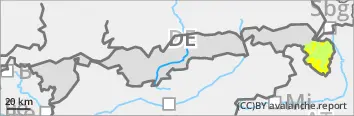
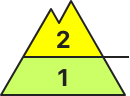
The avalanche risk is moderate above the tree line and low below it. In the steep terrain adjacent to the ridgeline in northern, eastern and southern aspects as well as in gullies and bowls, fresh snowdrift accumulations can be triggered as small to medium slab avalanches by a small additional load. In addition to the risk of burial, the risk of being swept away and falling must be taken into account.
Snowpack
The new fallen snow lies on a melt-freeze crust or, on the sunny side, up to high altitudes on the ground that has already been covered with snow. In places, the connection to the melt-freeze crust is poor due to embedded surface hoar. Intermediate layers prone to triggering may be present within fresh snowdrift accumulations. At higher and higher altitudes, faceted crystals can be found below the old melt-freeze crust down to the ground.
Tendency
No significant change for the time being.
Danger level
Very little new fallen snow
The avalanche danger is low. Avalanches are hardly to be expected.
Snowpack
A few centimetres of new fallen snow lie on an often load-bearing melt-freeze crust or, on sunny slopes, up to high altitudes on the ground that has already been covered with snow. On shady slopes, the old melt-freeze crust is sometimes not load-bearing. At higher and higher altitudes, faceted crystals can often be found below the melt-freeze crust right down to the ground.
Tendency
Low avalanche danger over the turn of the year.
Danger level
Avalanche Problem
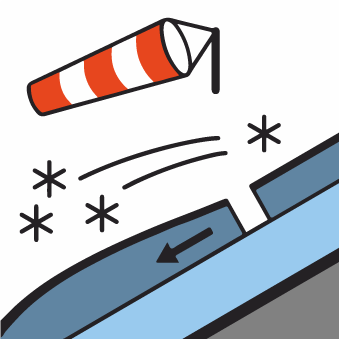
Wind slab
Avoid small, fresh snowdrift accumulations in the steep terrain adjacent to the ridgeline
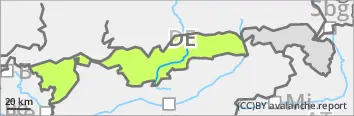
The avalanche risk is low. In the steep terrain adjacent to the ridgeline in northern and eastern aspects, small, fresh snowdrift accumulations can be triggered locally as a small snow slab by a small additional load. Be aware of the risk of being swept away and falling.
Snowpack
There is little new fallen snow on a melt-freeze crust, which is often stable, or up to high altitudes on sunny slopes on ground that has already been covered with snow. On shady slopes, the old melt-freeze crust is sometimes not stable. In some places, small, fresh snowdrift accumulations lie prone to triggering on surface hoar. At higher altitudes, faceted crystals can often be found below the melt-freeze crust right down to the ground.