The danger of Avalanche is low. Be careful in fresh snowdrift accumulations!
The snowpack is mostly stable. In some places in the High alpine regions, especially on fresh snowdrift accumulations of blown snow, a small, clustered Avalanche can be triggered under higher loads.
Snowpack
dp.4: cold following warm / warm following cold
There is little snow, and the peaks and ridges are in some places blown bare. During the last deterioration, about 10 cm of New fallen snow fell, on Sunny slope below 2000 m on terrestrial ground.
In the high alpine regions, weak layers may be present in the old snow cover.
Tendency
Monday and Tuesday will be sunny and warmer, with zero isotherm above 2500 m. Winds will die down.
Danger level
2000m
Avalanche Problem
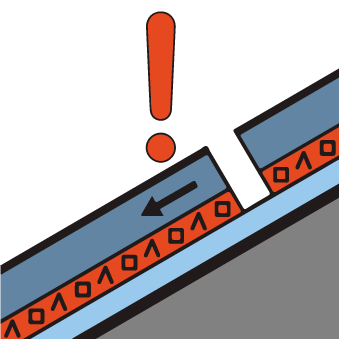
Persistent weak layer
2000m
Only isolated avalanche prone locations in the high altitudes
The avalanche risk is generally low. Isolated avalanche prone locations can be found at high altitudes in extremely steep gullies in the northern sector, where large additional loads can occasionally trigger smaller slab avalanches. The danger of falling dominates over the danger of avalanches!
Snowpack
The snow surface is usually hard and icy, with sunny slopes up to over 2000 metres above sea level. Below the melting hard crust, kinetic metamorphism weakens the snow base, fundament.
Tendency
The avalanche danger remains low at least until Monday.
Danger level
Risk of falling on a hard snow surface
The avalanche danger is low. Avalanches are hardly to be expected.
Snowpack
At higher altitudes, faceted crystals can be found close to the surface below a mostly stable melt-freeze crust. Otherwise, the remaining snow cover, snowpack is compact and stable. Away from artificially snow-covered pistes, there is usually too little snow for winter sports. The middle elevations are largely free of snow on the south side.
Tendency
The avalanche danger remains low.
Danger level
Low avalanche danger, very little snow.
The avalanche risk is low and there are hardly any avalanche prone locations. Take care on icy surfaces due to the risk of falling.
Snowpack
The new fallen snow of the past few days has settled well and was moistened on the surface on Saturday. A crust of hard snow formed during the night. Only in shady gullies and bowls is there an old snow foundation in places, which may contain weak layers in places. In general, the snow thickness is very low.
Tendency
The avalanche danger will remain low over the next few days.
Danger level
Avalanche Problem
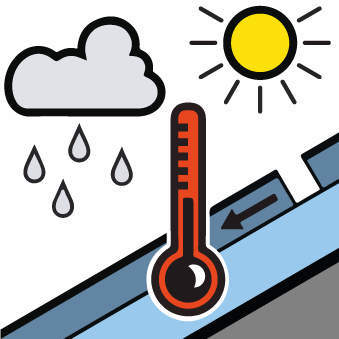
Wet snow
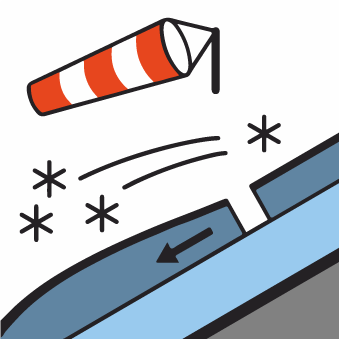
Wind slab
Treeline
Up to 40 cm of snow in some places, don't walk alone on steep meadows!
On steep meadows with blowing snow, an Avalanche can be triggered. As the weather clears and gradually thaws, the snow will become heavier, especially in the afternoon, and spontaneous creeps of wet snow will break out.
Snowpack
dp.6: cold, loose snow and wind
Up to 40 cm of snow fell on the ground in Kobansko and 30 cm in Pohorje. Snowdrift accumulations have formed on the edges of meadows and near Ridge due to strong NE winds. On Saturday during the day, snow on the Sunny slope over low clouds became heavier, while during the night a thin drizzle formed.
Tendency
Winds will weaken overnight on Monday. Monday and Tuesday will be sunny and warmer. The danger of avalanches will decrease.
Danger level
Isolated avalanche prone locations occur in persistent weak layer of old snow.
In isolated cases avalanches can be triggered in persistent weak layers on very steep shady slopes in high alpine regions. These releases are mostly small-sized. The risks of falling and sustaining injuries outweigh those of being buried in snow masses. At very high altitudes over minor areas, freshly generated but small-sized snowdrift accumulations require attentiveness.
Snowpack
The old snowpack is superficially melt-freeze encrusted and generally hardened. It softens up slightly during the daytime hours, particularly on sunny slopes. Beneath the melt-freeze crusts, particularly on steep north-facing slopes, expansively metamorphosed crystals weaken the shallow snowpack. At high altitudes, small-sized snowdrift accumulations occur from place to place. On shady slopes in high alpine regions, isolated weak layers occur inside the snowpack. South-facing slopes are bare of snow up to high altitudes. Only limited information from outlying terrain is currently available to the Avalanche Warning Services.
Tendency
Avalanche danger expected to remain low
Danger level
Injury from stones and falling are the main dangers.
The avalanche danger is low. In gullies and bowls adjacent to the ridgeline, crests or summits in shady slopes, there are very isolated trigger points in persistent weak layers that are difficult to disturb. Only very rarely can drift snow packs be triggered there by individuals. Avalanches remain small.
Snowpack
The snow depth is well below average for the time of year. The surface is crusted can form, on sunny slopes it softens during the daytime changes. In shady slopes, weak layers of faceted crystals have been preserved in the snow cover, mostly in the vicinity of crusts. The fracture propagation potential is generally low due to the overall heavily built-up transformed snow cover.
Tendency
The avalanche danger remains low.
Danger level
Not much snow. Low avalanche danger.
Isolated avalanches can be triggered in extremely steep terrain. Most releases are small. Risks of falls and injuries outweigh those of being buried in snow masses.
Snowpack
The old snowpack is superficially melt-freeze encrusted and generally hardened. It softens up slightly during the daytime hours, particularly on sunny slopes. South-facing slopes are bare of snow up to high altitudes. Only limited information from outlying terrain is currently available to the Avalanche Warning Services.
Tendency
No significant change anticipated. Low avalanche danger.
Danger level
Ski touring opportunities are and will remain generally limited!
Only at very high altitudes is there occasional problematic persistent weak layer on the shady slope and in very steep, extreme terrain. Be aware of the risk of falling.
Snowpack
Even at higher altitudes there is very little snow, below that it is often bare or there is some snow from last Wednesday. The old snowpack is mostly hard-frozen or icy. When the sun shines, the surface will soften a little during the day depending on the aspect.
Tendency
No change in the weather and no snowfall is expected in the coming days. There is therefore no significant change in the snow and avalanche situation.
Danger level
Lack of snow and stones are the main dangers.
The avalanche danger is low. There is usually not enough snow for snow sports and avalanches can hardly be triggered.
Snowpack
There is no closed snow cover, snowpack and the terrain is mostly bare.
Tendency
The avalanche danger remains low.
Danger level
2600m
Avalanche Problem
Persistent weak layer
2600m
Rare avalanche prone locations in the persistent weak layer covered by a little wind slab
The avalanche danger is low. Small avalanches in particular can occasionally be triggered by one person in shady slope high alpine regions above 2600 metres. On the one hand, where older wind slab snow has formed a suitable board over a weak layer in the persistent weak layer. On the other hand, close to the surface in the wind slab of the last few days, which is still prone to triggering. In addition to the risk of burial, particular attention should be paid to the risk of entrainment.
Snowpack
The surface is crusted can form, on sunny slopes it softens during the daytime changes. In high, shady slopes, the melt-freeze crust is usually covered by edged snow with no binding, which can serve as a weak layer in exceptional cases. The potential for fracture propagation is generally low due to the overall highly built-up, transformed snow cover, snowpack. Fractures within the snow cover are most possible in the thin wind slab or over the hard old snow foundation from early winter. The snow depth is well below average at all altitudes.