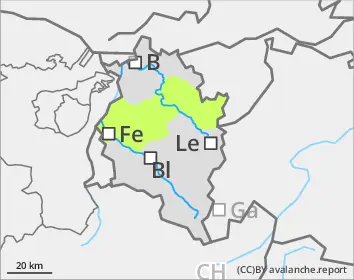
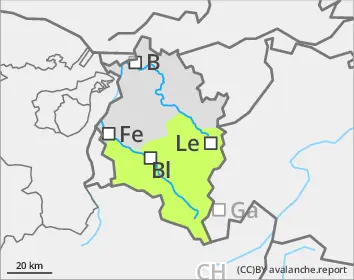
Isolated avalanches can be triggered in extremely steep terrain. Most releases are small. Risks of falls and injuries outweigh those of being buried in snow masses. Isolated small-sized glide-snow avalanches are possible.
Snowpack
Traces of fresh fallen snow frequently blanket a superficially melt-freeze encrusted, generally hard old snowpack surface, which hardly softens up during the daytime hours. South-facing slopes are bare of snow up to high altitudes. Only limited information from outlying terrain is currently available to the Avalanche Warning Services.
Tendency
No significant change anticipated, avalanche danger is low.
Danger level
Isolated avalanche prone locations in persistent weak layer of old snow.
In very isolated cases avalanches can be triggered in persistent weak layers on very steep shady slopes in high alpine regions. These releases are mostly small-sized. The risks of falling and sustaining injuries outweigh those of being buried in snow masses. At very high altitudes over minor areas, freshly generated but small-sized snowdrift accumulations require attentiveness.
Snowpack
Traces of fresh fallen snow frequently blanket a superficially melt-freeze encrusted, generally hard old snowpack surface, which hardly softens up during the daytime hours. At high altitudes. local, small-area snowdrifts occur. On shady slopes in high alpine regions isolated weak layers occur inside the snowpack. On the surface there is sometimes surface hoar. South-facing slopes are bare of snow up to high altitudes. Only limited information from outlying terrain is currently available to the Avalanche Warning Services.