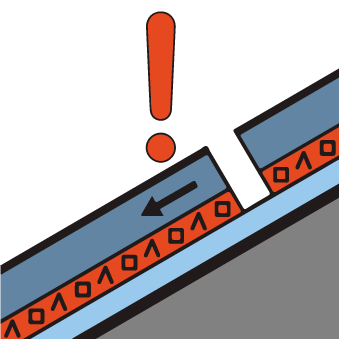
The avalanche risk is low. On very steep, smooth slopes such as meadows or sparse forest areas, individual small sliding snow avalanches can detach themselves.
Snowpack
The snow surface is only partially hardened in the morning and quickly softens again in the middle layers during the day. The snowpack base is partly wet. There is little snow, on the south side the ground is extensively covered with snow well into the middle elevations.
Tendency
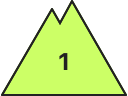
The avalanche danger remains low.
Danger level
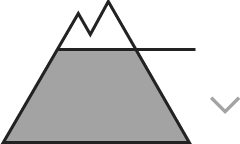
2200m
Avalanche Problem
Persistent weak layer
2200m
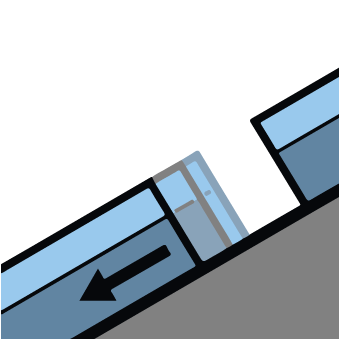
Gliding snow
2200m
Few danger spots.
The avalanche danger is low. Old snow is problematic in places. Above 2200 m, small slab avalanches can occasionally be triggered in very steep terrain in northern exposures with high additional loads.
In addition, individual, smaller sliding snow avalanches can release themselves on very steep slopes with smooth ground that have not yet been discharged.
Snowpack
The snow surface has hardened in places in the morning and quickly softens again in the middle layers during the day. Only at the highest altitudes can angular, built-up crystals remain under the snow cover. Above 2200 m, the upper half metre of the snowpack on the shaded side is still partially covered in snow. The base of the snowpack is often wet. There is little snow; on the south side, the ground is covered with snow well into the middle elevations.