Injury due to lack of snow and stones is the main danger.
There is usually not enough snow for snow sports and avalanches can hardly be triggered.
Snowpack
There is no closed snow cover and the terrain is mostly bare.
Tendency
On Wednesday, insignificant amounts of precipitation will fall, as rain up to medium altitudes.
Danger level
2000m
Avalanche Problem
Persistent weak layer
2000m
Few danger spots on very steep shady slopes at high altitudes.
The avalanche danger is low. Old snow is problematic in places. At high altitudes, small slab avalanches can occasionally be triggered in very steep terrain in northern exposures with high additional loads.
In addition, individual, small sliding snow avalanches can be triggered on extremely steep sunny slopes with smooth ground that have not yet been discharged.
Snowpack
The snow surface has hardened up to the highest altitudes. It softens in the sun over the course of the day. Crystals with an angular structure have formed under the snow cover, especially on the shaded side. Above 2000 m, the upper half metre of the snow cover on the shaded side has retained some snow-covered surface frost. However, snowpack tests show that large-scale fracture propagation is no longer to be expected. The base of the snowpack is partly wet. There is little snow, on the south side the ground is covered well into the middle layers.
Tendency
Little change.
Danger level
Avalanche Problem
Gliding snow
Injury from stones and falling are the main dangers.
The avalanche danger is low. A few small spontaneous sliding snow avalanches are possible from very steep meadow slopes. In shady high altitudes, there are still isolated spots in the old snow that are difficult to trigger for small slab avalanches, especially in gullies and hollows close to the crest.
Snowpack
The snow depth is well below average for the time of year, with low elevations and the sunny side of the valley being widely covered in snow. The snow surface is hardened and softens on the sunny side during the day. Inside, the snow cover is often soaked through to high altitudes. At high altitudes on the shady side, there are still isolated weak layers of angular crystals in the snowpack, mostly in the vicinity of crusts.
Tendency
On Wednesday, insignificant amounts of precipitation will fall, as rain up to medium altitudes.
Danger level
Often hard, hardened snow surfaces.
The avalanche danger is low. Small sliding snow avalanches can occasionally occur on extremely steep, smooth sunny slopes.
Snowpack
The snow surface has hardened in many places. It softens in the sun as the day progresses. The snowpack base is partly wet. There is little snow, on the south side the ground is extensively covered with snow well into the middle elevations.
Tendency
The avalanche danger remains low.
Danger level
Avalanche Problem
Persistent weak layer
The risk of avalanches remains low.
Snow cover is mostly stable. Creep is unlikely. In arid areas above the forest line, weak layers may be present in the snow cover. In a few places in the high mountains, a small, clustered avalanche may be triggered under higher loads.
Snowpack
dp.4: cold following warm / warm following cold
Snow cover is mostly stable, with significant snowmelt on slopes. Crusting is present on the slopes, while the snow cover remains soft and dry in the more shaded and sheltered areas, especially in the high mountains. In arid areas, weak layers may be present in the snow cover.
Tendency
Wednesday will be cloudy and foggy. Light snow will fall with mainly weaker south to south-westerly winds. The snow limit will be between 1800 m and 2000 m above sea level. In the high mountains, no more than 10 cm of new snow will fall. The new snow will not change the avalanche risk. On Thursday, the mountains will be fairly clear, with temperatures still quite high for this time of year.
Avalanches can be triggered in the persistent weak layer in isolated cases above about 2400m on very steep shady slopes. These releases are usually small-sized. The risks of injuries from being forced to take a fall outweigh those of being buried in snow masses. Continuing isolated, usually small-sized glide-snow avalanches are still possible on steep slopes which have not yet discharged. Glide cracks are signals of possibly imminent danger.
Snowpack
Tonight once again a breakable-to-capable of bearing loads crust can be generated. During the daytime it softens up particularly on sunny slopes and at lower altitudes. On south-facing slopes, the ground is becoming bare of snow up to high altitudes. On shady slopes at altitudes above 2400m, isolated weak layers occur inside the snowpack.
Tendency
As a result of perturbances, heavily clouded skies but with very little precipitation. Ongoing low avalanche danger.
Danger level
2600m
Avalanche Problem
Persistent weak layer
2600m
Gliding snow
2600m
Few sliding snow avalanches and rare danger spots in old snow
The avalanche risk is low. Injury from stones and falling are the main dangers. Due to the foehn, thin, easily recognisable drift snow packs are formed. In a few places, mainly small avalanches may be triggered by individuals in gullies and hollows near the crest at high altitudes. Spontaneous small sliding snow avalanches are possible from very steep, not yet discharged meadow slopes.
Snowpack
The surface is dominated by harsch and broken harsch cover, which softens on the sunny side during the day. At shady high altitudes, there are angular crystals within the snow cover near crusts, which can occasionally serve as a weak layer. At low and medium altitudes, the snow cover is largely stable and occasionally slides off on smooth ground. The snow depth is well below average, and on the sunny side it is snow-free far up.
Tendency
On Wednesday, insignificant amounts of precipitation will fall, as rain up to medium altitudes.
Danger level
Avalanche Problem
Gliding snow
Not much snow. Low avalanche danger.
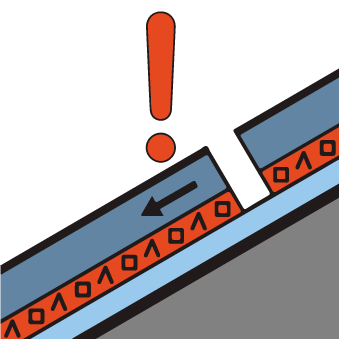
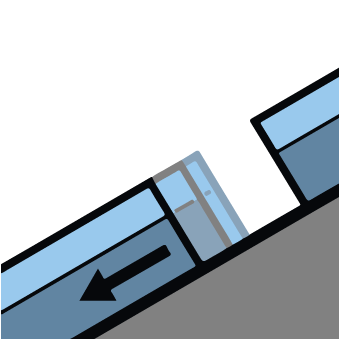
Continuing isolated small-sized glide-snow avalanches are still possible on steep smooth slopes which have not yet discharged. Glide cracks are signals of potential imminent danger.
Snowpack
Tonight once again a breakable-to-capable of bearing loads crust can be generated. During the daytime it softens up particularly on sunny slopes and at lower altitudes. On south-facing slopes, the ground is becoming bare of snow up to high altitudes.
Tendency
Heavy cloud cover as a result of perturbances, but very little precipitation. Ongoing low avalanche danger.