Danger level
 | 2200m |
|  |
|  |
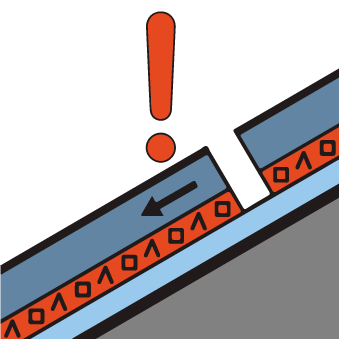

Durable weak layer at height
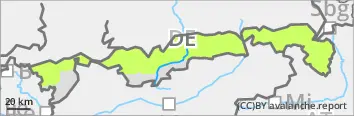
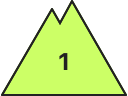
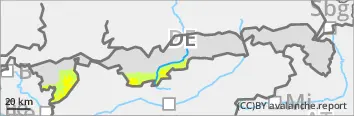
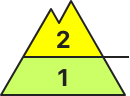
The avalanche danger is moderate above 2200 metres and low below. Old snow is the main problem. Slab avalanches can be triggered at high altitudes on very steep slopes in the northern exposures, especially with high additional loads. Far-reaching break propagation and thus avalanches of medium size are possible in wind-protected hollows. Otherwise, avalanches usually remain small and the risk of falling must be taken into account. Individual sliding snow avalanches can spontaneously slide down extremely steep slopes with smooth ground that have not yet been discharged. These are usually small.
Snowpack
At night, the moist snow cover freezes and becomes icy. During the day, it softens again slightly on the sunny side and remains hard on the shaded side. At the highest summits, the snow cover is thinner on the shaded side and is not stable everywhere. Here, the snow underneath the snow cover has an angular structure. In places, the top half metre of snow still has a layer of surface frost that is prone to disruption. Sliding movements still occur occasionally on smooth ground. On the south side, the ground is increasingly pitting in the middle layers.
Tendency
The old snow problem is slowly becoming less acute.