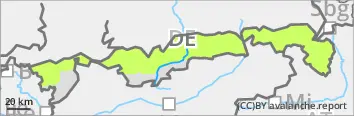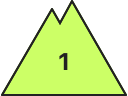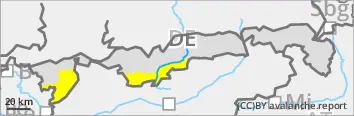
Danger level
 |
|  |  | |||||
|  |
|  |
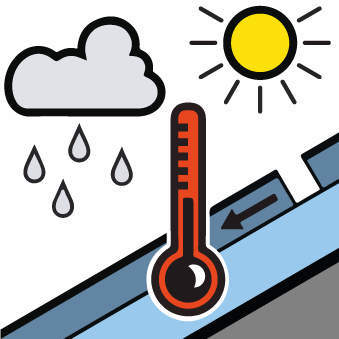
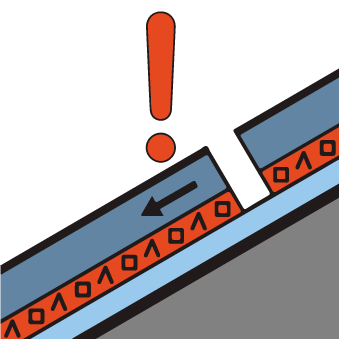

Slight increase in wet snow avalanche danger during the course of the day
The avalanche danger is moderate. Wet snow is the main problem. Wet sliding snow avalanches slide off spontaneously on extremely steep slopes with smooth ground that have not yet been discharged. Wet loose snow avalanches detach themselves from the steep rocky terrain when exposed to sunlight. Wet snow avalanches usually remain small. Old snow can be problematic at high altitudes. Danger spots can be found on very steep slopes in the northern exposures. Slab avalanches can be triggered by large additional loads in particular and tend to be small.
Snowpack
The snow cover is soaked right up to the higher elevations. In open areas, a partially stable layer of snow forms at night. When exposed to sunlight, the remaining snow cover quickly loses its firmness during the day; on the shaded side, it hardly softens despite warm temperatures. Sliding movements occur on smooth ground. At the highest altitudes, isolated layers of angular crystals prone to disruption have been preserved on the shaded side. This is particularly the case in the area of melted snow crusts in the upper part of the snowpack.
Tendency
Wet snow avalanche activity decreases with colder temperatures.