Weak old snow is sometimes easily disturbed by winter sports enthusiasts!
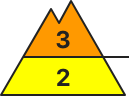
The avalanche danger is considerable above 2400 m and moderate below. Above around 2400 m, slab avalanches can be triggered in places by individual winter sports enthusiasts and can be of medium size. The danger spots for this are on very steep western, northern and eastern slopes, especially at the transitions from little to much snow as well as behind terrain edges and near ridges. Small to medium-sized, spontaneous sliding snow avalanches can still be expected from very steep, not yet unloaded grass mat terrain. During the course of the day, small, moist loose snow slides are still possible from sunny rock and scree terrain.
Snowpack
A warm front has partially moistened the snow cover up to 3000 metres, at least on the surface; below around 2000 metres, the remaining snow cover is often damp or wet right down to the ground. In the morning, the snow cover is mostly hard and hardened on the surface, and it softens again during the day, especially on the sunny side. Above around 2400 metres, there is bound snow (due to
(caused by rain or drift snow) on a layer of old snow with soft layers of angular crystals, which are prone to disruption. These weak layers are found in particular on the western, northern and eastern slopes.
Tendency
Slow decline in avalanche danger, weak layers in old snow remain susceptible to disruption.
Danger level
2400m
Avalanche Problem
Wet snow
2400m
Wind slab
2200m
Wet-snow avalanches continue – Snowdrifts at high altitudes prone to triggering
As a result of the mild temperatures and the weakened snowpack due to rainfall, small-to-medium sized wet-snow and glide-snow avalanches continue to be possible. Wet-snow avalanches can also be triggered by winter sports enthusiasts. At high altitudes, fresh, trigger-sensitive snowdrift accumulations have been generated. Small-to-medium sized slab avalanches can be triggered by winter sports enthusiasts. In addition, slab avalanches can be triggered in some places in the old snow by large additional loading. Caution urged on high-altitude very steep shady slopes.
Snowpack
The snowpack has been weakened up to high altitudes through rain impact. On Monday, numerous small, but also several medium and, in isolated cases, also large naturally triggered avalanches were reported. Above 2200m there was 30cm of fresh snow registered. As a result of strong-velocity winds it was transported and fresh snowdrift accumulations were generated. These are prone to triggering. At high altitudes, particularly on shady slopes, faceted intermediate layers are evident inside the snowpack. In places, these can be triggered.
Tendency
Sunny, very mild. Ongoing frequent small-to-medium sized wet-snow and glide-snow avalanches therefore possible.
Danger level
Avalanche Problem
Wet snow
Major danger: wet-snow avalanches
Avalanche danger is moderate. As a result of the mild temperatures and rain impact, increasingly frequent wet-snow slides and glide-snow avalanches are possible. These slides and avalanches can be triggered by winter sports enthusiasts. Due to the low snow depths, the avalanches will be small.
Snowpack
Due to rainfall on Monday, the shallow snowpack was weakened further at low and intermediate altitudes. During the nighttime hours it can consolidate slightly on the surface. During daytime hours it swiftly softens up again. Above 2000m, strong-velocity winds initially transported the fresh snow and generated small snowdrift accumulations.
Tendency
Very sunny, very mild. Increasingly frequent small-to-medium sized wet-snow and glide-snow avalanches are thus possible.
Danger level
Avalanche Problem
Wet snow
Wind slab
2400m
Pay attention to large sinking depths.
The avalanche danger is moderate. Wet snow is the main problem. Wet sliding snow avalanches slide off spontaneously on very steep slopes with smooth ground that have not yet been discharged. Where there is still snow on extremely steep terrain, it can slide off or be triggered as a loose snow avalanche, especially on the south side. Wet snow avalanches usually remain small.
Drift snow can be problematic in the highest summit and ridge areas. Danger spots can be found in the steep terrain close to the crest in the northern exposures. Accumulations of drifting snow can be triggered as mostly small slab avalanches with a small additional load.
Snowpack
The snow cover has become wet up to high altitudes. It only freezes superficially at night in open areas protected from the wind. With warm temperatures and sunshine, the remaining snow cover soaks quickly during the day and loses its firmness. Sliding movements occur on smooth surfaces. At the highest altitudes, layers of angular crystals that are susceptible to disruption are occasionally preserved on the shaded side. This is particularly the case in the area of older drift snow accumulations.
Tendency
The avalanche danger will decrease over the next few days.
Danger level
2400m
Avalanche Problem
Persistent weak layer
2400m
Gliding snow
2400m
Weak old snow and sliding snow are the main dangers.
The avalanche danger is moderate above 2400 metres and low below. Above around 2400 m, slab avalanches can be triggered in places by individual winter sports enthusiasts. The avalanches usually remain small, but can occasionally become medium-sized if they break through into deeper layers. Danger spots for this are located on very steep western, northern and eastern slopes, especially at the transitions from little to much snow as well as behind terrain edges and near ridges. Small, spontaneous sliding snow avalanches can still be expected from very steep, not yet unloaded grass mat terrain. During the course of the day, small, moist loose snow slides are still possible from sunny rock and scree terrain.
Snowpack
A warm front has partially moistened the snow cover at least on the surface up to summit level; below around 2000 metres, the remaining snow cover is often damp or wet right down to the ground. In the morning, the snow cover is usually hard and hardened on the surface, and it softens again during the day, especially on the sunny side. Above around 2400 metres, there is bound snow (due to
(caused by rain or drift snow) on a layer of old snow with soft layers of angular crystals, which are prone to disruption. These weak layers are found in particular on the western, northern and eastern slopes.
Tendency
Slow decline in avalanche danger, weak layers in old snow remain susceptible to disruption.
EARLIER Danger level
1500m
Avalanche Problem
Wet snow
1500m
Persistent weak layer
Treeline
LATER Danger level
1700m
Avalanche Problem
Wet snow
1700m
Persistent weak layer
Treeline
If the weather is sunny, the risk of avalanches on steeper slopes will increase during the day.
Warm and sunny weather may lead to more spontaneous avalanches of wet snow on steep slopes during the day in the coming days. In arid areas above the tree line, weak layers are present in the snow cover. In a few places, a small to medium sized snow avalanche can be triggered under higher loads.
Snowpack
dp.4: cold following warm / warm following cold
In recent days, the crust has been building up on the slopes in sunny weather. Snow cover remains lighter in the shadier and sheltered areas. Mostly, however, it is increasingly transformed by wind and sun. In arid areas, weak layers may be present in the snow cover. During the day tomorrow, the snow cover will become more pronounced and less stable on sloping terrain.
Tendency
Especially on steep slopes, the risk of avalanches will increase slightly during the day and decrease rapidly in the evening. Snow will remain mostly dry and poorly transformed in the arid areas.
Danger level
Avalanche Problem
Wet snow
Small wet-snow avalanches due to rain
Avalanche danger is low. As a result of mild temperatures and light rainfall, wet slides and glide-snow avalanches are possible. Due to the shallow depths of snow, avalanches will remain small.
Snowpack
Up to intermediate altitudes, rain impact weakened the shallow old snowpack increasingly on Monday. During the nocturnal hours it can consolidate slightly on the surface. During the daytime hours it swiftly softens up again.
Tendency
Sunny and very mild. Thus, wet-snow and glide-snow avalanches continue to be possible.
Danger level
Avalanche Problem
Wet snow
Little snow, few avalanches.
The avalanche danger is low. Wet snow is the problem. Individual, small, wet sliding snow avalanches slide off spontaneously on very steep slopes with smooth ground that have not yet been discharged. Where there is still snow on extremely steep terrain, it can descend as a small, wet loose snow avalanche, especially on the south side.
Snowpack
The snow cover has become wet up to high altitudes. It only freezes superficially at night in open areas protected from the wind. With warm temperatures and sunshine, the remaining snow cover soaks quickly during the day and loses its firmness. At the highest elevations, isolated layers of angular crystals remain. Overall, the snow cover has decreased considerably. The lower layers are thinning out.
Tendency
The avalanche danger remains low.
Danger level
Avalanche Problem
Gliding snow
Wet snow
Little snow, low avalanche danger.
The avalanche danger is low. Small, spontaneous sliding snow avalanches are still to be expected from very steep, as yet undischarged grass mat terrain. Small, damp loose snow slides are still possible from sunny rocky and craggy terrain during the course of the day.
Snowpack
There is often little snow and the lower elevations are becoming increasingly thin. The existing snow cover has been moistened by the rain right up to the summit regions. In the morning hours, the snow surface is partly hard and hardened, during the day it softens again. The entire snow cover can slide off on slippery ground. In the shaded summit areas, there are still isolated weak layers of angular crystals in the snowpack.
Tendency
Little change, the avalanche danger remains low. Isolated small sliding snow avalanches are still possible.