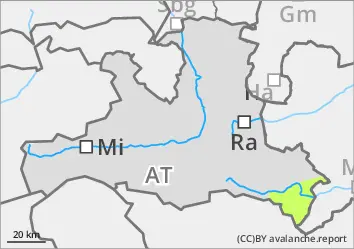
Weak layers in the old snow are still susceptible to disruption in some cases
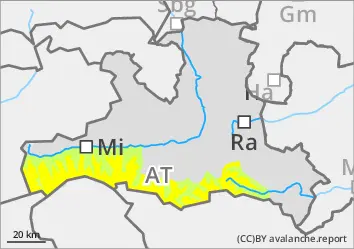
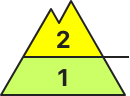
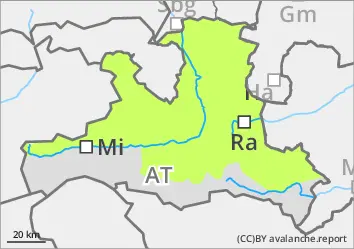
The avalanche danger is moderate above 2400 metres and low below. The main danger comes from small to medium-sized slab avalanches. These can still be triggered by individual winter sports enthusiasts in the west, north and east exposures, particularly at transitions from little to a lot of snow and in the entrance areas to snow-covered gullies and hollows. Danger areas due to drifting snow are sometimes thinly covered with snow and difficult to recognise. Occasionally, small sliding snow avalanches can still come loose. Avoid areas underneath sliding snow mounds.
Snowpack
Over the past few days, small accumulations of drift snow have formed close to the crest, which are lying on an unfavourable layer of old snow with soft layers of angular crystals. Some of the drift snow packs are covered by a small amount of fresh snow. In windless areas, the snow surface is loose or covered with surface frost. On the sunny side, the snow cover has settled and may have hardened on the surface. In very steep grassy terrain, the snow cover is still occasionally sliding along the ground.
Tendency
With the arrival of a warm front and a rise in the snow line, the avalanche risk increases slightly for a short time.
Danger level
2400m
Avalanche Problem
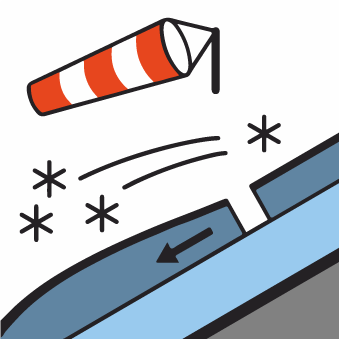
Persistent weak layer
2400m
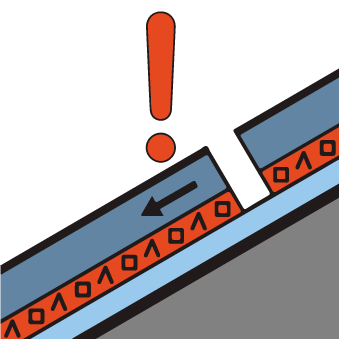
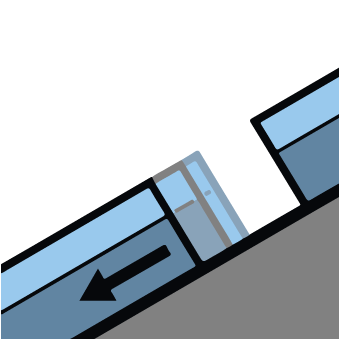
Gliding snow
Small slabs of snow can still be released in a few places
The avalanche danger is low. Small slab avalanches can still be triggered by individual winter sports enthusiasts in a few places in the terrain - the high altitudes of the Niedere Tauern and the Northern Alps are particularly affected. Danger areas are located in the extended northern exposures and behind the edges of the terrain as well as the entrance areas of gullies and hollows. Some small sliding snow avalanches can still be triggered from very steep grass mat terrain.
Snowpack
In the high altitudes of the Niedere Tauern and Northern Alps, there are small-scale drift snow packs close to the crest, which lie on the shaded side on an unfavourably built-up old snow cover with soft layers of angular crystals. Some of the drift snow is covered by a small amount of fresh snow. In places where the wind is calm, the snow surface on the shaded side is angular and loose. On the sunny side, the snow cover has settled and may have hardened on the surface. In very steep grassy terrain, the snow cover is still sliding off the ground in some places.
Tendency
With the arrival of a warm front and a rise in the snow line, the avalanche risk increases slightly for a short time.
Danger level
Little snow in the terrain
The avalanche risk is low, there are hardly any danger spots in the terrain. Small snow slabs are most likely to be triggered by winter sports enthusiasts in very and extremely steep, shaded terrain. The risk of injury and entrainment exceeds the risk of burial.
Snowpack
A few centimetres of fresh snow cover some of the older drift snow lenses and surface hoar frost. In places, the drift snow lies on an unfavourably built-up layer of old snow with soft layers of angular crystals, which are still prone to disruption in places. Overall, there is still little snow in the terrain.
Tendency
There is little snow in the terrain. The arrival of a warm front and the rise in the snow line therefore have little influence on the avalanche risk.