The avalanche danger is moderate above 2400 metres and low below that. The main problem is slab avalanches in old snow, which can still be triggered by individual winter sports enthusiasts in the west, north and east exposures, especially at transitions from little to lots of snow. In addition, fresh drift snow packs can still be triggered in the extended northern sector, which are thinly covered with snow. Danger spots are located here particularly in the entrance areas of gullies and hollows as well as behind terrain edges. The avalanches usually remain small, but can occasionally break through into the old snow and become medium-sized.
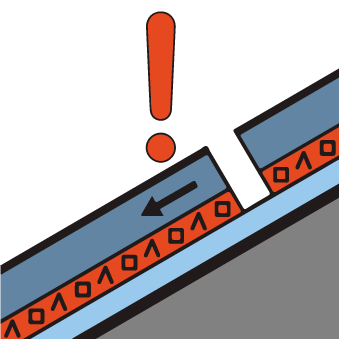
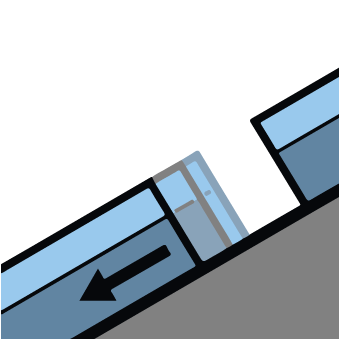
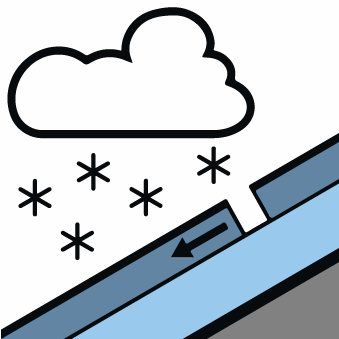
Below 2800 m, small gliding snow avalanches can still spontaneously occur. Avoid areas underneath sliding snow pockets.
Snowpack
On the shady side, a few centimetres of new snow cover fresh (from the south foehn of the past few days) and older drift snow packs, which lie on an unfavourably built-up old snow cover of angular crystals. In windless areas, the old snow surface is still loose or covered with surface frost. On the sunny side, the old snow cover is set far up and can be hardened. In very steep grass mat terrain, the snow cover is partly sliding off the ground.
Tendency
Little change for the time being.
Danger level
2000m
Avalanche Problem
Wind slab
2000m
Persistent weak layer
2200m
Gliding snow
Caution urged on steep, shady slopes. Fresh snowdrifts being generated during the daytime.
During the course of the day, mostly small-sized trigger-sensitive snowdrifts will accumulate. Older snowdrift masses can still be triggered, particularly on shady slopes. They have now been blanketed by fresh snowfall, making them difficult to recognize. Small-to-medium sized slab triggerings are possible by winter sports enthusiasts. In addition, slab avalanches can be unleashed in parts of the old snowpack by large additional loading. Caution urged on high-altitude very steep shady slopes. Naturally triggered glide-snow avalanches are still possible over smooth grass-covered ground and rock plates.
Snowpack
Tonight some snowfall is anticipated. As a result of increasing westerly winds, the loosely-packed fresh snow will be transported during the course of the day, generating mostly small, trigger-sensitive snowdrift accumulations. Particularly in high-altitude ridgeline terrain, these will often be deposited on top of surface hoar. With ascending altitude, small-sized older snowdrifts are still prone to triggering. At high altitudes, especially on shady slopes, faceted intermediate layers occur inside the snowpack, and can be triggered in some places.
Tendency
On Sunday, avalanche danger could increase due to snowfall and strong-velocity winds from the west.
Danger level
1800m
Avalanche Problem
Wind slab
1800m
Gliding snow
2000m
Loose snow will be transported at higher altitudes.
The avalanche danger is moderate above 1,800 metres and low below. Drift snow is the main problem. Danger spots are in steep terrain close to the crest with exposures from north-west to north to south-east as well as in gullies and hollows. The drifting snow can be triggered as a mostly small slab avalanche with a small additional load.
Small, spontaneous sliding snow avalanches are also possible below 2000 metres. Very steep slopes with smooth ground such as meadows, forest aisles and rock slabs are affected. Areas below sliding snow cracks should be avoided.
Snowpack
Loose snow and some fresh snow is being transported by strong winds from a south-westerly direction. Fresh and older drifting snow lies mainly on the shaded side on an angular old snow surface or surface hoar frost and is susceptible to disturbance. On shady slopes at higher altitudes, deeper layers of angular crystals can be found in the snowpack in places. At mid-altitudes, the snowpack at the transition to the ground is widely wet.
Tendency
Wet and sliding snow come to the fore with mild temperatures.
Danger level
treeline
Avalanche Problem
Wind slab
Treeline
Gliding snow
1800m
Drift snow can be problematic in places.
The avalanche risk is low. Above the tree line, drifting snow can be problematic. The few danger spots are in the steep terrain close to the crest with exposures from north-west to north to south-east. The drifting snow can be triggered as a small slab avalanche with a small additional load.
In addition, small, spontaneous sliding snow avalanches are possible below 1800 m on very steep slopes with smooth ground. Areas below sliding snow cracks should be avoided.
Snowpack
Loose snow is transported by winds from the south-west. Fresh and older drift snow lies mainly on the shaded side on an angularly built-up old snow surface or on surface frost. Accumulations of drift snow remain small, but are prone to disturbance in places. On shady slopes at high altitudes, deeper layers of angular crystals can occasionally be found in the snowpack. At mid-altitudes, the snowpack at the transition to the ground is widely wet.
Tendency
Wet and sliding snow come to the fore with mild temperatures.
Danger level
treeline
Avalanche Problem
Wind slab
Treeline
Gliding snow
Fresh snowdrifts accumulating during the course of the day.
Avalanche danger is low. During the course of the day, mostly small-sized trigger-sensitive snowdrifts will accumulate above the timberline. Older snowdrift accumulations can still be triggered, particularly on shady slopes at high altitudes. Due to shallow snow depths, avalanches will remain small. Apart from being buried in snow masses, the risks of being swept along and forced to fall also require caution. Particularly on slopes where the ground is smooth and over rock plates, naturally triggered small-sized avalanches continue to be possible.
Snowpack
Tonight some snowfall is anticipated. As a result of increasing westerly winds, the loosely-packed fresh snow will be transported during the course of the day, generating mostly small, trigger-sensitive snowdrift accumulations. Particularly in high-altitude ridgeline terrain, these will often be deposited on top of surface hoar. The old snowpack is thoroughly moist up to high altitudes, well settled and melt-freeze encrusted on the surface. On steep smooth slopes, glide cracks and small glide-snow slides have been repeatedly observed.
Tendency
On Sunday, avalanche danger could increase due to snowfall and strong-velocity winds from the west.
Danger level
2200m
Avalanche Problem
Wind slab
2200m
Gliding snow
Avoid small-scale drift snow packs
The avalanche danger is low.
In a few places in the terrain - mainly the Tauern and the high altitudes of the northern Alps are affected - fresh and older drift snow packs can be triggered as small avalanches by individual winter sports enthusiasts. Danger areas are most likely to be found in the extended northern exposures and there behind terrain edges as well as the entrance areas of gullies and hollows. On very steep slopes with exposures from east to south to west, mainly small sliding snow avalanches can also be triggered spontaneously.
Snowpack
The old snow surface is often loose and angular on the shaded side with a hint of fresh snow on top. In the high altitudes of the Tauern and Northern Alps, there are small-scale drifts on the shaded side, which can be disturbed on the loose base. On the sunny side, the snow cover has settled a long way up and may have hardened in the morning. In the very steep grass mat terrain, the snow cover slides off the ground in places.
Tendency
Little change.
Danger level
treeline
Avalanche Problem
Persistent weak layer
Treeline
Above the tree line, weak layers may be present in the snow cover.
In a few places, a small to medium-sized avalanche can be triggered above the tree line under higher loads. Greater caution is needed, especially in shaded areas where weak layers may be present in the snow cover and in places with blowing snow. This is particularly true for concave landforms such as ravines and gullies.
Snowpack
dp.4: cold following warm / warm following cold
On Friday night, 5 to 10 cm of rain fell in the mountains. The snow fell mostly in light winds, so the wind carried the snow only in the most exposed places. Snow in the mountains is relatively scarce. The snow cover is becoming increasingly crusty due to various factors. Weak layers may be present in the snow cover, especially on the axial slopes of the high mountains.
Tendency
Sunny spells will become more frequent in the mountains at the weekend. It will get warmer. The risk of avalanches may increase slightly, especially on steep slopes.
Danger level
2200m
Avalanche Problem
Persistent weak layer
2200m
New snow
Little snow, small drift snow problem
The avalanche risk is low, the main danger being older, snow-covered drift snow packs. Small slab avalanches can be triggered in very few places - for example in very steep gullies or hollows - in west, north and east exposures at high altitudes. Small loose snow avalanches are possible spontaneously from extremely steep, very sunny areas.
Snowpack
Five to ten cm of loose fresh snow covers older drifting snow packs and surface frost. Some of the drift snow packs are lying on angular layers in the old snow and are still prone to disruption in places. Overall, there is still little snow.