Weak layers in old snow and small-scale drift snow
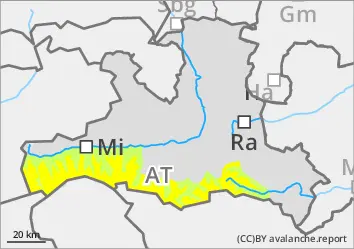
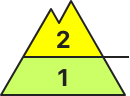
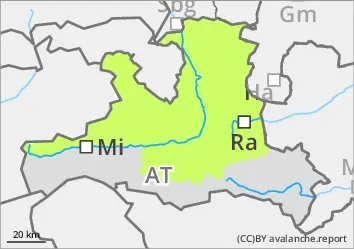
The avalanche danger is moderate above 2400 metres and low below.
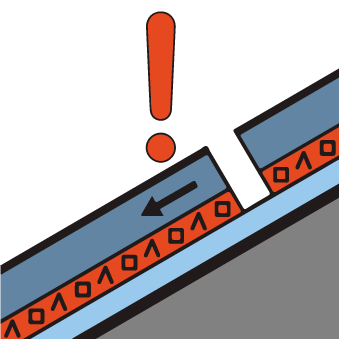
The main problem is old snow. In the sectors from west to north to east, slab avalanches can be triggered in some places by even a small additional load. Avalanches can break through to deeper weak layers and become medium sized if the snow is thick enough.
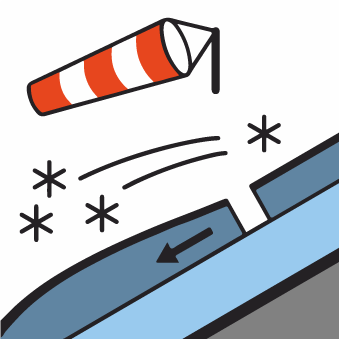
In west to north to east exposures above around 2200 m, small slab avalanches can also be triggered in fresh drift snow. The few danger spots are mainly close to the crest. Below 2800 m, mostly small sliding snow avalanches can occur spontaneously.
Snowpack
The snow surface is often loose on the shaded side. In the upper part of the snowpack, fresh snow that has blown over close to the ridge can form a weak layer. In the middle part of the snowpack, weak layers of angular crystals have formed between the fresh snow packs of the past week. At high altitudes, angular crystals can also be found at the transition to the compact old snow foundation and occasionally near the ground.
On the sunny side, the snow cover has settled far up and may have hardened in the morning.
Tendency
No significant change.
Danger level
2200m
Avalanche Problem
Wind slab
2200m
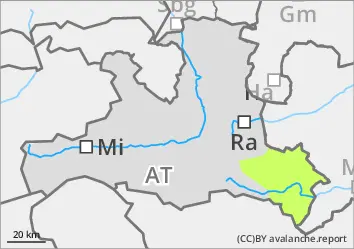
Little snow, small drift snow problem
The avalanche danger is low, the main danger is drift snow.
Above 2200 m, small slab avalanches can be triggered in a few places in west, north and east exposures.
Snowpack
The snow surface is wind-treated. In the upper part of the snow cover, overblown fresh snow can form a weak layer. Overall, there is still little snow.
Tendency
Little change.
Danger level
Avalanche Problem
Gliding snow
Wind slab
1800m
Avoid terrain under sliding snow cracks and small-scale drift snow areas
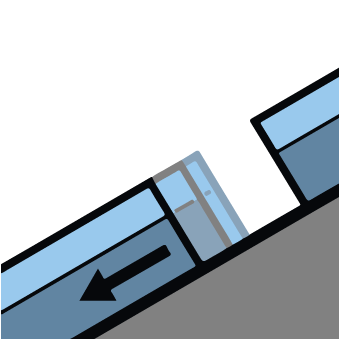
The avalanche danger is low. The main problem is the sliding snow on slopes with exposures from east to south to west. Small sliding snow avalanches can occur spontaneously up to the summits. There are localised danger spots for mostly small slab avalanches (drift snow problem), particularly in the Tauern region and at high altitudes in the northern Alps.
Snowpack
The snow surface is often loose and angular on the shaded side. Only at high altitudes can isolated angular weak layers be detected within the snowpack. In the high altitudes of the Tauern and Northern Alps, there are also small-scale drifts on the shaded side, which can be disturbed on the loose base. On the sunny side, the snow cover has settled a long way up and may have hardened in the morning.