Caution urged on steep, shady high-altitude slopes
Snowpack
Tendency
Danger level
1800m
Avalanche Problem
New snow
1800m
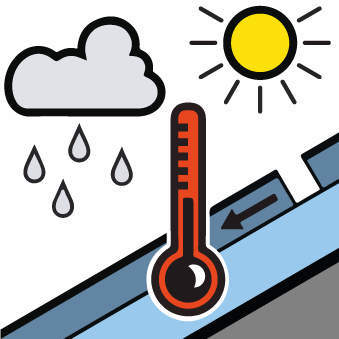
Wet snow
1800m
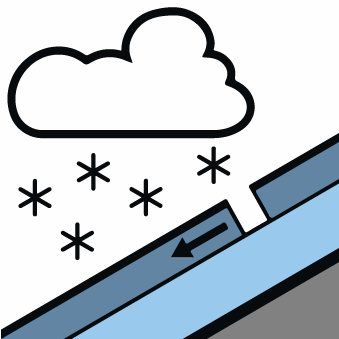
Gliding snow
2200m
Danger spots are difficult to recognise.
The avalanche danger is moderate. The snow that has fallen in the last few days is the main problem. Slab avalanches can be triggered in places on steep slopes at higher altitudes with low additional loads. On shady slopes at higher elevations, deeper layers can be disturbed and avalanches can reach medium size.
Wet snow becomes a problem below approx. 1800 m. On steep slopes interspersed with rocks, in very steep forest aisles and when exposed to sunlight, small, moist and wet loose snow avalanches are increasingly triggered spontaneously.
On very steep, smooth meadow slopes at all altitudes and exposures, smaller sliding snow avalanches can also detach themselves.
Snowpack
The snow that has fallen in the last few days is clearly settling in mild temperatures. At higher altitudes, there are weak intermediate layers in the upper half metre of the snow cover in places. Under older accumulations of drifting snow, soft, fragile snow layers have been preserved in places. Only here is a break propagation over larger areas possible. Up to around 1800 metres, the snow becomes moist and loses its firmness with the onset of precipitation, mild temperatures and sunshine during the course of the day. The ground is not frozen and the snowpack base is often wet.
Tendency
With the forecast cooling, the wet snow problem will ease again at the beginning of next week.
Danger level
1800m
Avalanche Problem
Wind slab
1800m
Gliding snow
2200m
Beware small-sized snowdrift accumulations and gliding snow
Small-sized snowdrift accumulations can still be triggered above the timberline. Small-to-medium sized slab avalanches can be triggered by winter sports enthusiasts. Avalanche prone locations occur particularly in ridgeline terrain, wind-loaded gullies and on steep, shady slopes. Especially on steep grass-covered slopes, small-to-medium sized glide-snow avalanches are possible. Caution below glide cracks.
Snowpack
The fresh fallen snow and small-sized snowdrift accumulations from the last few days are settling increasingly and firming up. Particularly on steep grass-covered slopes, increasingly frequent glide cracks and heightened gliding snow have been observed. As temperatures continue to rise, this process will accelerate.
Tendency
To begin with, no significant change in the avalanche situation is anticipated. As a result of rising temperatures, gliding snow activity will increase somewhat.
Danger level
2400m
Avalanche Problem
Persistent weak layer
2400m
Wind slab
1800m
Wet snow
Careful on blowing snow! Above 2400 m there are weak layers in the old snow cover. On prominent slopes, snow will slicken and creep during the day.
A small additional load can trigger a small to medium avalanche, especially near ridges where there are fresh snow drifts, especially above 1800 m. At altitudes above 2400 m, a small load can trigger a small to medium avalanche of packed snow. During the day, if the weather is sunny, the snow on the slopes will become thinner and in many places will creep down. On steep grassy slopes, the whole snow cover may creep down.
Snowpack
dp.6: cold, loose snow and wind
On Monday and Tuesday, more than 40 cm of snow fell above 1800 m, and up to 20 cm at lower altitudes. The snow fell on uneven ground - in some places on terrestrial ground, especially on the southern slopes on drifts of blown snow.
The north-easterly wind moved the snow above the tree line and built up drifts - especially above 1800 m, where there is more dry snow.
There are weak layers in the old snow cover above 2400 m.
Tendency
Sunday will be a little warmer, but cloudier. Westerly winds will start to blow. The avalanche risk will remain similar to Saturday, with a lower probability of spontaneous avalanches of wet snow on prominent slopes.
Danger level
2200m
Avalanche Problem
Persistent weak layer
2200m
Wind slab
2200m
Slab avalanches, especially in the northern sector
The avalanche danger is moderate above 2200 metres and low below.
The main problem is old snow. In the sectors from north-west to north to north-east, slab avalanches can be triggered in some places by even a small additional load. Avalanches can break through to deeper weak layers and become medium sized if the snow is thick enough.
Small to medium-sized slab avalanches are also possible in fresh drift snow at a few danger spots, especially near the crest. Danger spots can be difficult to recognise in diffuse visibility.
Below 2800 m, small sliding snow avalanches can spontaneously occur.
Snowpack
The snow surface is often still loose at high altitudes. In the upper part of the snowpack, fresh snow that has blown over close to the crest can form a weak layer. In the middle part of the snowpack, weak layers of angular crystals have formed between the fresh snow packs of the past week.
At high altitudes, angular crystals can also be found at the transition to the compact old snow foundation and occasionally near the ground.
On the sunny side, the snow cover has settled well up to high altitudes and can slide off the ground.
Tendency
The old snow problem remains, the drift snow problem decreases as the snow cover settles.
Danger level
1800m
Avalanche Problem
Wind slab
1800m
Wet snow
800m
Careful on blowing snow!
A small additional load can trigger a small to medium avalanche, especially near ridges where there are fresh snow drifts, especially above 1800 m.
Snowpack
dp.6: cold, loose snow and wind
On Monday and Tuesday, more than 60 cm of snow fell above 1800 m, and up to 30 cm at lower altitudes. The snow fell on uneven ground - in some places on terrestrial ground, especially on the southern slopes on drifts of blown snow. The thin old snow cover, now hidden under the new snow, is mixed with old-growth ash. This reduces the stability of the snow cover.
The north-easterly wind has been moving snow above the forest line and building drifts - especially above 1800 m, where there is more dry snow.
Tendency
Sunday will be a little warmer, but cloudier. Westerly winds will start to blow. The avalanche risk will remain similar to Saturday, with a lower probability of spontaneous avalanches of wet snow on prominent slopes.
Danger level
1800m
Avalanche Problem
Wind slab
1800m
Wet snow
Careful on blowing snow! On prominent drifts, snow will slush and creep during the day.
A small additional load can trigger a small to medium avalanche, especially near ridges where there are fresh snow drifts, especially above 1800 m. During the day, in sunny weather, the snow on the slopes will loosen and in many places creep down. On steep grassy slopes, the whole snow cover may creep down.
Snowpack
dp.6: cold, loose snow and wind
On Monday and Tuesday, more than 40 cm of snow fell above 1800 m, and up to 20 cm at lower altitudes. The snow fell on uneven ground - in some places on terrestrial ground, especially on the southern slopes on drifts of blown snow.
The north-easterly wind moved the snow above the tree line and built up drifts - especially above 1800 m, where there is more dry snow.
Tendency
Sunday will be a little warmer, but cloudier. Westerly winds will start to blow. The avalanche risk will remain similar to Saturday, with a lower probability of spontaneous avalanches of wet snow on prominent slopes.
Danger level
2200m
Avalanche Problem
Persistent weak layer
2200m
Gliding snow
1800m
Be aware of the problem of old snow at high altitudes
The avalanche danger is moderate above 2200 metres and low below.
The main problem is old snow. In the north-west to north-east sector, slab avalanches can be triggered in some places by even a small additional load. Avalanches can occasionally be of medium size if the snow thickness is sufficient.
Small sliding snow avalanches can occur spontaneously above 1800 metres.
Snowpack
The snow surface is often still loose at high altitudes. In the central part of the snowpack, weak layers of angular crystals have formed between the fresh snow packs of the past week. In small areas, surface frost may also have been snowed in.
On the sunny side, the snow cover has settled well up to high altitudes and may slide off the ground.
Tendency
The problem of old snow at altitude remains.
Danger level
1800m
Avalanche Problem
New snow
1800m
Wet snow
1500m
Pay attention to ground contact and risk of falling!
The avalanche danger is moderate above 1800 metres and low below. The snow that has fallen in the last few days is the main problem. Slab avalanches can be triggered in places on very steep slopes with little additional load. On shady slopes at high altitudes, lower-lying weak layers can be disturbed and avalanches can reach medium size.
Wet snow becomes a problem below approx. 1500 metres. Here, individual damp and wet loose snow avalanches spontaneously break loose in steep rocky terrain and in very steep forest aisles. Occasionally, the wet snow also comes off on the ground.
Snowpack
The snow that has fallen in the last few days is clearly settling in mild temperatures. At higher altitudes, there are weak intermediate layers in the upper half metre of the snow cover in places. Underneath older accumulations of drifting snow, soft layers of snow that are susceptible to disturbance remain in places. Up to 1500 metres, the snow becomes moist with the onset of precipitation and mild temperatures and loses its firmness. The ground is not frozen and the snowpack base is often wet.
Tendency
No significant change in avalanche danger.
Danger level
2000m
Avalanche Problem
Wind slab
2000m
Little snow, small drift snow problem
The avalanche danger is low, the main danger is drift snow.
Above 2000 m, small slab avalanches can be triggered in a few places in west, north and east exposures.
Snowpack
The snow surface is wind-treated. In the upper part of the snow cover, overblown fresh snow can form a weak layer. Overall, there is still little snow.
Tendency
Little change, the drift snow is increasingly settling.