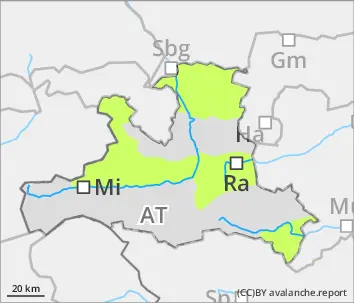
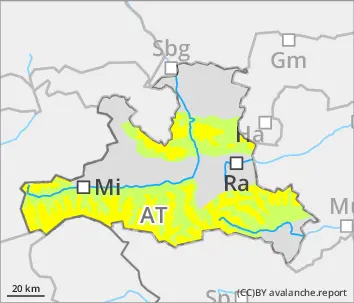
Generally favorable conditions, isolated danger zones due to snowdrift accumulations
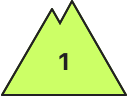
Avalanche danger is low. Fresh snowdrift accumulations are triggerable as small avalanches even from one sole skier. The few danger zones occur near ridgeline, esp. in steep shady terrain. They are often blanketed with fresh snow, making them hard to recognize. Apart from the danger of being buried in snow masses, the risks of being swept along and forced to take a fall demand adequate consideration.
Snowpack
On steep shady slopes above 2000m up to 20cm of fresh fallen snow lies deposited atop an expansively metamorphosed snowpack. In transitions from old to fresh fallen snow and inside the snowdrift masses, weak layers can form, the drifts form the slab. On sunny slopes and at lower altitudes the bonding of fresh snow to old snow is generally good, weak layers occur only inside the drifted masses. Weak layer in the lowermost part of the snowpack are no longer likely to trigger.
Tendency
As temperatures gradually rise, likelihood of triggering will recede
Danger level
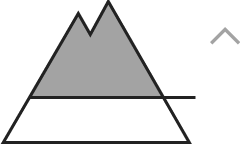
2200m
Avalanche Problem
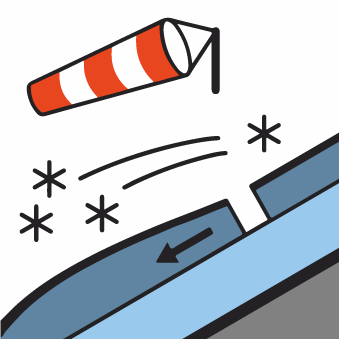
Wind slab
2200m
Caution on shady slopes: freshly generated snowdrift accumulations
Avalanche danger above 2000m is moderate, below that altitude danger is low. The few danger zones occur esp. in very shady gullies and bowls distant from ridgelines on NW/N/E facing slopes. Avalanches in the old snow above 2200m are isolated, possible only in extremely steep terrain on north-facing slopes. In isolated cases small to medium sized glide-snow avalanches are possible, triggerable by minimum additional loading. During the course of the day, naturally triggered loose-snow avalanches can be expected in all aspects, releases will be generally small-sized.
Snowpack
Steep shady slopes above 2000m: up to 20-40 cm of fresh snow lies deposited on a metamorphosed surface. In transitions from old to fresh fallen snow and inside the snowdrift accumulations, weak layers can be generated. On sunny slopes and at lower altitudes, the bonding of fresh fallen snow to the old snowpack is generally good, weak layers are found only inside the newly generated drifts. Weak layers in the lowermost part of the snowpack are no longer likely to trigger.
Tendency
As temperatures gradually rise, likelihood of triggering will recede